
How much more money should Britain commit to conflicts we cannot control?
Roshan Doug considers just how much the UK should commit to helping war efforts abroad
I’m at a dinner party with a group of Bohemian liberals in Central London. I express an opinion that does not fit the prevailing orthodoxy and within seconds, the question isn’t whether I have a point. It’s whether I’m a right-wing fuddy-duddy.
Sometimes the accusation goes further: by challenging the accepted narrative, I am playing into the hands of those who want to destabilise our country.
The irony is that destabilising Britain is precisely what I want to avoid. I want a country confident enough to think independently, look after its own people and question those who govern it. And if that makes me a miserable fascist so be it.
Question the prevailing wisdom on Ukraine, and you risk being labelled a Mr Putin sympathiser. But caring about Britain does not mean turning our backs on the world, and questioning UK’s foreign policy does not make you anti-British.
Let me be clear. I do not take pleasure from seeing suffering of anyone. But do I feel the same emotional investment in the Russia/Ukraine war as some politicians and broadcasters seem to demand of me? No, I don’t.
My concern is Britain’s priorities. What is the point of grand declarations about defending one nation against another when hospitals in this country are under pressure, roads are in a scandalous state, prisons are overcrowded, public services are stretched, growing ghettoisation in every city, and housing is increasingly unaffordable?
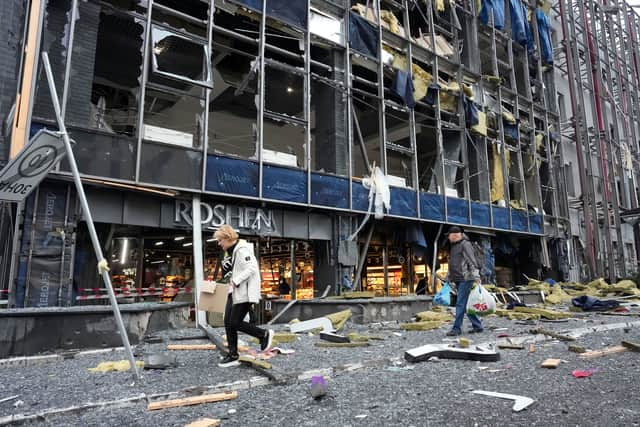

Of course, Britain has international responsibilities. But recognising a crisis abroad does not mean committing money indefinitely without asking what we hope to achieve and what we can realistically afford – no matter how much Mr Zelenskyy pleads.
Every pound of public money deserves scrutiny. That is accountability, not a lack of compassion.
And if our justification for supporting Ukraine is purely that we must stand up to aggressors and defend international law, why is that principle applied selectively?
Where was the same moral certainty when America invaded Iraq in 2003? It unleashed years of destruction and instability, with consequences Iraq continues to endure. Did America face the same determination to isolate it, the same appetite for sanctions or the same international mobilisation that followed Russia’s invasion?
The circumstances were different, of course. But that does not make the question illegitimate.
Is our commitment to international law universal, or does it depend on whether the country breaking the rules happens to be our ally?
America has a long history of military interventions, from Vietnam and Iraq to Afghanistan and Libya. We should be able to question the conduct of our allies without being accused of siding with their enemies.
Consider Venezuela and the American military operation in January earlier this year. It resulted in President Nicolás Maduro’s capture and transfer to US custody, and it raised serious questions about sovereignty and the limits of American power. One can strongly criticise Maduro’s government while still questioning the legality and precedent of forcibly removing another country’s leader.
Imagine Mr Putin sending troops into Washington to seize an American president and take him to Moscow. Would we hear endless qualifications about the complexity of the situation, or would the international outrage be immediate?
When powerful countries act, the diplomatic vocabulary becomes remarkably flexible. What is condemned as aggression when an adversary does it, can become intervention, a necessary security action or a pre-emptive strike when an ally is responsible.
There is another awkward question. Why should European – NATO –countries be expected to demonstrate solidarity and sacrifice while Mr Trump’s administration pursues its own negotiations and arrangements with Russia?
Diplomacy may be essential to ending the war. But if pragmatism is acceptable for Washington, why is questioning the prevailing policy sometimes treated as betrayal elsewhere?
I am not suggesting that Russia and America are identical, or that every military intervention is morally equivalent. I am asking for one standard of principle, not two.
Meanwhile, how much more money, time and political capital should Britain commit to conflicts whose outcomes we cannot control? National security matters, as does helping people whose homes have been destroyed. But our own security depends on functioning infrastructure, reliable public services and a population that retains confidence in its government.
We can sympathise with Ukrainians while questioning whether every additional (£70b?) is well spent. We can oppose Russian aggression without writing a blank cheque. And we can care about the world without neglecting the people who elected us to serve them.
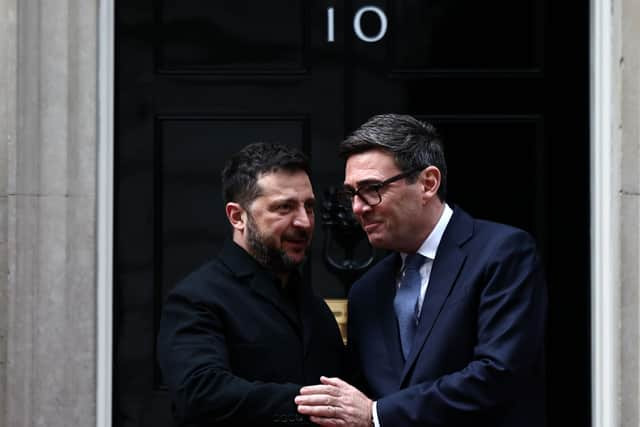
I do not want Britain to turn its back on the world. I just want it to act with proportion, consistency and a clear sense of responsibility. That means scrutinising foreign commitments and confronting the hypocrisy of this country’s allies as readily as that of its adversaries.
If that makes me right-wing, perhaps the label tells us more about the narrowness of our political debate than it does about me.
I have not lost my conscience. I have simply lost patience with selective outrage.
If aggression is wrong, it is wrong whoever commits it. And before Britain tries to sort out international conflicts, it should demonstrate that it can put its own house in order first.
I believe that the plight of the British citizens – young people, pensioners, and war veterans – should be the primary concern for Mr Burnham and his government. Defend British borders, British shores; defend British interests, British workers. That is the very least people should expect from their government.
Or – as my friends have pointed out – am I simply a grumpy old git?
Roshan Doug is a social commentator and a former Birmingham Poet laureate. [email protected]