
I revisit site of Whitchurch's canal breach 11 months after disaster struck
Eleven months since catastrophe struck Whitchurch’s canal collapse looks very different
The last time I visited Whitchurch’s Llangollen Canal was in very different circumstances.
Scrambled to the North Shropshire town on December 22 last year after reading a frankly unbelievable police update using the words “sinkhole” and “major incident”, I arrived shortly after 9am, and ditched the car in search of a disaster with no real idea of what to expect.
Following the blue lights it wasn’t long before I found the towpath and set off to see what I could find.

As chance would have it on the way I met a lady whose brother had been caught up in the disaster.
She recounted an incredible story of his boat being plunged into a giant chasm and said he, like others was now recovering from the ordeal at the town’s fire station.
It’s safe to say I wasn’t quite prepared for the sight that greeted me when I arrived a few hundred metres further on.
Firstly there was a giant lake of muddy brown water. Unassuming passers-by not familiar with the location - like me - would have probably just have thought “that’s a lake”, but no, it wasn’t a lake.
In fact it was the overspill of millions of litres of water that had been pouring out of the Llangollen Canal since the early hours of that morning.
Hidden from view another couple of hundred metres down the towpath was the cause of the problem.
Now, for most British people there’s a clear mental image of the idyllic canal scene - for me built up over several picture-perfect childhood holidays on the waterways.
The reality of what confronted me as I reached the site that morning is difficult to fully convey.
As a reporter you attend plenty of incidents involving some form of varying disaster. Frequently you’re told by those present ‘it was like a bomb had gone off’.
Well, while I don’t want to fall back on cliché, it did very much look like a bomb had actually gone off.
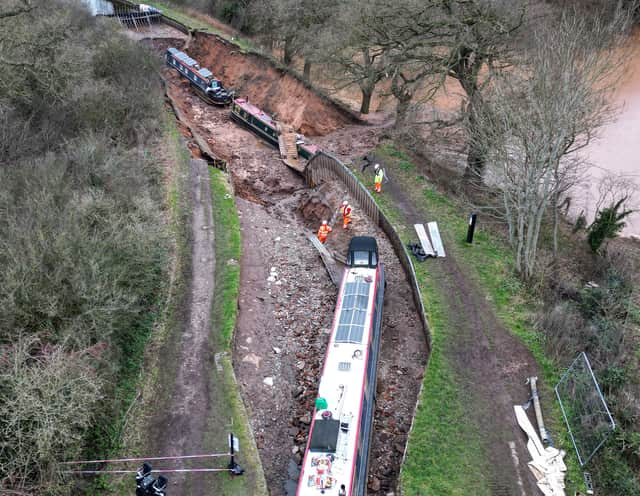
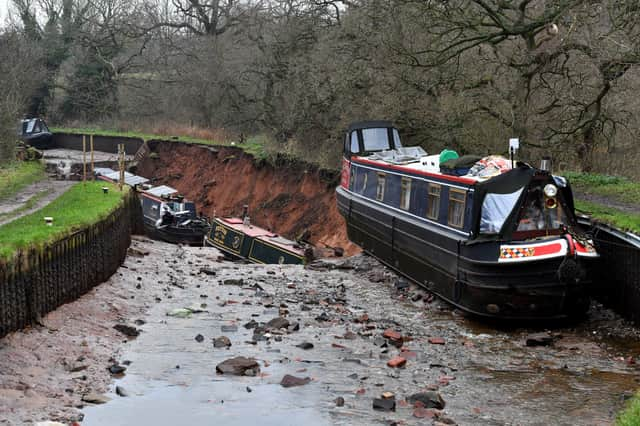
There was a giant crater where the canal should have been.
In that chasm were two boats, inconceivably both still upright embedded in mud, while another sat teetering on the edge like something out of a disaster movie.
Despite the chaotic nature of the scene it was eerily quiet. The canal had been dammed earlier that morning in an emergency effort by the fire service and the poor occupants of the boats involved had been moved to safety.
Incredibly despite the severity of the situation no one was seriously hurt in disaster.
This week has seen the Canal and River Trust, which is responsible for repairing the breach, announce that it is expected to finally re-open the section next March.
So, more than 11 months on from my last visit I joined representatives from the trust and workers from Kier, who are doing the on-the-ground construction work, to see just how the project is coming on.
Kitted out in the appropriate PPE, myself and a gaggle of other media types were ushered inside the fencing surrounding the compound and taken down to get a look at the progress.
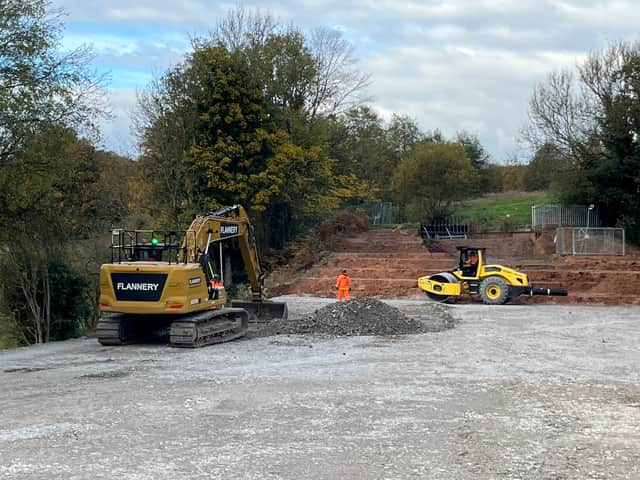
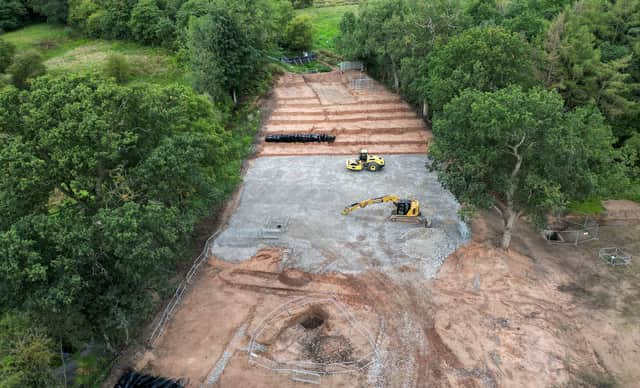
The most instantly striking aspect as I stood where I was around 9.30am on December 22, was how much earth has been cut away to start the rebuilding project.
When assessing how to rebuild the section, which originally sat on a raised stretch with embankment down to fields either side, the engineers quickly concluded the existing earth - heavy in silt and clay - could not be used.
Instead the rebuild has seen thousands of tons of earth dug out below the level of the breach.
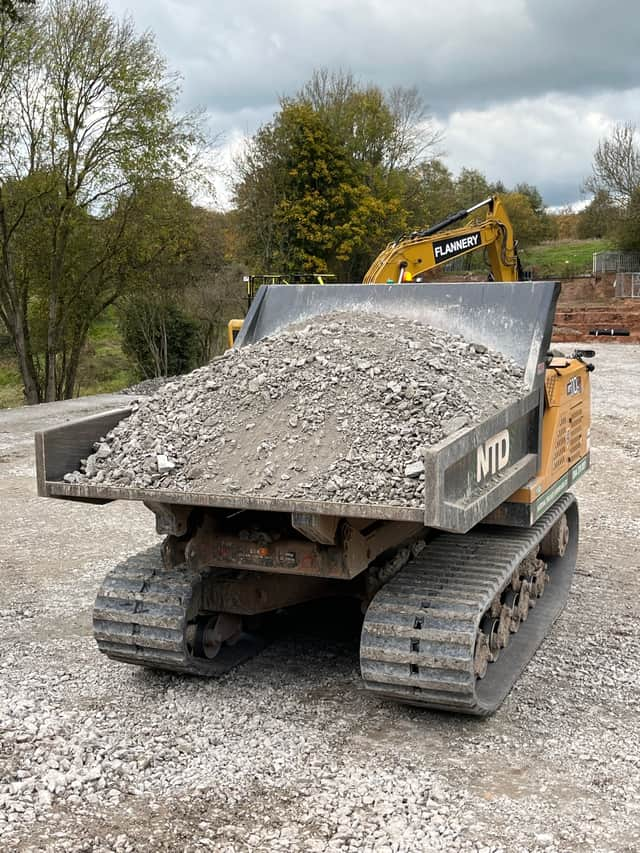
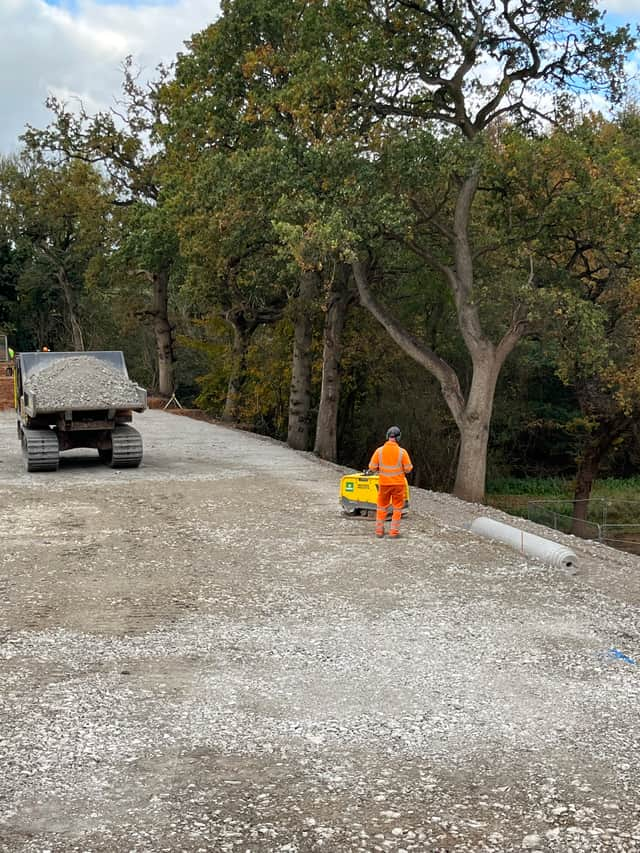
The next stage has been for workers to painstakingly build up layers of stone - to a maximum of 250mm at a time, before ensuring it is flat, and starting on adding the next layer.
The process started in August and is still going on, taking around a week to add each layer.
In total around 18,000 tons of stone will be used in the process.
Eventually a layer of concrete will be added on top, before a dedicated concrete channel for the new canal section is added above.
While all this is going on huge pipes carry water from one side to the other, to ensure supplies continue to the Hurleston Reservoir in Cheshire.
The process is powered by a giant bank of generators, using anywhere up to 6,000 litres of fuel a week.
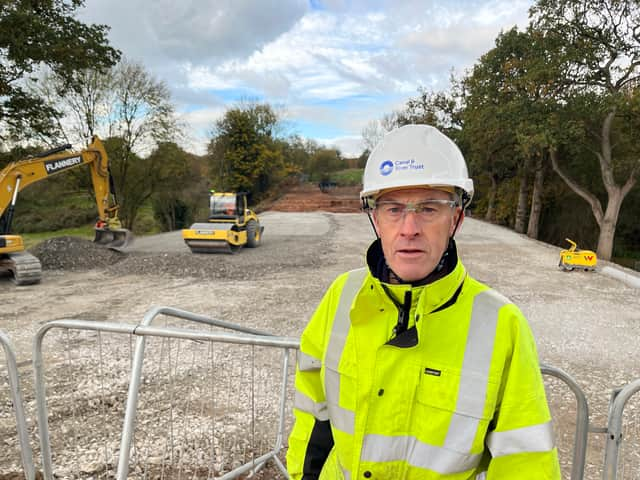
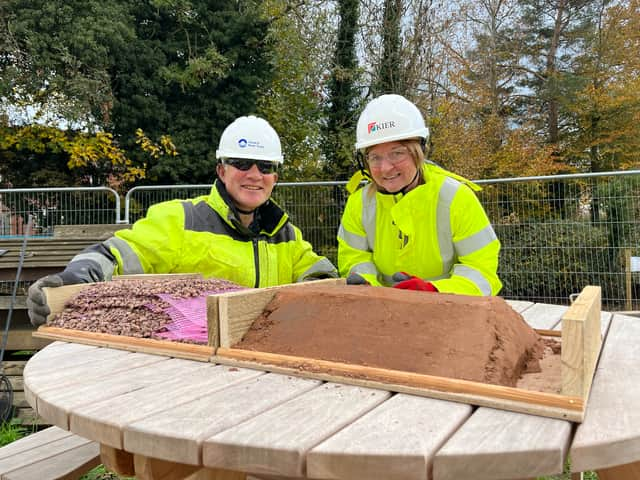
Ian Draycott, lead engineer for the Canal and River Trust, said that decision to use the layered method to rebuild the section had been because it would represent the most stable solution.
He had even created a model to show how the two methods differed.
He said: “There was nothing wrong with the way it was done, it has been good for 200 years - it is just they did what they had to do back then, but what we are able to do now is to fully analyse what is called ‘slope stability’ and by virtue of that we are able to build stronger, more stable structures.”
Speaking at the site as workers continued to build up the layers of stone in the background, Simon Harding, project manager for the Canal and River Trust, said he was hopeful the site will be able to re-open ready for Easter next year.
Addressing the challenges faced by the work he said: “We were forced into fixing the canal in December 2025 when we had the breach, since then we have completed the design, but in the background we have gained access to adjacent farmland, created roads, storage and compounds and now dug out the whole of the breach that was there in December where the three boats were stuck down there.
“We have pulled the three boats out, we are now building the design, so we have had a few hiccups along the way where we have come across soft spots and had to deal with it - had to change the design, introduce different layers of reinforcement and things like that, so we are in a fairly good place now progressing the job, so onwards and upwards.”
Speaking about the prospect of an Easter opening date he said: “We should be able to reach that, Mother Nature might throw some challenges at us heavy rain if it is really heavy than that stops play, ice and cold will not help us when we are concreting, there are challenges but I am hoping that easter will be a good time to open, ready when everyone is sort of waking up from winter and boats are starting move and navigating again.”