
Inside the Black Country mansion where the Gunpowder Plot came to a bloody end – and the fight to save it
Penny for the Guy?
Every November 5, millions of people across Britain mark the failure of the Gunpowder Plot with fireworks and bonfires, but few may realise that the conspiracy reached its bloody conclusion at a historic mansion in the heart of the Black Country.
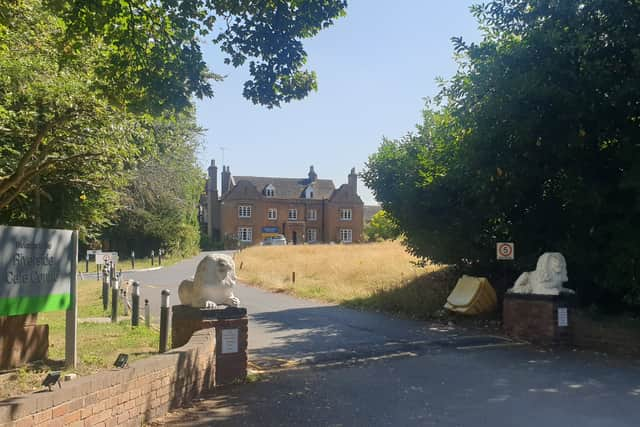
Tucked away in Wall Heath, near Kingswinford, Holbeche House might appear to be just another ageing country mansion.
But behind its walls lies one of the most remarkable chapters in British history, involving a failed attempt to blow up Parliament, a desperate flight across the Midlands and a deadly confrontation between some of the country's most notorious conspirators and the King's men.
It was here, on November 8, 1605, that the Gunpowder Plot effectively came to its violent end, with ringleader Robert Catesby among those killed during a final stand against the authorities.
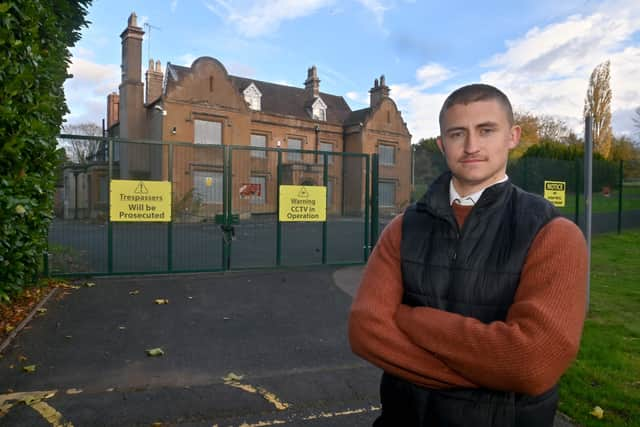
And more than four centuries later, the Grade II*-listed building has faced a very different battle – one to secure its future after years of deterioration.

A plot that shook the nation
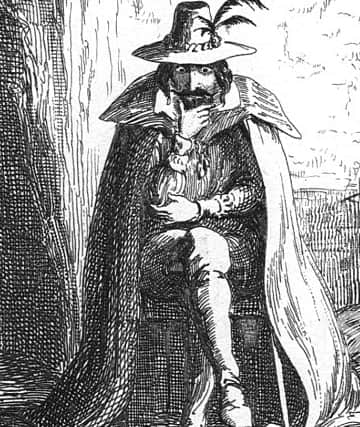
While Guy Fawkes remains the name most closely associated with the Gunpowder Plot, it was Robert Catesby, a wealthy Catholic from Warwickshire, who masterminded the conspiracy.
The plan was to blow up the House of Lords during the State Opening of Parliament on November 5, 1605, killing King James I and members of his government.
The conspirators hoped the attack would trigger an uprising and ultimately restore a Catholic monarchy to England.
Religious tensions had been simmering for years, with Catholics facing persecution under Elizabeth I and hopes of greater tolerance under her successor, James I, proving short-lived.
Catesby, who had previously been imprisoned for his involvement in the Earl of Essex's rebellion in 1601, began gathering a group of men willing to take increasingly desperate measures.
Among those recruited were Thomas Percy, brothers Robert and Thomas Wintour, John and Christopher Wright, and Guy Fawkes, an experienced soldier who had fought abroad.
Fawkes was tasked with guarding the gunpowder stored beneath Parliament, where the conspirators had secured a cellar directly below the House of Lords.
But the plot began to unravel when an anonymous letter warning of the danger was sent to Lord Monteagle in October 1605.
The authorities searched the cellars beneath Parliament in the early hours of November 5 and discovered Fawkes alongside barrels of gunpowder concealed beneath fuel.
He was arrested, and the remaining conspirators fled London, beginning a desperate journey which would eventually lead them to the Black Country.
A desperate journey to Holbeche House
As news of the failed conspiracy spread, Catesby and his followers headed towards the Midlands, hoping to gather support for an uprising.
But the rebellion they had anticipated never materialised.
Instead, the fugitives found themselves increasingly isolated, pursued by the authorities and struggling to secure weapons and supplies.
During their journey, they took supplies from Warwick Castle and later obtained weapons and gunpowder from Hewell Grange.
By the evening of November 7, the remaining conspirators had reached Holbeche House, the home of Stephen Lyttelton, whose family had longstanding connections to the Catholic cause.
The mansion, believed to have been built around 1600, offered temporary shelter.
But the men were exhausted, their hopes of rebellion were fading and their gunpowder had become soaked during their journey through heavy rain.
What happened next would prove disastrous.
In an attempt to dry the damp powder, the fugitives placed it near an open fire.
A stray spark ignited the explosives, causing a violent blast inside the house.
Several conspirators suffered serious burns, including Catesby, while John Grant was reportedly left with horrific injuries to his eyes.
The explosion left the already desperate men in an even weaker position as the King's forces closed in.
The bloody last stand
On the morning of November 8, 1605, around 200 men led by Richard Walsh, the Sheriff of Worcestershire, surrounded Holbeche House.
The fugitives were heavily outnumbered, and any realistic hope of escape had all but disappeared.
What followed was a fierce confrontation which brought the conspiracy to its final, bloody conclusion.
Catesby and Thomas Percy were fatally shot, with one account suggesting they were struck by the same bullet.
Brothers John and Christopher Wright were also killed, while several other conspirators were wounded and captured.
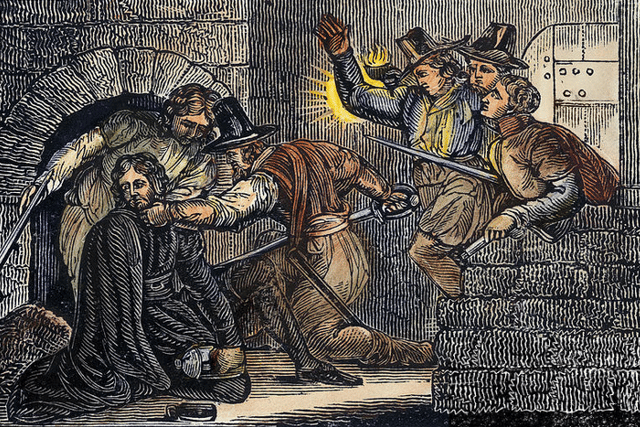
Thomas Wintour was among those taken alive, subsequently facing trial and execution.
The battle left its mark on the building itself.
Musket damage believed to date from the siege can still be seen in the historic masonry and original front doors, providing a remarkable physical connection to the events of 1605.
The aftermath also extended across the Black Country, with several local people accused of helping the fugitives.
Stephen Lyttelton escaped the immediate confrontation but was eventually captured in January 1606 and executed in Stafford.
Meanwhile, Thomas Smart and John Holyhead, two farmers from Rowley Regis, were hanged at Wolverhampton's High Green, now Queen Square, for sheltering members of the conspiracy.
Their deaths underline how the failed plot reached into communities across the region, leaving a legacy far beyond the walls of Parliament.
A mansion facing an uncertain future
Despite its turbulent past, Holbeche House survived the centuries that followed.
The original building features distinctive Dutch gables, while historic oak panelling, fireplaces and exposed timber beams remain inside.
It was granted Grade II* listed status in 1951, recognising its exceptional historical and architectural significance.
In more recent decades, the mansion was used as a residential nursing home, operated by Four Seasons Health Care.
But the home closed in 2022, leaving the historic property empty and its condition deteriorating.
In 2023, Holbeche House was added to Historic England's Heritage at Risk Register, prompting concerns about its long-term future.
Campaigners called for the mansion to be preserved and opened to the public, although the National Trust ruled out taking over the property.
A potential lifeline emerged when Dudley-based Select Health Care submitted plans to convert the building into its head office.
The proposals included roof repairs, restoration of windows and doors, and alterations to the interior.
Documents submitted with the application revealed historic features including oak panelling, fireplaces, priest hides and the original doors believed to bear scars from the 1605 siege.
Neil Ranford, of NCR Architectural Design, stressed the importance of protecting the building's unique heritage.
"Holbeche’s special historic interest, the people who used it, the things that have happened there, the ideas that have been developed there and the unique role the building played in the nation’s history cannot be understated nor undervalued," he said.
More than 420 years after the Gunpowder Plot, Holbeche House remains a remarkable reminder of one of the most dramatic episodes in British history.