
Birmingham-wide 20mph speed limit would be 'common sense' and help 'bamboozled' drivers

The possibility of a ‘city-wide’ 20mph speed limit being introduced in Birmingham has been described as a “common sense policy” by campaigners.
Opinion has been fiercely divided in recent days after it emerged that a letter requesting a “20mph zone for the whole of Birmingham” had been sent to the government - but campaigners say it could also help bamboozled drivers.
The request comes as councillors across the political spectrum call for meaningful change after a road safety emergency was declared in the summer.
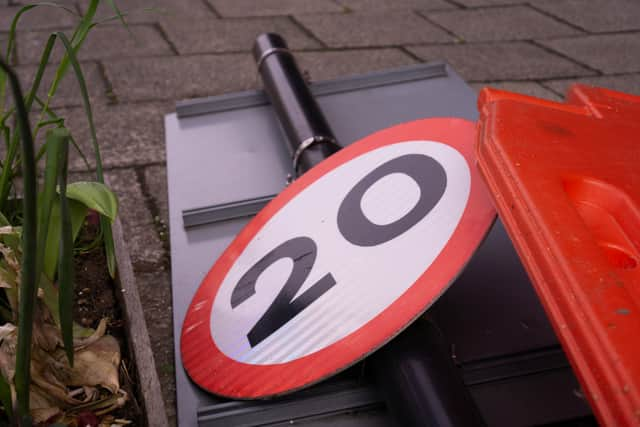

The council’s cabinet member for transport, who sent the letter, said in a recent statement that slower speed limits on ‘appropriate’ roads would reduce collisions and save lives.
“For this reason, our Birmingham Transport Plan sets out that 20mph should be the speed limit in residential areas and where footfall is high,” councillor Majid Mahmood said. “Other types of roads will remain unaffected.”
Similar arguments have been echoed by road safety campaigners in the city this month.
Mat MacDonald, chair of Better Streets for Birmingham, told the Local Democracy Reporting Service that there are “reams of evidence” to show that a 20mph speed limit saves lives and prevents catastrophic injuries.
In particular, he pointed to the World Health Organization saying that 20mph speed limits where people and traffic mix make for streets that are “safe, healthy, green and liveable”.
Mr MacDonald continued: “A default limit of 20mph across the city would still allow some exceptions for major arterial routes, which could be decided on a case by case basis.”
He went on to say that setting the rule that roads should be 20mph unless otherwise specified could help the cash-strapped council save money on road signage.
“It will provide clarity for motorists often bamboozled by the endless chopping and changing of speed a single car journey across the city can entail,” he said.
“It will also save our overstretched emergency services and NHS the massive costs associated with road traffic collisions – a tab which, ultimately, we as taxpayers pick up.”
According to a road safety inquiry report, road casualties cost the public around £205 million every year in Birmingham.
Mr MacDonald therefore described “city-wide” 20mph speed limits as a “common sense and cost-effective policy”.
“Anyone who is even remotely serious about reducing the tragic loss of life on our road network should be doing everything they can to make it happen,” he said.
‘Lots of progress’
Speaking at a recent full council meeting, Cllr Majid Mahmood confirmed there is a “desire to have a 20mph speed limit city-wide”.
“This is set out in the Birmingham Transport Plan and we are making lots of progress on this,” he continued.
In a previous statement, he explained: “Slower speeds are less intimidating towards those who walk or cycle – activities that we need to encourage more of if we are to reduce the number of harmful emissions and traffic levels in the city.
“Approximately one third of the city’s roads are already subject to a 20mph speed limit.
“We would like to expand the number of roads subject to this speed limit where appropriate and are currently exploring opportunities to carry this out”.
While campaigners have welcomed the news, others have reacted with anger towards the council’s Labour administration.
Conservative councillor Meirion Jenkins (Sutton Mere Green) told last week’s full council meeting: “Motorists and cars are the wheels that keep the Birmingham and Midlands economy turning.
“If we put obstacles in their way, whether its unnecessary traffic lights, unnecessary closures or the extremes of the loony left trying to turn the whole of Birmingham into a 20mph limit – we’ve seen in Wales what happens when they do that”.
Addressing such backlash, the 20’s Plenty for Us campaign group recently said: “The fuss about Birmingham City Council (BCC) wanting to set a default 20mph limit is entirely manufactured.
“BCC already has a policy of 20mph for most urban roads.
“It’s just seeking a sensible process and signage reg change to make it cheaper to implement.”
The Welsh government sparked similar controversy when it introduced a default 20mph speed limit on restricted roads across Wales last year.
Restricted roads are usually in residential and built-up areas where there are lots of people and often have street lights on them.
The default 20mph speed limits were introduced with the aim of reducing the number of collisions and severe injuries; making streets safer; and encouraging more people to walk and cycle.
Not everyone is a fan however, with a recent YouGov survey suggesting that seven in ten Welsh people oppose them.
It’s still relatively early days when it comes to the possibility of a “city-wide” 20mph speed limit in Birmingham and plans to introduce such changes would have to go through consultation first.