
Birmingham vs Seville: A tale of two cities and fifty years of change
Why is it that Birmingham feels so different?
If you’ve never heard Holidays in the Sun by the Sex Pistols, the band's fourth single released 48 years ago in October 1977, you are in for, in my opinion, a treat, writes Dr Steven McCabe.
It’s notable as being the last single enfant terrible John Lydon, better known then as Johnny Rotten, performed on, as well as for the guitar playing by Steve Cook, which makes it such a superlative song.
However, like all great songs, it’s the lyrics that are intriguing.
Rather than engage in trying to dissect what Lydon was attempting to say – lord knows many have tried – let’s assume he was critiquing the then tendency for many British holidaymakers to sniffily go on cheap package deals to sunny destinations whilst considering themselves better than locals whilst ignoring the poverty and inequality back home.
Well, it must be said, if Britain was a mess back in 1977, the year of the late Queen Elizabeth’s Silver Jubilee, it feels a whole lot worse now.
For sure, there were issues with rising unemployment and the curse of inflation that a certain ‘Iron Lady’ would capture power on the promise of solving in May 1979.
Spoiler: the latter was solved by, in large part, massively increasing the former in order to undermine the power of unions.
Here in Birmingham, the major change the last 50 years has wrought is notable by its absence: the decline of manufacturing as a major employer.
As I’ve written previously, employment in manufacturing in Birmingham peaked at around a quarter of a million.
Almost half of Birmingham’s male citizens worked in the many factories that peppered every district but were concentrated in the inner city.
Jobs in manufacturing, though back in the 70s so frequently dismissively considered to be something they hoped their children would avoid as being a grimy environment and ‘dead end’, paid for homes, cars and holidays of so many of my parents’ generation.
What happened from the 1980s onwards was a rapid decline in the significance of manufacturing such that now, according to Birmingham City Council, employment in this sector is 33,000, which represents 6% of the working population.
Factories which once dominated the landscape – and which undoubtedly pumped out harmful emissions – have disappeared.
As a case in point, the factories where my parents worked, Lucas on Shaftsmoor Lane where my mother was employed until retirement, and the behemoth British Leyland plant at Longbridge where my dad worked for 15 years until 1974, are long gone.
In the late 70s, when the Sex Pistols were causing uproar with their rebellious behaviour, and though unemployment was starting to rise, the pervading wisdom was that after some readjustment, things would return to normal.
The last half a century, unsurprisingly, has seen tremendous change here in Birmingham, across Britain and the world, most especially in Europe.
And it’s the change in Europe, particularly Spain, I’d like to consider, as I’ve just come back from a short visit to Seville.
Back in 1977, though trips to Spain were by then nothing exceptional, for those I knew, they usually consisted of a ‘package tour’ to a resort when visitors barely saw the country beyond the glitzy bars, restaurants and nightclubs purposely intended to relieve holidaymakers of their money.
If ever there was a Faustian Pact – the sacrifice of your values for gain based on the legend of Doctor Faustus, who traded and sold his soul to the devil, Mephistopheles, to derive worldly pleasures and forbidden knowledge – this was it.
The evidence along the coast of what used to be small towns or villages.
Perhaps the best example of this is Benidorm, the famous municipality in the province of Alicante, a Valencian Community, on the Mediterranean coast.
Benidorm developed a reputation for expertise in fishing, notably tuna, based on having perfected the Islamic technique of almadraba.
This created a vibrant economy which led to economic benefits for the local community.
Sadly, because of changes in fishing using much larger ships on which all of the essential processes can be carried out, Benidorm’s significance declined and, as a direct consequence, so did the prosperity of its citizens.
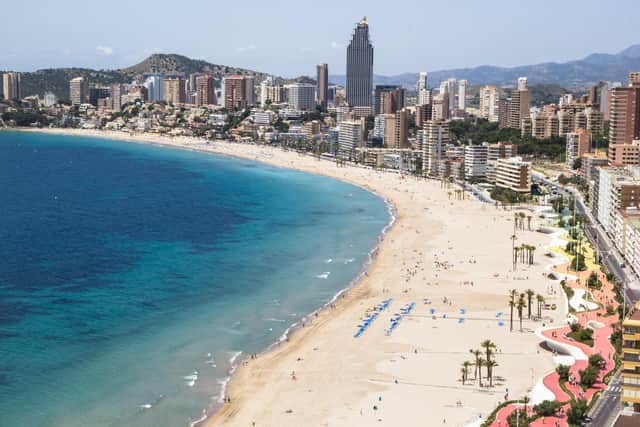

In what surely seemed like a logical decision at the time, Benidorm’s Town Council in 1952 approved new development plans intended to develop the tourism market, which many speculated would develop if Brits could be seduced to switch from their annual holidays at seaside resorts in this country, staying in bed and breakfast accommodation where it rained all too frequently.
As history attests, ‘necessity’ is the mother of invention, and there were many tour operators only too happy to develop overseas holidays to destinations ‘where the weather is much better and the food is so much cheaper’ (a line from the 1978 hit ‘Airport’ by the Motors).
Spain, it should be remembered, was still a dictatorship under General Franco, which didn’t end until his death on 20th November 1975 and which led to a three-year transition to democracy achieved when a new constitution for democracy was approved.
What, beyond the vaguely interesting history, has all of this got to do with Birmingham and my recent trip to Seville?
In the case of Spain, membership of the European Economic Community, the forerunner to the European Union (EU), was the catalyst to investment in infrastructure, ensuring economic development in all regions.
Seville, with a population of just over 700,000, is smaller than Birmingham.
With a working population of 303,000, the average annual salary is €23,154, just over £20,000, which is considerably less than Birmingham, which, according to the city’s council, is £33,952 for full-time employees.
Very significantly, the unemployment rate in the province of Seville is 12.49%, higher than the Spanish national average of 10.6% and certainly greater than Birmingham, where the rate is 7.2% (Office for National Statistics).
Nonetheless, there was a really good vibe and feeling amongst those encountered.
People seemed happier.
This is particularly so at the fresh food and fish market we visited when we visited Cadiz, which I’d highly recommend.
Community and family appear to be of paramount importance.
It is abundantly clear that high-speed rail is essential in linking large cities.
On passing through Seville’s railway station on the day trip to Cadiz on the coast, I noted you could get to Madrid, 331 miles away, in two and a half hours by high-speed train at a cost of just over £6 if booked in advance.
As a cursory read of the internet will show, Seville is dominated by professional and business services, which account for 21.37% of employment, trade and transportation (16.45% of employment), tourism and logistics.
The service sector and its significance as a regional city in Andalusia in Southern Spain were massively stimulated by the hosting of the Universal Exposition of Seville in 1992, which required considerable investment in the construction of trams, metros, buses, roads and cycle lanes.
Being on the Guadalquivir, the second-longest river with its entire length in Spain, which is navigable by major ships, allows it to be a major port despite being landlocked.
Incentives in research and development as well as education have ensured the attraction of inward investment, start-up enterprises, and spin-off endeavours, all of which have underpinned prosperity.
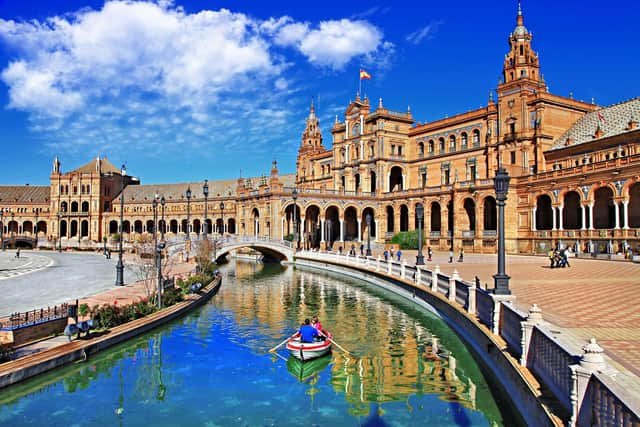
What I saw in my brief visit to Seville recently was a city that was confident, wealthy and buoyant.
Though I can’t say they don’t exist, I saw no boarded-up shops, almost no graffiti, no gangs and no evidence of crime or fear.
Importantly, the vast majority of shops appeared to be sole traders, many of whom proudly proclaimed the fact they’d traded as such for generations.
So, I ask myself, why is it that Birmingham feels so different?
We have the International Convention Centre, which opened in the 1990s and which has hosted many significant events in the last 30 years.
Many of the tatty old buildings as well as the dreadful underpasses have disappeared, which makes Birmingham far more enticing than it was back in the 1970s, when it resembled the set of ‘A Clockwork Orange’, the 1971 dystopian crime film written, produced, and directed by Stanley Kubrick and based on Anthony Burgess's 1962 novel.
However, and very obviously, we don’t get the same weather as Seville, which was around 30 degrees centigrade when I visited in mid-October but which regularly reaches an unbearable 45 degrees C in the summer.
We should not forget that the success of the Commonwealth Games in 2022 was partly down to luck in that, like the 2012 Olympic Games in London, it didn’t rain and was sunny, which made the city look attractive.
Ultimately, and as I’ve regularly written in the last 15 years as a commentator, Birmingham’s transition from a manufacturing city has felt brutal in its rapidity and, it has seemed to so many of its citizens, without sufficient planning of the employment that would replace the relatively well-paid jobs that have disappeared.
Birmingham’s recent well-publicised travails, including the ongoing bin strike, but more especially that the City Council is bankrupt, are a manifestation of the sense of malaise we’re currently experiencing.
Spookily, this malaise has resonance with 1975, when the then Labour government under Harold Wilson was being assailed by challenging financial constraints, international pressure, disputes by unions and domestic terrorism from the Provisional IRA, resulting in draconian legislation and security measures.
On 11th February 1975, Margaret Thatcher became the Conservative Party’s leader and, four years later, promising to retrieve the country’s reputation by restoring economic confidence through monetarism, utterly changed the future.
Worryingly, at the next general election due to be held in 2029, fifty years after Thatcher came to power, there’s every likelihood that this country will vote for an unproven party with a leader promising us an economic turnaround resonant with Thatcher’s claim leading up to the May 1979 general election.
If elected in 2029, could things get any worse under a government led by Nigel Farage, whose influence and responsibility for this country leaving the EU should never be underestimated?
Curiously, a line from another Sex Pistols single from 1977, 'God Save the Queen', seems apposite:
‘There is no future in England's dreaming.’
Though I’m looking forward to my next holiday in the sun, the one thing you can never get is a decent cup of tea!
Dr Steve McCabe
Steve is Professor and Pro Vice Chancellor, DoctorateHub.
Previously, having worked for Birmingham City Council, he spent the last 35 years as an academic at Birmingham City University teaching and researching economics, management and business. Additionally, he has written extensively for edited texts examining economics and politics.
He regularly writes and comments regularly in the national and international media on politics and the economy and has published texts on quality management, benchmarking, ‘Brexit’ and its economic and social impact, the green economy and manufacturing, house prices and India’s progress since independence.