
Birmingham NHS bosses would ‘love’ to see pilot dementia project extended beyond 2028

Memory Matters is being run for over 80s in north Birmingham until 2028.
NHS bosses in Birmingham would ‘love’ to see a pilot dementia project that is already cutting assessment waiting times rolled out across the rest of the city.
Memory Matters is being run in north Birmingham for over 80-year-olds and it is already help cut waiting times for assessment and treatment.
The pilot brings together GPs, dementia specialists and community organisations together with the aim to reduce the amount of time people wait to be seen.
Over the last six months, 109 dementia assessments have been delivered through participating GP practices, reducing average waiting times for assessment to treatment from 31 weeks to 11 weeks.
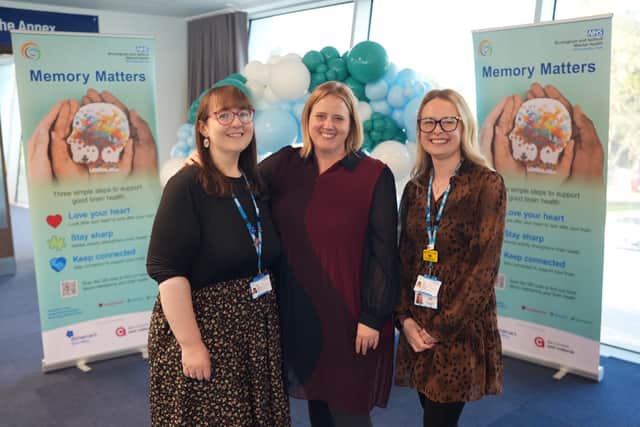

It is being funded by the by NHS Birmingham and Solihull’s Fairer Futures Fund and will run until 2028.
Lou Pickering, Community Service Manager for BSMHFT’s dementia and frailty services and Memory Matters lead, said: “We would love to see this rolled out across Birmingham and Solihull.
“We’ve picked the north locality because it has higher levels of ageing population and, at the time of the project, we had the longest needs. But we see the value of this for everybody across Birmingham but it will need investment to roll out across the rest of the city.
“There’s been 101 people seen through that pathway. We’re saving on average 29 weeks for those 101 people. The benefits we’ve found which we weren’t anticipating is the partnerships developed along the way.
“We can understand and recognise need in that locality and know from our partners how to seek support a lot quicker. Before, we would do our assessment, email the GP and possibly never see those people in their dementia journey again whereas we’re holding the treatment element in primary care as well.”
Professor Farooq Khan, consultant psychiatrist and also clinical lead for dementia in the Midlands for NHS England said: “This is a pilot happening in one neighbourhood team. We would like all the other teams to get involved.
“Obviously this is a small beginning and start but as time goes by and people are able to see the results of that and the difference in ease and access for that mild spectrum of dementia that can be diagnosed within primary care, then I would say it can be adapted in other places in Birmingham and across the Midlands.”
“There is a huge demand for secondary care services. With this mild spectrum taken away, then secondary care will have more time to look at the more complex spectrum of dementia.”
Paul Athey, Chief Finance Officer at NHS Birmingham and Solihull, said: “The Fairer Futures Fund was established to support new approaches that can make a tangible difference to people’s health and help reduce inequalities across Birmingham and Solihull.
“Memory Matters is a strong example of what that investment is intended to achieve – bringing together the NHS, primary care and trusted voluntary and community organisations to design services around the needs of local people.
“These early results are encouraging. By testing a different way of working, we are seeing people get answers, treatment and support much sooner, while also building stronger links with communities so that conversations about memory and brain health can happen earlier.
“The learning from projects like this is important too. The Fairer Futures Fund gives us the opportunity not only to invest in innovative local approaches, but to understand what works and how successful models can help shape services for the future.”