
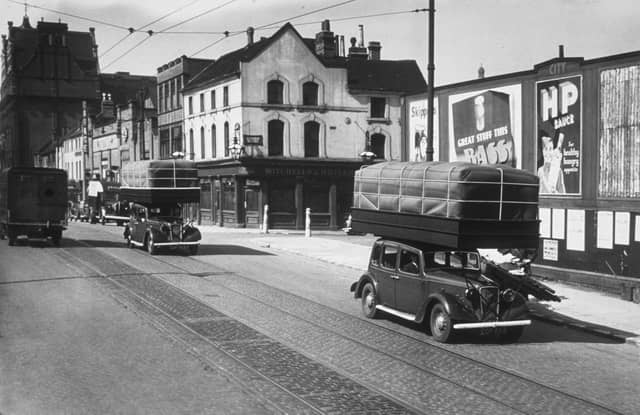


This week, we’re taking a look back at Birmingham during the 1940s.
During the early part of a decade, the city suffered heavy bombing by the Nazi German Luftwaffe during World War 2.
The last large raid on Birmingham was not until July 1942, making it one of the most heavily bombed cities outside of London.
The city was extensively redeveloped in the years following the war.
These photos give an insight into what life was like for Brummies during the decade, including post-war Birmingham.
All photos from Getty Images
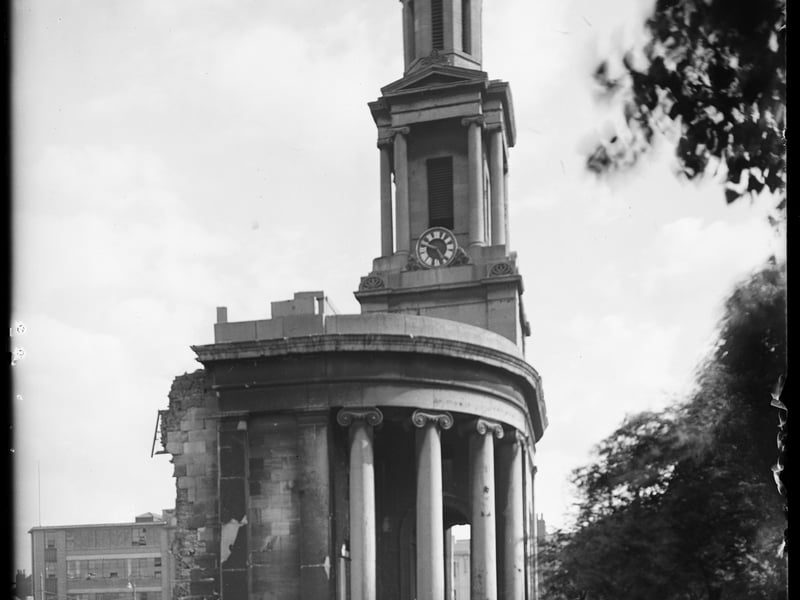
13. St Thomas's Church, Bath Row, Lee Bank, 1941
The tower and portico of St Thomas's Church viewed from the north showing bomb damage. In December 1940 all but the tower and west portico were destroyed during an air raid. The church was never rebuilt but in 1953 the grounds were laid out to commemorate the coronation of Queen Elizabeth II. In 1995, fifty years after the end of the Second World War, the gardens were redesignated as St Thomas' Peace Garden where the remains of the church now form a focal point. | Heritage Images via Getty Images
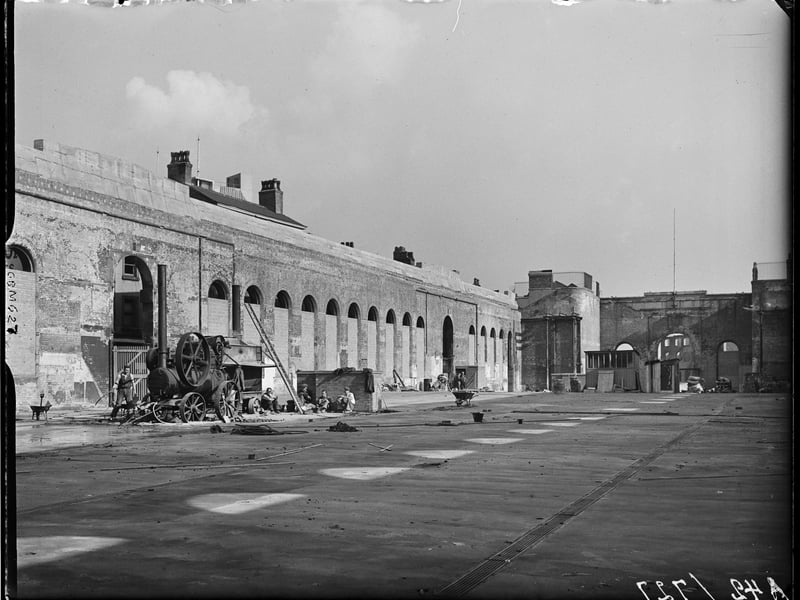
14. Market Hall, Worcester Street, Bull Ring, 1841
Construction workers beside a traction engine inside the bombed out shell of the Market Hall. The former Market Hall dated from the 1830s. It was destroyed during the Birmingham Blitz and remained as an empty shell until it was demolished in 1963 as part of the Bull Ring Centre development. This view shows the windows bricked up and the roof missing as a result of the incendiary devices dropped on the 25th August 1940. | Heritage Images via Getty Images
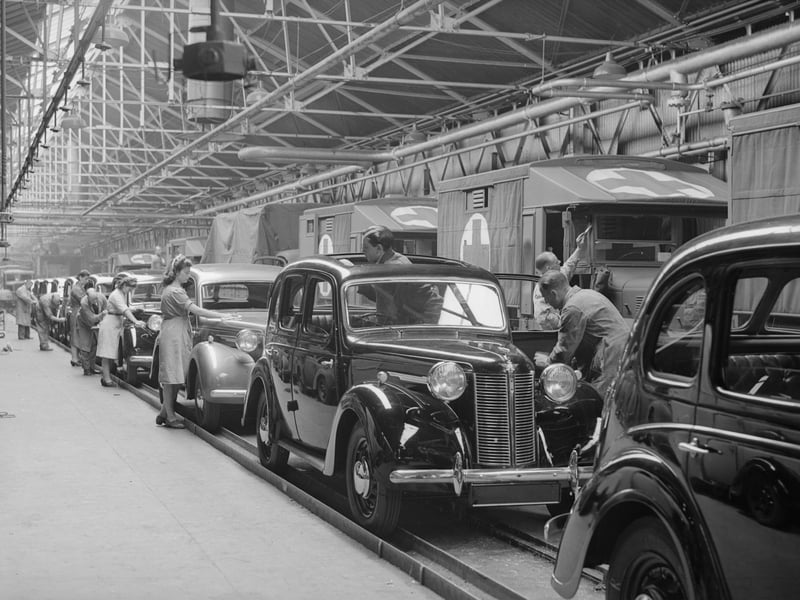
15. 11th August 1945
A row of army ambulances still being manufactured at the Austin factory in Birmingham. But beside them are a line of new post-war 10 horsepower Austin cars for civilian use. (Photo by Keystone/Getty Images) | Getty Images
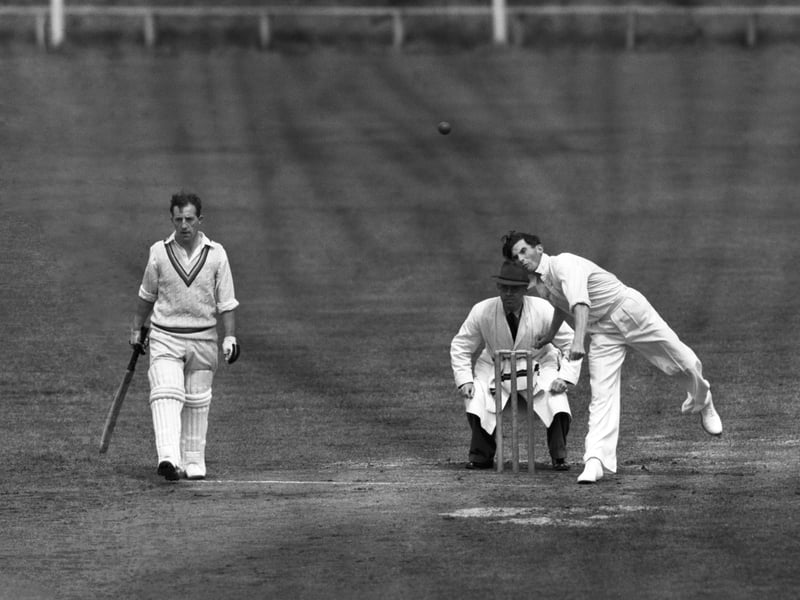
16. Cricketer Vince Broderick, of Northamptonshire C.C.C
Bowling during a test trial at Birmingham, June 1945. (Photo by Central Press/Hulton Archive/Getty Images) | Getty Images