
Brummie legend’s last song: Jeff Lynne’s Electric Light Orchestra farewell echoes from Kitts Green to Hyde Park
Jeff Lynne’s Electric Light Orchestra performs its final concerts in Birmingham and London’s Hyde Park, marking the end of an iconic musical era - Dr Steven McCabe pays tribute.
Anyone who lived through the 1970s will recall the profusion of mainstream musical genres regularly offered on Top of the Pops and Radio One encompassing all forms of rock such as ‘glam’ (glamorous) ‘prog’ (progressive) and punk which rebelliously which set out to smash up everything that had gone before.
However, there was plenty of what was described as ‘easy listening’ intended to appeal to the mainstream.
One group offering such music was The Electric Light Orchestra (ELO) formed in Birmingham in 1970, two years after Aston’s Black Sabbath which performed recently at Villa Park as a magnificent finale to its 57 year career.


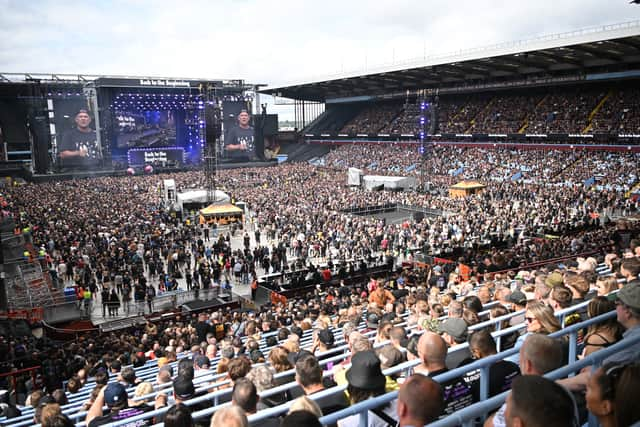
ELO, though now only consisting of lead singer Jeff Lynne (born in Erdington in December 1947), will perform its last ever concert next Sunday in London’s Hyde Park having played two gigs here in Birmingham’s last weekend as a way of saying farewell to the city.
Though Jeff Lynne will be rightly heralded as being the constant member of ELO over the last 55 years, the idea for a group deliberately a mixing classical instruments with rock came from Roy wood who’s now mostly associated for his 1973 Christmas hit ‘I Wish It Could Be Christmas Everyday’, only beaten to number one in the charts that year by Wolverhampton band Slade’s ‘Merry Christmas Everybody’.
Roy Wood, born in November 1947 in Kitts Green, had been the guitarist, singer and songwriter in The Move which formed in 1965 and whose third single, ‘Flowers in the Rain’ was the first single ever played on Radio One when it was launched as a pure pop radio station 30th September 1967.
Curiously, as well as achieving this of pop history, the royalties from this hit single which reached number two in the charts have contributed well over £200,000 to charities as a consequence of The Move’s manager Tony Secunda, creating a postcard to promote it with then Prime Minister Harold Wilson shown in bed with his private secretary Marcia Williams.
Having sued the group, the High Court decreed all royalties from ‘Flowers in the Rain’ should be donated to charities of Wilson's choice.
Initially, The Move consisted of Singer Roy Wood, drummer Bev Bevan, co-vocalist Carl Wayne, bassist Ace Kefford, and guitarist Trevor Burton.
It was the departure of Wayne in January 1970 which created the circumstances by which Jeff Lynne joined The Move having previously turned down such an offer by his friend Wood when Trevor Burton left in February 1969 as he wanted to concentrate on his own group, The Idle Race.
The seeds of the notion the group that became ELO germinated due to Lynne’s enthusiastic support for Wood in his belief that mixing musical styles would create an innovative and more progressive sound.
Beverley, better known as Bev, Bevan, born in South Yardley in November 1944, and three years older than Wood and Lynne, who was also in The Move is credited as the third member of ELO when it formed in the summer of 1970.
Fascinatingly, Bevan gave up a career as a trainee buyer in one of Birmingham’s then department stores called The Beehive Warehouse where he worked with his school friend Robert Davis, now better known as comedian Jasper Carrott.
For reference, The Beehive Warehouse, ‘A Warehouse for the People’, long gone, was located on Albert Street in Dale End and closed due to financial difficulties in 1972 when it fell out of fashion with customers who flocked to sparkly newcomer ‘posh shop’ Rackhams on Corporation Street – currently still operating as House of Fraser – and to Lewis’s further up the street where Bull Street intersects and though having opened in 1885, modernised to remain an attractive retail destination.
ELO’s first single, ‘10538 Overture’, originally intended as a Move B-side, came about when the song, written by Lynne, about an escaped prisoner, was adapted by Wood to include multiple cellos and recorded in July 1970 (though not released until June 1972.
This gave form to the intoxicatingly layered sound Wood believed should characterise the new group.
ELO name was selected in homage to light entertainment and orchestral music characteristic of the BBC Light Programme, the national radio station for Britain between 1945 until 1967, when it was replaced by Radio One.
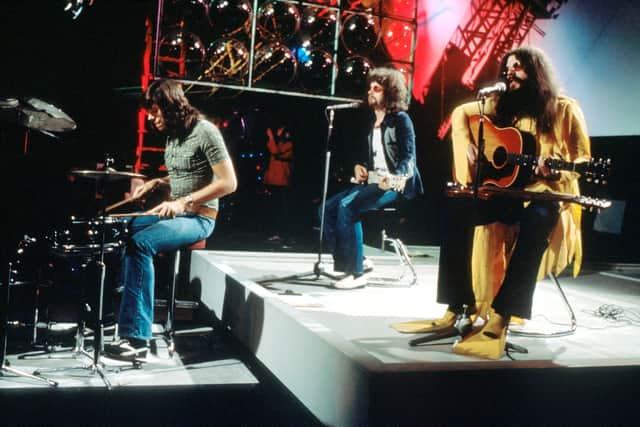
‘10538 Overture’ became the lead track on ELO’s first eponymously named album released on 3rd December the following year.
Intriguingly, The Electric Light Orchestra, recorded over eleven months between July 1970 and June 1971, and released by Harvest Records in the UK, was titled ‘No Answer’ in the United States because an executive from United Artists which who released it there, rang up to talk to a member of ELO about the new group’s first album but, not having failed to do so, wrote down “no answer” which, amusingly, was assumed by others to be what it would be called.
Though consisting of three members, ELO quickly grew in size to incorporate musicians capable to producing the desired sound when playing live for its first concert on April 16 th , 1972, when it performed in a pub in Croydon.
Not all musicians remained in ELO in its early years and, undoubtedly arguably, the most significant departure was of its most seminal founding member Roy Wood during the initial recording of its second album ‘ELO2’ recorded at the Air Studios between May and October of 1972 who left in June to form formed Wizzard taking keyboards/French horn player Bill Hunt and touring cellist Hugh McDowell with him.
Some suggested that Wood’s departure, regarded as a seminal influence, would result in ELO’s failure as a commercial success.
As we know, Lynne developed ELO to become a phenomenally successful ‘supergroup’ whose hit singles and albums have sold millions across the globe and still regularly played on radio stations and feature in commercials; ‘Livin’ Thing’ currently being used in a television advertisement.
ELO 2, released in March 1973, spawning the group’s second UK top 10 and first US chart single, ‘Roll Over Beethoven’, is notable for the fact that Richard Tandy played keyboards.
Despite the many personnel changes ELO experienced, including the falling out between Lynne and Bevan, Tandy continued to collaborate with the former until his death last year.
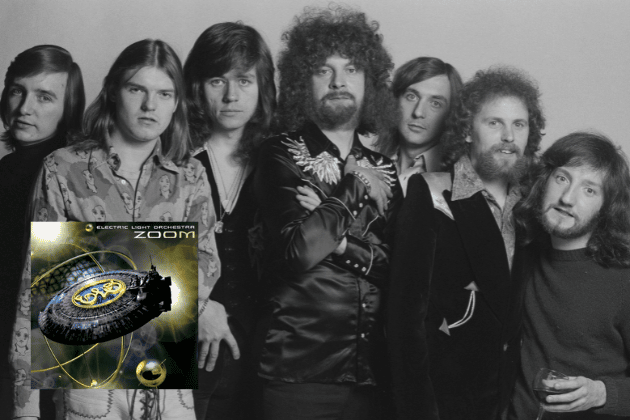
ELO2 was followed by One the Third Day released in late 1973 and included the singles ‘Showdown’ and ‘Ma-Ma-Ma Belle’ though failed to trouble the UK charts and only reached number 52 in the US charts.
Eldorado subtitled A Symphony by the Electric Light Orchestra, ELO’s fourth studio released late 1974 was far more successful.
Responding to criticism by his father, a lover of classical music, that ELO had no tune, Lynne conceived the album’s storyline of an imaginary character journeying into a fantasy world to escape mundanity before writing the score to tracks.
Resulting in singles ‘Can't Get It Out of My Head’ and ‘Boy Blue’, Eldorado was by ranked by Rolling Stone Magazine in July 2010 as number 43 in its list of the 50 Greatest Prog Rock Albums of All Time.
ELO’s fifth album, Face the Music, released in the US in Autumn 1975 produced singles ‘Evil Woman’, ‘Strange Magic’ and ‘Nightrider’ and is noted as being a far more ‘middle of the road’/’Mid Atlantic’ sound.
Face the Music, in selling over a million copies went platinum, the accolade introduced by the Record Industry Association of America (RIAA) in 1976 demonstrated ELO’s phenomenal success as commercial pop group here and in the US.
Importantly, Jeff Lynne at al were received critical acclaim which gave them the confidence to produce their next three albums in the second part of the 1970s which cemented ELO’s ability to command stratospheric success in terms of selling vinyl – the only available form that music was sold half a century ago – and tickets for concerts.
The first of these, the critically acclaimed A New World Record, released in late 1976 contained four hit singles ‘Livin' Thing’, ‘Do Ya’, actually a cover of a Move song released in the US, ‘Rockaria!’ and ‘Telephone Line’ and is the album that most people probably own and became a multi-platinum winner.
As some music critics suggested, Lynne was the best songwriter to emerge from Britain since Lennon and McCartney of the Beatles.
The following year another multi-platinum-selling album, the double LP Out of the Blue was released featuring immensely successful hit singles ‘Turn to Stone’, ‘Sweet Talkin' Woman’, ‘Wild West Hero’, and ‘Mr. Blue Sky’ which is many people’s favourite ELO tune and used to be played at all Birmingham City FC games (the group being fans of that club in the same way that Black Sabbath support Aston Villa).
Out of the Blue led to a nine-month, 92-date world tour, featuring an extravagantly large set including an eye-wateringly expensive spaceship stage with fog machines and laser displays filling for a pop group at the pinnacle of its success.
Notably, ELO’s final album of the 70s marked a departure from the classical vent that had characterised its career to then in favour of a more disco feel that so de rigueur of that year.
Discovery released in 1979 reached number one in the UK Album Chart and achieved sales sufficient to making it multi-platinum, and included ‘Don't Bring Me Down’, ‘Shine a Little Love’, the groups’ only number one hit in the US singles chart, ‘Last Train to London’, ‘Confusion’, and ‘The Diary of Horace Wimp’.
Where could ELO go from here?
The answer is that the 1980’s, though continuing success in 1980 with ELO’s only UK number one single, ‘Xanadu’ released in June from the mind-numbingly dreadful film of the same name, with Olivia Newton-John on vocals, and which reached the top spot in many European countries, the direction Lynne wished to take the group in was starting to create tension among other members.
The album Xanadu, containing singles ‘I'm Alive’, which went gold (sold over 500,000), ‘All Over the World’ and ‘Don't Walk Away’ performed by ELO as well as hits by Newton-John (‘Magic’) and ‘Suddenly’ with Cliff Richard, by going double-platinum, most definitely signalled an end to the progressively classical rock sound pioneered by Wood and Lynne a decade before.
Lynne and ELO were not the first to discover that in a quest to maintain popularity you search for novelty and a sound that will attract fans whose tastes may all-too-frequently be fickle and doesn’t always work.
Even David Bowie, who famously developed a chameleon like ability to regularly change, found that those buying your music or paying to see you perform simply want you to continue playing the hits that made you popular in your early years.
You become a creative prisoner of your own success.
And though I could analyse the next 45 years of ELO, including disputes and various versions of the group, as well as Lynne’s contribution to music more generally, including his collaboration with the wonderful Travelling Wilburys made up of him, George Harrison, Roy Orbison, Bob Dylan and Tom Petty, or that founding member and drummer Bev Bevan moved to heavy metal outfit Black Sabbath, the focus is on celebration of a sound and hits that made the group so fabulously successful in the 1970s.
This, after all, is what those attending the final concerts in Birmingham last weekend and Hyde Park have paid to hear.
Next time you walk down Broad Street look for Jeff Lynne’s star on Birmingham’s ‘Walk of Stars’ installed by Westside Business Improvement District in 2014 take a moment to reflect with pride the brilliant pop records he and other ELO members who grew up in this city were responsible for.
Dr Steven McCabe
Steve is Professor and Pro Vice Chancellor, DoctorateHub.
Previously, having worked for Birmingham City Council, he spent the last 35 years as an academic at Birmingham City University teaching and researching economics, management and business. Additionally, he has written extensively for edited texts examining economics and politics.
He regularly writes and comments regularly in the national and international media on politics and the economy and has published texts on quality management, benchmarking, ‘Brexit’ and its economic and social impact, the green economy and manufacturing, house prices and India’s progress since independence.