
Rubik's Cube championship lands in Birmingham - we went along to see how it all unfolded
Birmingham welcomes competitors from around the globe for the Rubik's UK championship, former champion George Scholey shares his top tips for cracking the Rubik’s Cube
When the Rubik’s Cube was first released internationally back in 1980, it quickly became a cultural phenomenon.
Fans became obsessed with not only solving the intricate cube, but also doing so, in the quickest possible time.
This obsession has stood the test of time, and decades later, this is definitely evident at the Rubik’s UK Championships that’s currently being hosted at the University of Birmingham.
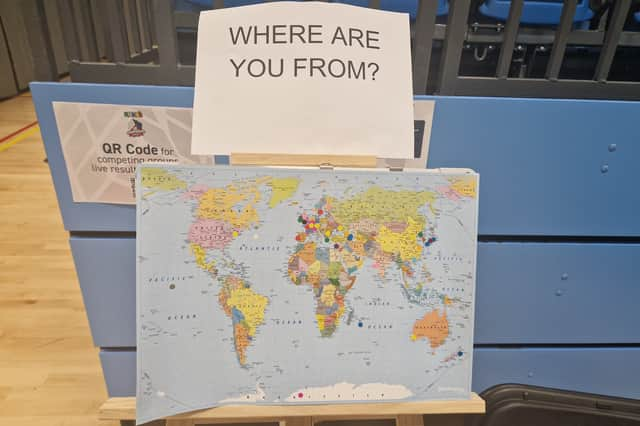
At this year’s competition up to 1,000 competitors and spectators from over 30 regions around the globe have flocked to our city to take part in this quirky competition.

The competition began yesterday ( Friday 22 August) and it is still underway, and tomorrow (Sunday 24 August), the next UK Rubik’s Cube champion will be crowned, right here in Birmingham.
The competition is fierce as many hope to beat the current world record which at the time of writing this piece is 3.05 seconds.
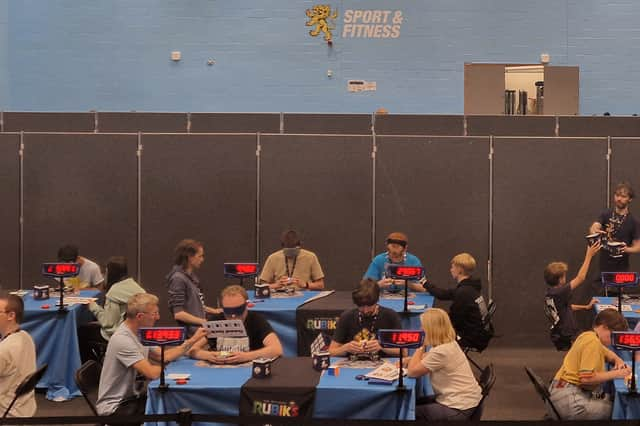
At the tournament, people of all ages competed, and many spectators were left in awe at the tough speedcubing categories that took place, and how quickly they were solved.
There was even one challenge in which players wore big gloves while solving the cube.
We spoke to professional Rubik’s solver, George Scholey - holder of 11 national records, 3 Guinness World Records, and a former UK champion.
Scholey took up the hobby about ten years ago when he attempted to combine solving the Rubik's cube with his other love of doing magic acts.
He soon turned his attention entirely to solving the cube, and as he told us, "I just got obsessed from there!"
Scholey shared that, of all his Guinness World records, he is most pleased of having solved the most Rubik's Cubes in a 24-hour period and solving the most during a marathon.
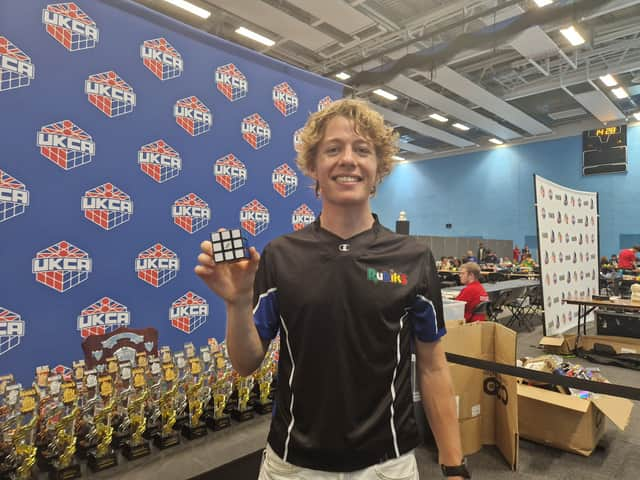
He shared his top tips for cracking the Rubik’s Cube.
“I’d definitely say take it step by step, so you’re actually going to solve it in layers, not sides, all a misconception. So the first layer, the second layer, third layer.
“Just appreciate you’re going to have to learn these things called algorithms which are sets of moves that will temporarily mix it up and then put it back up. But you only really need to know 4 or 5 to solve it, so it’s not as intimidating a process as people think.”
Across the competition, there are 17 speedcubing categories at the Rubik’s UK Championships, including a 7x7x7, one-handed and a blindfolded event.