
What’s wrong with GTA6? We don’t ban Shakespeare!
Roshan Doug is no real fan of Grand Theft Auto 6 - but he defends its right to exist
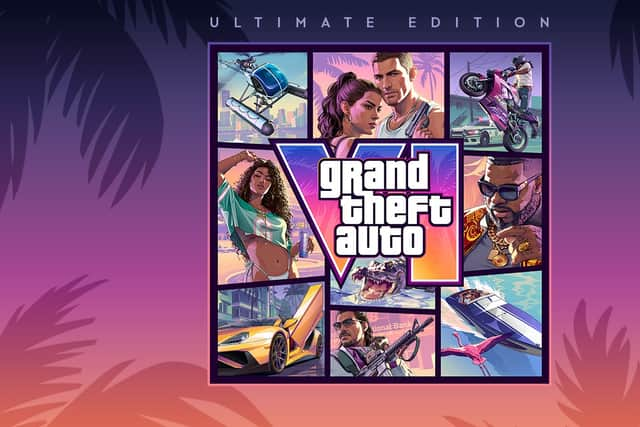
Last week, Grand Theft Auto 6 (GTA6) caused quite a ripple in the gaming world. Judging by the reactions of self-appointed custodians of morality, you might have thought its makers had created a training programme for prospective serial killers.
Games now allow players to shoot, fight, steal, and destroy property. Cultural puritans have dismissed this as degeneracy. But I can’t see the fuss. They’re games after all – not government policy or a new component for the National Curriculum.
And anyway, we’ve entertained ourselves with violence for centuries. Romans had gladiators fighting to death.
Shakespeare filled his plays with murder, betrayal and political assassination. Think of the blinding of Gloucester in King Lear, multiple stabbing of Caesar, the regicide in Macbeth or the extraordinary bloodbath of Titus Andronicus. Sophocles gave us the self-blinding of Oedipus. And the Greek gods were hardly models of exemplary behaviour. Yet nobody seriously suggested that audiences would leave the theatre and embark on a killing their father, marrying their mother, and plucking out their eyes.
Then came cinema. We have watched cowboys shooting one another, gangsters machine-gunning rivals, superheroes demolishing cities and James Bond – the subject of my column last week – dispatching villains enthusiastically. And think Reservoir Dogs or Trainspotting.

And even some Bollywood films today depict sheer unadulterated bloodbath. Very graphic.
But we don’t assume cinema-goers will rush out to imitate what they have seen. Why, then, should computer games be treated differently?
Perhaps part of the objection has something to do with class and cultural snobbery. Britain is deeply class-ridden. Violence in Shakespeare is regarded as high culture; violence in a video game is apparently a sign of social decay, a threat to public standards.
We can admire a gangster in a critically acclaimed film, discuss the darker side of human nature in a university seminar and applaud a bloody theatrical tragedy. That’s high culture. But when millions of ordinary people enjoy a computer game, suddenly the guardians of civilisation are alarmed. Football fans are regarded as uncouth and common.
It’s clear that there is an unspoken hierarchy in respectable entertainment: a novel about a criminal – Dostoevsky’s Crime and Punishment for instance – can be studied and a violent film like Pulp Fiction can win awards, while a mass-market game is dismissed as vulgar. We watch boxing, martial arts and cage fighting, where physical confrontation is part of the spectacle. Real blood and real violence are witnessed. Yet we become anxious when similar fantasies are recreated on a computer screen.

Is this really about morality, or do we simply disapprove of the form in which the entertainment is presented?
I think we should be wary of confusing taste with virtue. GTA6 offers players an imaginary world in which they can do things they would never contemplate in real life. The streets are virtual, the characters fictional and the consequences imaginary. It is called escapism. We distinguish between an actor playing a murderer and an actual murderer. Surely, we can make the same distinction when somebody presses a button on a games console.
Playing a villain does not make you one, any more than playing a soldier makes an actor a warmonger.
Nor is there convincing evidence of a simple, direct relationship between playing violent video games and becoming violent in real life. Millions enjoy such games without developing criminal tendencies.
Of course, not every game is suitable for every age group, and manufacturers have responsibilities. But we should be careful about treating popular entertainment as a threat to our moral wellbeing. Follow that argument to its logical conclusion and – as I suggested – we might have to reconsider much of our literature, theatre and classical mythology.
I am not particularly interested in stealing virtual cars or causing mayhem in the fictious Los Santos. Such games are not for me. I wasn’t even fan of 1970s Space Invaders. I have quite enough trouble negotiating rush-hour traffic in real life.
But I understand why millions enjoy the experience. The appeal may be the freedom to explore an elaborate imaginary world, take risks without real consequences and enjoy a story in which the player, rather than the audience, has a part.
We should reserve our moral outrage for real harm, not confuse a fictional crime spree with a criminal act. A society confident in its values should be able to tell the difference. Perhaps the real question is not whether GTA6 is too violent for our taste, but why we are so ready to mistake our distaste for a danger to civilisation.
And before you pick up your pen to complain, let me add that as a society we are no more violent today than we were a few decades ago. In fact, I might go as far to sat that we are a safer place than thirty/forty years ago – it’s just that the 24 hours of rolling news, the burgeoning mass media, the constant circulation of video clips of people behaving badly give the impression that the modern world is dangerous. It really isn’t any more dangerous than when you were young. Honest.