
'We cannot ignore or mock those who take to the streets with flags' - Roshan Doug's warning to the UK
‘In supposedly liberal Britain, many citizens now feel they must whisper their opinions’ - Opinion from Roshan Doug
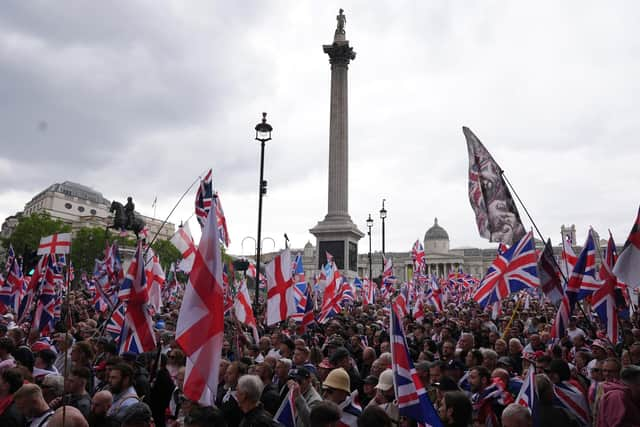
Last weekend’s demonstrations in central London – involving supporters of Reform UK, activists linked to Restore Britain, and supporters of Tommy Robinson – brought tens of thousands of people onto the streets, with estimates ranging between 50,000 and 60,000.
Whatever people think of the protests, those are not fringe numbers. They represent something real happening in Britain.
Yet the reflex reaction from large sections of the political and media class is always the same: dismiss the crowds as fascists, racists, cranks or conspiracy theorists.
That response may earn approving nods in television studios and fashionable north London dinner parties, but it avoids confronting a rather uncomfortable truth – millions of ordinary Britons are deeply uneasy about where the country is heading.
I say this not as some party activist waving placards on Whitehall, but as someone who has spent a lifetime working inside Britain’s educational, literary and civic institutions – as a journalist, former magistrate and educator involved in shaping policy on teaching and learning. Over the years I have worked with students and communities – young and old, black, white and Asian – from sleepy shire towns to the industrial heartlands of the Black Country.
Long before immigration became headline news, people were already quietly expressing concerns about integration, social cohesion and cultural change. And these were not skinheads in pub car parks ranting about foreigners. They were decent, ordinary people trying to make sense of rapid change.
Many years ago, while researching a week-long series of articles for this newspaper on ghettos and social fragmentation in the West Midlands, I discovered something fascinating. People from all backgrounds – black, white and Asian alike – admitted privately that they believed immigration and integration posed serious challenges. Yet many were terrified of saying so publicly for fear of being branded racist or culturally backward.
That silence has only grown worse. It is actually rather extraordinary when you think about it. In supposedly liberal Britain, many citizens now feel they must whisper their opinions in kitchens and taxis because expressing them openly risks social condemnation, professional trouble or public humiliation.
Across Britain there are genuine concerns about illegal immigration, asylum hotels, pressure on housing and public services, terrorism, crime, and the wider question of what British identity even means anymore. Whether one agrees with every slogan shouted at protests is almost beside the point. Democracies ignore public sentiment at their peril.

And here lies the problem. When mainstream parties refuse to discuss difficult issues honestly, voters do not magically stop worrying about them. They simply drift toward people willing to talk about them – sometimes sensibly, sometimes recklessly.
The narrowing of acceptable debate has become deeply unhealthy. Journalists, commentators and politicians who question immigration policy are routinely branded ‘far-right’ almost by reflex. In truth, parts of the activist Left now appear far less tolerant than many of the people they denounce. Much of what is casually labelled ‘far-right’ today amounts to little more than concern about borders, community identity, crime or social cohesion. Yet disagreement is increasingly treated not as something to debate, but something to silence.
Britain desperately needs a sense of balance again. It is perfectly possible to oppose racism and genuine extremism while also recognising that ordinary people have legitimate concerns about immigration levels, integration and national identity. Refusing to acknowledge this distinction is precisely why populist movements continue growing across Europe and now increasingly across Britain too.
As someone of Indian heritage who has spent much of his life writing about multicultural Britain, literature and identity, I find it intellectually lazy to claim every concern about immigration is rooted in racism. Many immigrants themselves – including long-settled minority communities – express worries about social fragmentation and the pace of demographic change.
This weekend’s protests may alarm some people, and yes, some rhetoric undoubtedly goes too far. But endlessly sneering at voters, policing language and shutting down debate is not going to make these concerns disappear.
Quite the opposite.
If Britain’s mainstream parties continue pretending there is no serious public anxiety about immigration, integration and cultural change, movements such as Reform and Restore Britain will only continue to grow stronger. The real danger to democracy lies not in acknowledging uncomfortable concerns, but in refusing to listen to them at all.