
Is it time to end the BBC licence?
The TV licence debate: Could £11 a month be the answer for the BBC?, writes Dr Steve McCabe
In the digital age we live in, some argue that the notion of having to pay a licence to watch programmes on television seems strangely analogous.
However, 103 years after licences were introduced for ‘wirelesses’ – an outdated expression used for radios which operated on electromagnetic waves – and which cost ten shillings (50p), the equivalent of approximately £39.25 now, if you wish to watch BBC television, you are required to pay £180 annually or £15 each month by direct debit.
To be fair, making a comparison with 1923 is misleading, as John Logie Baird did not perfect the ability to transmit a moving silhouette image until the following year and took an additional year to achieve what was an extremely rudimentary version of the working television system.
Even a year after the BBC launched a consistent high-definition public television broadcasting service in November 1936 from Alexandra Palace in London, the number of television ‘sets’ sold was believed to be around 9,000 and had only grown to 20,000 by the time World War Two commenced in 1939.
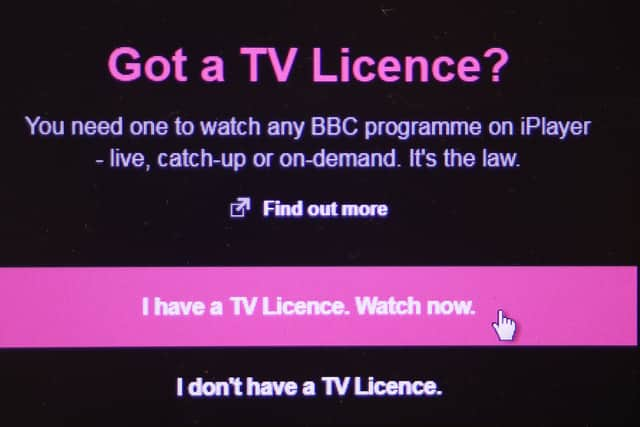

In 1946, and recognising that television would increasingly become popular, the General Post Office, as it was then known, introduced a licence for both radio and television which cost £2 a year which is the equivalent to £108.73 now.
In 1968, an additional licence costing £10 was introduced, twice the cost of the existing licence, for those who had purchased a television set capable of allowing output to be viewed in colour.
Given such a television cost over £300, the equivalent of £5,500 now, only those with deep pockets could afford them, though falling prices made them far more accessible, and those using black and white sets started to decline.
Currently, there are only 3,600 households who continue to purchase black and white television licences at a cost of £60.50.
In the 80 years since the licence, including television, was introduced, the output of the BBC has developed immensely from being one channel which, in black and white, consisted of an hour of output in the afternoon and two hours in the evening to become the multi-channel output with high influence through radio, internet and global reach, most especially via its Radio ‘World Service’ and news.
Crucially, an organisation which employs approximately 22,000 people requires a budget to match. In the last financial year, 1925-26, the BBC received a total income of £5.96 billion, which, since 1991, received statutory authority for licensing and administration from the Home Office, later subcontracting collection to external firms like the Post Office/Consignia and later Capita.
The majority of the BBC’s income, almost two thirds, comes from the licence fee; £3.88 billion from the licence fee
The remainder was made up of commercial and other income, £2.08 billion, consisting of selling programmes, particularly to overseas customers, renting studio space and grants, including receiving £137 million from the Foreign, Commonwealth and Development Office (FCDO) to fund its World Service.
However, as has been made public in June, income of almost £6 billion is insufficient to fund the BBC, and the broadcaster is seeking to reduce its headcount by 2,000, especially in its News division, intended to achieve an annual saving of £500m.
However, there is a generational shift occurring in the consumption of television in that the younger you are, the less propensity you have to watch television in ‘real time’, as it’s shown live.
Rather, many prefer to receive their consumption of output from streaming services online, many of which require a subscription.
More critically, as far as the BBC is concerned, increasingly, many opt out of paying the licence fee, stating they do not watch any live broadcasts or BBC iPlayer.
Currently, 3.7 million premises have informed TV Licensing of the fact they legally do not need a licence, at £180, representing a loss of £666 million) each year.
Given that the number who opted out of paying the television licence in the last year was 540,000 in the latest financial year, this loss will rise in the future.

For completeness, it’s estimated that unlicensed evasion is around 12.5% of households, which, given there are some 29 million, means another £650 million of uncollected revenue.
The current government, which is a wholehearted supporter of the BBC, unlike other political parties, appreciates the need for an alternative method and more consistent funding for what many believe to be a national treasure.
One of the ideas being mooted by Labour is that every household which has a live internet connection would have an additional charge of £11 a month – £132 annually – which would replace the licence fee.
According to IBISWorld, in the coming year, 98.2% of UK households are expected to have internet access, representing a total of 27.7 million, upon which the £11 monthly charge could be imposed.
Though this total will be reduced due to those legally not required to pay for the television licence, such as where there is someone over 75 and in receipt of Pension Credit and those who are registered blind, currently some 810,000, this would still leave around 26.9 million households and would raise over £3.55 billion annually.
The real benefit for the BBC of raising money in this way is that it would produce almost guaranteed income, as having an internet connection is viewed by the vast majority as essential as having any other utility; for teenagers, probably more so!
Clearly, for those who currently pay £180 annually for a licence to watch BBC television, an annual reduction of £48 would be welcome.
However, one can hear the howls of derision from those who choose not to watch BBC television and therefore pay nothing; having an additional annual cost of £132 would not be well received.
Ultimately, whether the change is made is a political decision, and, as the saying goes, you can please some of the people, some of the time.
It seems that in this case, doing something that will give a price reduction to almost every one of the 21 million-plus households who currently watch BBC television and pay the licence fee outweighs any potential protests and claims of being unfair by the 3.7 million households who don’t.
Those politicians who contend – usually without a shred of evidence – the BBC is too ‘woke’ and, in their opinion, propagate left-of-centre views, will undoubtedly organise a vociferous campaign of opposition to any change to the funding of the BBC, particularly one which gives it a guaranteed course of revenue.
Nonetheless, Andy Burnham, who has attained power by appreciating the concerns of ordinary people and appears willing to make their lives better, would be onto a winner with what some might call an ‘internet tax’.
The reality is that without such a change, the future of the BBC will be one in which it must anticipate diminishing revenue requiring further cuts to staff and, of course, output.
Indeed, for the majority of UK citizens, the BBC provides a valuable service.
According to broadcast regulator Ofcom, 60% of the public are satisfied with the service the BBC provides.
This rises to 73-74% when the public are asked their opinion about the quality of the BBC’s digital services.
The BBC has a long tradition of public service and, during the second war, offered an essential lifeline to keeping UK citizens informed and, more crucially, entertained during the dark days of
conflict.
However, as it has discovered, the terrain in which it now operates is radically different to that which existed only a generation ago when, certainly until the early 1980s, its only opposition was ITV, which, currently, is struggling with reduced revenue from advertising.
A vast array of competitors that have emerged in recent years have created an intensely dynamic environment.
Forcing the BBC to compete on the basis of charging potential users to voluntarily pay would risk putting it to the commercial sword.
A vastly reduced BBC would represent a national tragedy.
Accordingly, Labour should use the majority achieved in the 2024 general election to introduce the legislation that will be necessary to introduce the £11 monthly fee that’s been proposed as soon as possible.
Steve is Professor and Pro Vice Chancellor, DoctorateHub.
Previously, having worked for Birmingham City Council, he spent the last 35 years as an academic at Birmingham City University teaching and researching economics, management and business. Additionally, he has written extensively for edited texts examining economics and politics.
He regularly writes and comments regularly in the national and international media on politics and the economy and has published texts on quality management, benchmarking, ‘Brexit’ and its economic and social impact, the green economy and manufacturing, house prices and India’s progress since independence.
To read Dr McCabe’s work visit Amazon to find English Regions After Brexit: Examining Potential Change Through Devolved Power.