
Divorce - and why men are the forgotten victims whose lives can be devastated
Men are often victims - they lose routine, purpose, identity, home, daily contact with their children
There’s one subject society still struggles to discuss honestly – what happens to men after divorce.
Behind the legal paperwork, the financial settlements and the polite language about ‘moving on’, there are thousands of men sitting alone in half-empty flats wondering how life changed so quickly.
Men separated from children and financially stretched to breaking point. Men emotionally isolated. Men trying to appear fine in public while privately unravelling.
And we still don’t talk about it enough.
For generations, men built their identity around duty – providing, protecting, holding things together.
Keeping the roof over everyone’s head. Being dependable. Carrying pressure quietly. Whether modern society values that role or not, millions of men were raised to believe their worth lay in reliability and sacrifice.
My own father was one of them. He never sat around discussing feelings. Men of his generation rarely did. They weren’t encouraged to narrate their emotions or analyse every feeling out loud. They got on with life. They worked, paid the bills, worried privately and carried responsibility without complaint. That silence wasn’t always emotional distance. Often it was simply endurance. And when a marriage breaks down, many men lose far more than a relationship. They lose routine. Purpose. Identity. Home. Daily contact with their children. Sometimes all at once.
A father can go from reading bedtime stories every night to seeing his children only occasionally within weeks. The emotional shock of that shift can be enormous.
Then comes the financial blow.
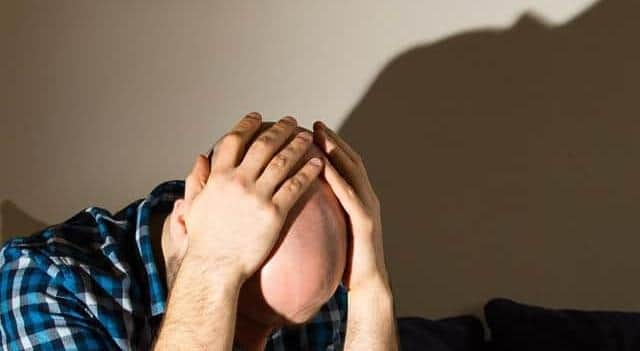

Many men will tell you divorce doesn’t feel like losing half – it feels like losing nearly everything. Between legal fees, maintenance, housing costs and the practical cost of starting over, some feel 70 or even 80 per cent of their income disappears, while they are also expected to leave the matrimonial home they may have spent decades paying for.
That can be devastating. And it doesn’t only happen to younger men. A close friend of mine, Colin, is 76 and going through a separation which he is certain will end in divorce. His children are all grown up now – middle-aged adults with families of their own. By any conventional measure, his responsibilities as a father are complete. But emotionally that brings little comfort. He told me recently – though not in exact words – that he feels he is living in limbo, not quite here, not quite there. No longer fully part of the life he spent decades building, but not yet anywhere new either. His future feels uncertain in a way he never expected it would at this stage of life.
What struck me most was when he described feeling redundant in terms of his role. Like an appendix – still there, but no longer considered essential.
It was painful to hear because I suspect many men understand exactly what he means. One day you are needed for everything – husband, father, provider, organiser, problem-solver. Then suddenly you feel peripheral to your own life.
Part of the problem is that many men suffer quietly. Men are often less likely to have emotional support networks or to discuss personal distress openly with friends. They keep busy. Work longer. Distract themselves. Or retreat into silence.
Society often tells men to ‘open up’. But many men instinctively know vulnerability is not always met with sympathy. There’s another uncomfortable truth here too: men remain one of the few groups it is still socially acceptable to mock openly. Male loneliness, male weakness, male bodies, male failure – all remain easy material for humour. Female comedians joke about useless husbands. Office banter casually ridicules men. Mockery of men is often dismissed as harmless.
But humour repeated often enough shapes culture. And if you’re already struggling, hearing men constantly portrayed as ridiculous, incompetent or emotionally hopeless takes its toll. It teaches men that their pain is amusing, and their vulnerability something to be laughed at rather than understood.
Meanwhile society still expects men to protect, provide and remain emotionally steady during crisis, while often treating masculinity itself with suspicion.
We hear a great deal about male privilege. Far less about male burden, male responsibility and male disposability.¶Across history men fought wars, worked dangerous jobs, defended families and accepted sacrifice as duty. Much of it passed without praise then, and much of it goes unrecognised now.
None of this is to say women do not suffer. Of course they do. But acknowledging male suffering should not be controversial.
A healthy society should be able to speak honestly about men without embarrassment or apology. Boys should be raised to become strong, decent, capable men – men who carry responsibility well and contribute positively to the lives of others.
But strength does not mean invulnerability. Sometimes the quiet man at the end of the bar, the father withdrawing after divorce, or the older man staring at a future he no longer recognises is carrying far more pain than anyone around him realises.
And too often, by the time he finally speaks about it, society has already stopped listening.
* Roshan Doug is an educationalist and a former Birmingham poet laureate