
Being British - and why Enoch Powell should get a plaque
Roshan Doug on changing times - and why Enoch Powell should get a a plaque
The playwright James Graham, who turned Gareth Southgate’s Dear England into a hugely successful stage play, has been asked to head a project for the Commission on Community Cohesion looking at what it means to be British.
Now THERE’S a question. My first reaction was that, for most of our history, nobody in Britain would ever have asked it.
It would have sounded as odd as asking, “What does it mean to be part of your own family?” You simply knew.
Britishness wasn’t a mission statement or a government document. It wasn’t something that had to be explained in a television debate. It was simply there, quietly running through everyday life.
It was joining the back of the queue without even thinking about it. It was apologising when someone else bumped into you. It was believing that almost any national crisis could be improved by putting the kettle on. It was talking about the weather as though we had personally ordered it. It was cheering for the underdog and feeling slightly embarrassed if anyone praised us too much. We had a wonderful habit of making ourselves the butt of our own jokes before anyone else had the chance.
None of this was written down. Nobody taught it at school. You simply absorbed it.
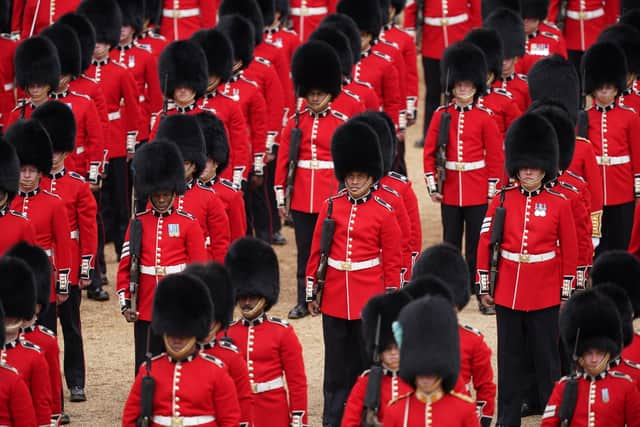

In fact, Britishness was rather like Britain’s unwritten constitution. Most countries have a single constitutional document setting out who they are and how they are governed. Britain never really bothered. Our constitution evolved through custom, tradition, precedent and common understanding. It worked because everyone broadly understood the rules.
Britishness was much the same. It wasn’t a list of approved values. It was an unwritten understanding that people instinctively recognised, not just here but abroad too.
For centuries Britain stood at the centre of world affairs. At its height, the British Empire governed around one-third of the world’s population. Whether people admired Britain or disliked it, they knew exactly what Britain was. There’s a lovely little symbol of that confidence. British postage stamps never carried the country’s name. Every other nation printed its name on its stamps. Confident Britain simply put the monarch’s head on them because everyone already knew where they came from. It was a country that needed no introduction.
Which is why today’s debate about Britishness is so fascinating. The very fact we’re asking the question suggests something has changed, and changed it certainly has.
Walk down almost any British high street today. You can buy a chicken tikka masala, hear Bhangra music drifting from a wedding venue, walk past half a dozen different languages being spoken and then spend the evening arguing on an American social media platform about something happening on the other side of the world.
None of that is necessarily a bad thing. Britain has benefited enormously from people bringing new ideas, businesses, cuisines and cultures. Our curry houses are practically a national institution these days. But it does mean Britain feels very different from the country many older people remember.
Add to that a society which is far more religiously diverse, far more secular in other respects, and far more influenced by global culture than ever before, and it’s hardly surprising people have begun asking what still binds us together.
Political correctness has played its part too. Whether you approve of it or not, many people now hesitate before talking about British history or national identity for fear of saying the wrong thing. Others believe that’s a necessary price to pay for creating a more inclusive society.
Whatever your view, Britishness has become something we debate rather than something we simply live. Perhaps Britishness also means being mature enough to live with our history rather than constantly trying to sanitise it. Every nation has figures from the past whose achievements sit alongside opinions or actions that later generations find uncomfortable.
Britain is no different. Robert Clive, better known as Clive of India, helped shape the course of British history, even though many people today take a critical view of parts of his legacy. His statue still stands proudly in Shrewsbury because history cannot simply be rewritten.

I would make a similar argument for Enoch Powell. Whatever one thinks of his views, few would deny that he profoundly influenced the debate about immigration, identity and nationhood from the late 1960s into the early 1990s. I believe he deserves a plaque or some other public marker in the Midlands – not to endorse everything he believed, but simply to acknowledge that he helped shape modern British politics.
A confident nation should be able to remember influential figures without feeling obliged either to canonise them or to erase them.
The decline of Britain’s old industrial communities has also mattered. Mining villages, factory towns and shipbuilding communities all had their own local identities, but they also possessed an unmistakable sense of being British. As those worlds disappeared, some of the shared experiences that held the country together disappeared with them.
There is an interesting parallel with Hindustan. For thousands of years, what we now call Hinduism scarcely needed defining either. People simply lived what they understood as Sanātana Dharma – the eternal way. Only after invasions, foreign rule and competing belief systems arrived did people increasingly find themselves explaining something that earlier generations had simply taken for granted.
I sometimes wonder whether Britain has reached a similar point.
Perhaps civilisations only start trying to define themselves when the old shared understanding begins to weaken.
None of this means Britain has no identity. Far from it. The monarchy, Parliament, the rule of law, our sense of fair play, our humour and our quiet instinct for public service still matter to millions of people. But perhaps we’ve forgotten that Britishness was never meant to be an academic theory. It was a way of life. Like Britain’s unwritten constitution, it worked best when nobody felt the need to write it down.
Perhaps the real challenge isn’t finding a clever new definition of Britishness at all.
Perhaps it’s rediscovering enough common culture that we no longer need one.
* Roshan Doug is an educationalist and a former Birmingham poet laureate