
Solihull street lights to be dimmed in council's cost-cutting move – despite fears for women’s safety

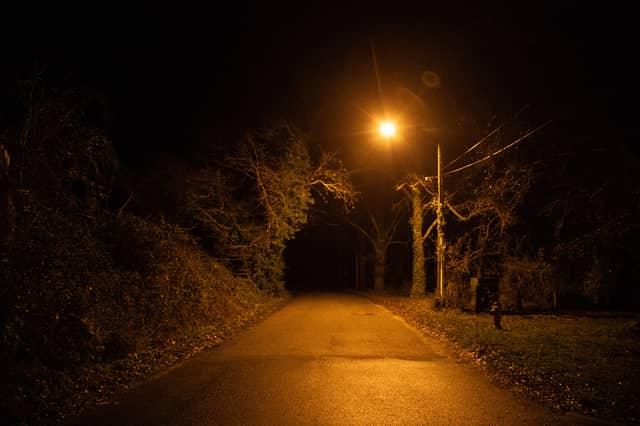

A senior councillor has rubber stamped plans to dim Solihull Council lights as the cash strapped authority continues to look for savings.
More than £500,000 is set to be saved this year through the change to lights across the borough.
Just over half of English councils responsible for street lights have chosen to dim or switch them off overnight over the last decade with Solihull Council among the last in the West Midlands to consider the move.
The authority is responsible for around 23,501 street lighting units, 2,595 illuminated road signs, and 1,727 bollards.
But a debate has rumbled on throughout the year as councillors shared concerns over the effect on partially-sighted people and women’s safety.
Council officers gave a demonstration to concerned councillors on what dimming would look like in practice with them later favouring a proposal to dim the lights by 25 per cent – copying Birmingham City Council’s model.
Councillors at a scrutiny board also went on to strongly oppose a complete “switch-off” of lights across the borough in the early hours of the morning.
A report to the latest cabinet portfolio holder’s environment and infrastructure decision session, recommending the 25 per cent proposal, said that “could save approximately £546,000” during this financial year.
And it was highlighted a “small sample of streetlights” had already been dimmed across the borough by 25 per cent over a six month test period with “no negative comments or queries” received from residents.
Councillor Alison Rolf, who attended the demonstration, said: “We genuinely could not tell it (dimming) had just been done and gone off again – it made no difference at all to how the street was lit.”
Councillor Ken Hawkins, the portfolio holder, said “high risk” areas would be excluded and it was a “flexible system” with police able to provide feed back if they had concerns.
“There is lots to support this,” he said.
“We are not darkening the streets of Solihull, we are not making areas where people will be afraid to walk at night.”
He added there had been no increases in anti-social behaviour where dimming had been done elsewhere in the country.
Councillor Kathryn Thomas asked about how quickly the changes could be implemented, Coin Hawkins replying that the report showed 17,000 lights had switched to the new adaptive system enabling them to be dimmed, with the rest to follow by the end of 2026.
The portfolio holder agreed to the recommendation at the meeting held virtually on July 3.