
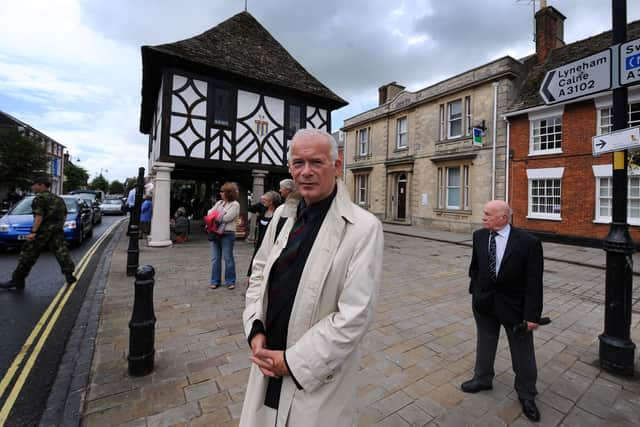
The world has dimmed with the death of Peter Rhodes
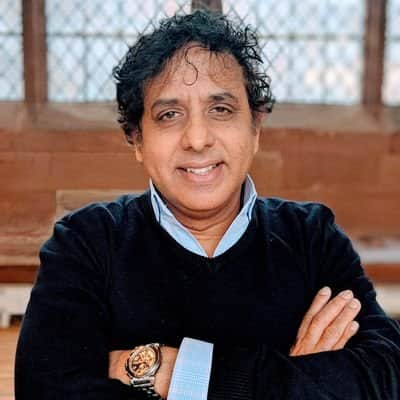
Academic and writer Roshan Doug pays tribute to Star columnist Peter Rhodes
The first time I met Peter Rhodes was in 1996, not long after I had published my debut collection of poems. He came to my workplace to interview me, hoping to gain an impression of my ‘world view’ of what he memorably called this ‘grand stage of fools.
At the time, I’m not sure I even knew what he meant. Nor, if I’m honest, did I think I possessed anything so grand as a ‘world view.’
Peter himself made an immediate impression. Softly spoken, with a distinctly Received Pronunciation, he carried an air of quiet gentility – immaculately dressed in a suit and tie, composed, attentive, and courteous. Over coffee, we spoke for a couple of hours. He listened far more than he spoke, occasionally jotting down a word, a phrase, or an idea, nodding gently as if affirming something he had already intuited.
It was only when the article appeared – thankfully a flattering one – that I realised what he had seen in me. He had picked up on themes I had barely articulated to myself: my sense of belonging, my cultural identity, my national allegiance. He suggested, quite perceptively, that I was in a kind of cultural transit – looking east, facing west. It was an observation that stayed with me.

Peter seemed to recognise aspects of my history that I had overlooked. He helped me confront a paradox I had long lived with but never fully acknowledged – that feeling of being neither entirely here nor there.
I was, in many ways, a full-time practitioner of English ,language and literature, yet at home I spoke Punjabi with my mother. That duality fascinated him. He would often ask about her in subsequent conversations, as though she were central to understanding me.
Perhaps not immediately, but certainly in the years that followed, I began a deeper journey of self-discovery – thanks in no small part to that early encounter. I started to explore my place in Britain more consciously, and to reflect on my relationship with its history and traditions.
At the same time, I turned my attention to India, immersing myself in its history, and in the philosophy of Hinduism, which I had previously neglected. I found myself developing perspectives that were at times contrarian, even contradictory – especially in relation to English literature and language, which had shaped me so profoundly. Alongside this, I grew increasingly drawn to the vivid, anecdotal stories of my mother – her memories, her voice, her lived experience. All of this, in some way, stemmed from Peter’s quiet prompting.
Yet Peter was never just an observer of individuals; he was, above all, a chronicler of ordinary life. He possessed a rare gift for writing in a way that resonated with everyday readers. His language was accessible, evocative, and rooted in common experience. Whether addressing local concerns or national debates, he captured the mood of his readership with a subtle, understated humour – often delivered with the lightest touch of a raised eyebrow.
His columns reflected a deep understanding of the rhythms of ordinary existence: the working week, the small rituals, the comfort of familiarity. He wrote not for the chattering classes or the intellectual elite, but for the men and women who worked nine to five, who might unwind with a pint at their local, and who looked forward to fish and chips – mushy peas included – on a Friday night.
When I later reviewed his memoir, Bloody Adjectives, I was struck by its honesty and warmth. The book is filled with stories from his life in journalism – encounters with notable figures, observations of events, and reflections on the craft itself.
I had the pleasure of interviewing him over lunch in his hometown of Kenilworth, where his candour was as evident in conversation as it was on the page. He spoke openly about the profession, acknowledging, at times, the tension between truth and convenience, especially under the pressures of deadlines.
The last time I spoke to Peter was only a few months ago. He had just received his cancer diagnosis. What struck me most was not despair, but a remarkable calm. He spoke candidly about life and family, and – perhaps most surprisingly – his decision not to pursue treatment.
There was no trace of bitterness. Instead, there was a quiet acceptance, almost a serenity, as though he had come to terms with something fundamental.
One remark, in particular, has stayed with me. After a lifetime of writing about everything under the sun, he said, one realises – when faced with death – that much of it is, in the end, meaningless. Nothing, he suggested, is quite as dark as we imagine. The world, indifferent and enduring, carries on long after we are gone.
He was right, of course. And yet, when someone like Peter Rhodes leaves us, it is hard not to feel that the world dims, if only slightly.
For all its continuity, its relentless forward motion, something of its warmth – its wit, its humanity –goes with him, departing this grand stage of fools just a little poorer than before.