
Changing the name of PCOS to PMOS improves awareness - but will it really improve treatment?
The name of Polycystic Ovarian Syndrome has been changed to a much more accurate name - but will it really improve things for patients? I remain skeptical.
Polycystic Ovarian Syndrome has long been considered an inaccurate name for a disease that affects around 10 per cent of women and is the leading cause of female infertility.
The reason why it is inaccurate is the ‘cyst’ part - you see, the so-called visible ‘cysts’ on the ovaries of women with the condition are not actually cysts at all. They are immature eggs - or follicles - that failed to be released from the ovary during ovulation.
Also, some women have no visible follicles at all, leading to some doctors to ignore other signs of the condition - such as metabolic issues and high androgens (testosterone) on a blood test.


So, the new name and more accurate title, which the charity Verity has fought hard for is PMOS - Polyendocrine Metabolic Ovarian Syndrome - which clearly labels the impact it has on the body. "The term polycystic ovary syndrome (PCOS) has long been recognized as inaccurate and potentially harmful,” the charity said following the announcement yesterday (May 12).
"The current name reflects only one organ and fails to capture the disorder's multisystem nature."
And while I agree with the accuracy of the name, the true impact of this change is yet to be seen - and call me a pessimist but I believe it will take more than a name change to improve care for this condition.
I believe it will lead to more diagnoses, without a doubt, as there can be no denying women without visible enlarged ovaries on an ultrasound scan that they have it. It’s estimated that 70 per cent of women with the condition go undiagnosed, according to ScienceAlert.
For many of us with diagnoses, the help stops dead at diagnosis - and only somewhat returns when you want to start a family - if you meet the right criteria.
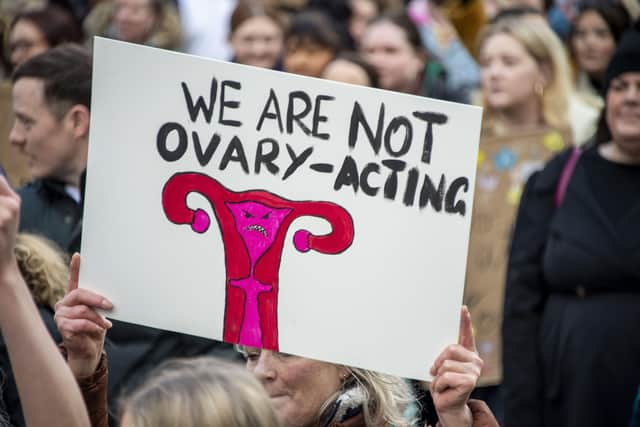
I want care to improve beyond a name. I want better and more effective treatment options and to know that if I’m ever luck enough to have a daughter in the future that she will have a better experience at her GP than I have over the last 12 years since I was diagnosed.
I’ve have written before about my struggles with access to care and how I welcome the research into GLP-1 as an option for women going ahead in the West Midlands and given how ignored women’s health has been, how dismissed we get at the doctors, we need to see a real overhaul here. We need more research. More accessible treatments. We need doctors who’ll actually listen to us.