
‘Why tear it down?’ Birmingham Rackhams plans spark debate over historic building

Birmingham residents divided as scheme for Rackhams site unveiled
The site of Birmingham’s historic Rackhams building could soon be dramatically transformed – but the major plans have been met with both optimism and frustration.

The story of the shop dates back to 1851, with Rackhams later expanding to Temple Row and becoming known for high-end goods and striking displays.
Known as one of Birmingham’s most iconic department stores, it went on to become part of House of Fraser and eventually closed earlier this summer.
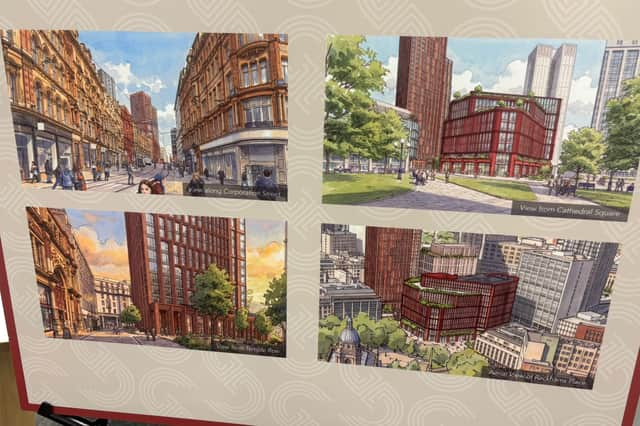
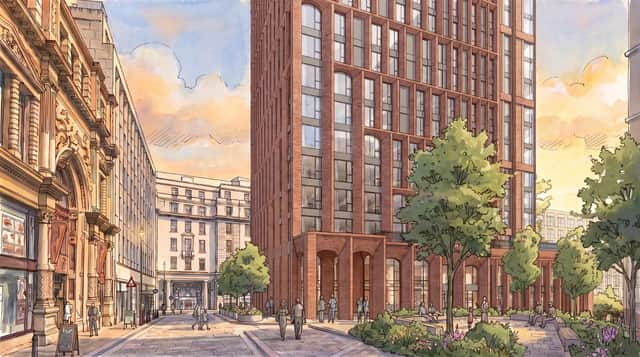
Birmingham-based developer Sphere Group has now unveiled plans for a scheme called Rackhams Place, a huge project which could provide more than 500 new homes across two towers, office space, a ‘linear park’ and more.
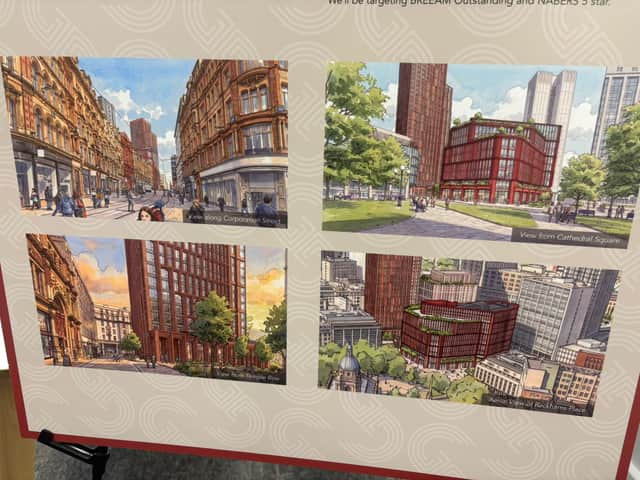
They say the plans would regenerate the area that includes the Rackhams building, with illustrations showing the site could look drastically different if proposals are ultimately given the green light.
But the plans have been met with an array of different opinions, with some questioning why the historic Rackhams building cannot be completely retained and refurbished.
“There’s a perfectly good building there in situ,” Ian Bailey said. “Why not just do it up rather than tearing it down and building yet another architects mad doodle?”
Susan Mead said: “I’d like to see the building adapted rather than torn down.”
“This is not the correct location for a red building, it won’t fit in at all,” Lewis Lucas argued. “The existing building fits in well.
“It should be kept and sensitively converted to an alternative use.”
Tony Whitehead meanwhile argued that the existing building is a “candidate for adaptive reuse”.
Other residents welcomed the plans however, with Tim Barnsley-Parfitt saying: “I like it, it looks a lot more open and less claustrophobic.
“Can’t imagine how long it will take and how awful the disruption will be though.”
Pete Simpson said: “The Rackhams building is not great or iconic architecture.
“As long as it is not replaced with another tall square. Something to complement the square around the cathedral is what is needed.”
“Honestly it’s a great idea,” one resident said. “Rackhams currently is such an ugly brutalist building.”
“Get rid all of the brutalist architecture in city centre,” another added.
The developer behind the proposed scheme says several options for the site were considered, ranging from a ‘light touch’ refurbishment of the existing ‘assets’ to complete demolition and new build.
The options were considered as part of an in-depth exercise, which took into account factors such as energy and carbon, improving the public realm and health and well-being.
Managing director at Sphere Group Thomas Taylor told the Local Democracy Reporting Service this week: “Before arriving at the proposals presented for consultation, we undertook an in-depth optioneering exercise.
“[This looked] at different levels of retention, refurbishment and redevelopment across the site.
“As a result of this work, our plans seek to retain the majority of the existing buildings’ substructure and therefore a large amount of their embodied carbon, whilst the operational carbon of the development has also been considered within the design to give a whole life picture.”
He continued: “Rackhams Place will be a new, mixed-use scheme consisting of homes, office space, ground floor retail and welcoming public spaces.
“The proposed new public realm areas have been very well received and we’re keen to hear more thoughts on making these as attractive as possible via our consultation website.”
Mr Tayor added that they welcomed around 80 visitors to a public consultation event last week.
“Our public consultation will continue until mid-October,” he said.
“Initial feedback has been fantastic and conversations ranged from design and potential delivery timescales to memories of shopping in Rackhams, which forms part of our consultation.”
Sphere Group says its public consultation closes on Friday, October 16 before a planning application is submitted later in the autumn.
If the proposals are approved, the construction stage could start next year with the completion of the first building(s) expected to be in 2030 and total completion in 2031.