
HS2: A costly lesson in how NOT to deliver major infrastructure projects
Homes bought to make way for HS2 are now being sold back to the public
The age-old expression, ‘no pain, no gain’, might seem appropriate to the ongoing saga of the construction of the high-speed link between Birmingham and London, referred to as HS2.
‘Pain’, or at least inconvenience, certainly as far as travel around the M42 motorway at weekends has been experienced for the last couple of years and, it seems, will continue for the foreseeable future.
In late August I was involved in moving a member of the family from the south of Warwickshire to Staffordshire and, having to make two runs in one day can attest to the disruption this caused.
Additionally, we’ve been informed, the A45 Coventry Road in Bickenhill, Solihull, will close in both directions between 9pm and 6am over the weekend, 7th-11th and 14th December, to allow for completion of construction of a bridge as part of essential works associated with HS2.
More overnight closures are planned to take place until Saturday, December, 19 with a contingency to continue until Monday, December, 21 should work overrun.
Naturally, in what is literally the ‘big scheme of things’, such inconveniences may seem trivial if we were convinced there will be a greater good.
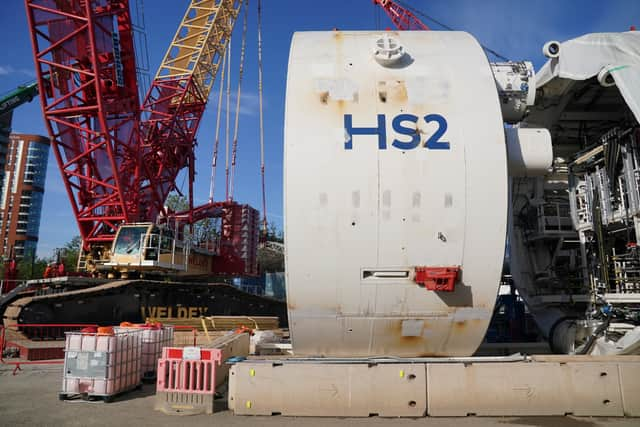

The problem in the here and now of 2026 is that any benefits that may eventually transpire from HS2 seem somewhat illusory.
Given the long timescale before we’ll ever likely have trains arriving and departing from the Curzon Street Station currently under construction – unlikely before 2039 – there’s a pervading sense that it’s too far into the future.
People in Birmingham and the West Midlands have more immediate concerns, not the least of which is how to pay the bills, particularly energy, which, in January, will increase by a whopping 26% due to a spike in world gas prices caused by conflict between Iran and the US.
There’s also, I contend, a weariness at the amount of time this project is taken.
When HS2 was first mooted in 2010, when the country was led by PM Gordon Brown, whose administration only had a couple of months left, it was intended that, as well as high-speed rail joining Birmingham to London, it would then spur off north in two phases: 2A to Manchester and 2B to Leeds.
Trains on HS2 would run at 224 mph (360 km/h), making it the fastest in Europe.
Significantly, including upgrade work that would enable the high-speed trains to continue onwards to Scotland, albeit at a slower pace, the total cost was estimated to be some £35 billion.
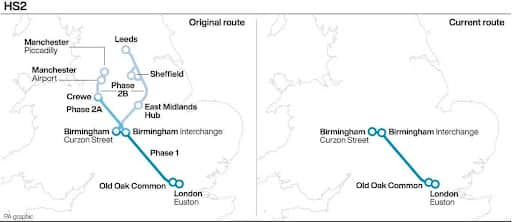
As we know, this figure has turned out to be a gross underestimation, resulting in the overall scheme being pared back to just the link between the capital and Birmingham, and, in a decision which further undermines credibility in the project, trains will operate at 199 mph (320 km/h) ostensibly to save money and avoid the need to carry out tests overseas, as we don’t have a line capable of operating at 224 mph.
However, even with this reduction in the magnitude of the original scheme, it’s widely speculated that when HS2 eventually completes, the total cost will be in excess of £100 billion, making it the most expensive rail line in the world.
Needless to say, many ask whether we should be spending such a vast sum of money on a transport infrastructure project with dubious benefits so far in the future even though it provides employment for, currently, around 30,000 workers.
Many ask whether the money could have been spent on other projects more likely to have a more immediate impact for hard-pressed families in the West Midlands.
Parliamentary committees have looked at how money has been spent and made various recommendations as to how improvement in the management of construction of HS2 could be achieved.
One aspect which might have been better considered was the purchase of properties along the lines as originally proposed in 2010.
Obviously, properties close to the line would need to be purchased though, according to those homeowners subject to this process, the way in which they’ve been treated has not been with the consideration that would have been expected.
More especially, the compensation offered has frequently been far below what they anticipated.
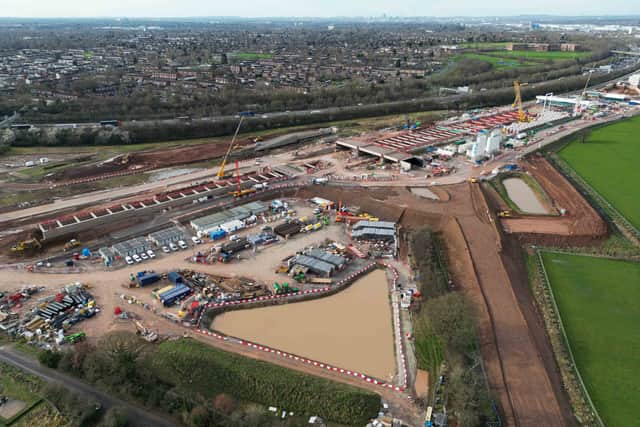
In the litany of inconvenience caused by HS2, being forced to leave your family home, ranks at the top of the scale.
So, the recent announcement that the Department for Transport (DoT) intends that properties purchased for the 123-mile 2B (Eastern) Phase, cancelled in November 2021, should be offered for sale to the public merely adds insult to the sense of injustice these homeowners have already suffered.
For the record, 562 properties were acquired by the DoT at a total cost of £169m for this phase of HS2, many of which were rented out or just left empty.
Many have since been rented out – and others simply left empty – as the government assessed their future after the section of 123-mile line was axed more than three years ago.
However, should any of those whose property was purchased in this way wish to buy back their home, they will be allowed first refusal but must pay what the market rate is for property.
Given that property prices have increased in recent years, they will be likely to have to spend far more money than they received when they were required to leave under the rules of compulsory purchase instituted for the purpose of constructing HS2.
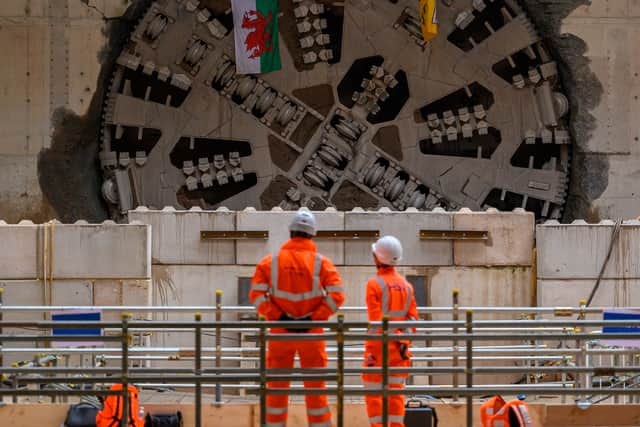
Who could blame such homeowners for feeling aggrieved that the need to move from houses they may have been happily living in for many years was completely unnecessary and caused them untold anguish?
Unfortunately, it seems, such suffering is part and parcel of governments achieving what they regard as strategic projects, and individuals affected are expected to take what’s offered and be obedient.
I have little doubt that in, say, 50 years when HS2 has been operating successfully between Birmingham and London for almost four decades, the many inconveniences suffered during its construction will have been long forgotten, as will the total cost, whatever that turns out to be.
However, as stressed above, the overwhelming majority of people care about today, tomorrow and the next few months, especially when faced with the eye-watering rise in energy bills they will have to pay from 1st January as a consequence of Regulator Ofgem’s announcement that the so-called ‘price cap’ will rise.
Pointedly, most understand that on this occasion there should not be blanket assistance for everyone, as occurred when energy costs rose following Russia’s invasion of Ukraine.
Nevertheless, what people do want is that the government redoubles its efforts to invest in energy production, which will reduce our dependence on gas that’s so reliant on international costs.
This would involve many more, probably localised, methods of generating electricity.
It must sincerely be hoped that should this be the case, there is far more forethought and, arguably, levels of care and compassion shown to those who might be impacted by any essential construction work than was the case during HS2, which, it may be argued, has been pretty dreadful.
One thing I must sadly conclude is commentators will continue to write damning analyses of the utter shambles that HS2 has been.
One thing that should happen is that HS2 becomes the definitive case study in how NOT to organise major infrastructure projects!