
Birmingham council paid itself more than £470,000 in fines and charges as vehicles breach Clean Air Zone rules
Birmingham City Council has paid more than £470,000 to itself in daily charges and fines because its own vehicles break the rules of its Clean Air Zone.
A council has paid more than £470,000 to itself in daily charges and fines because its own vehicles break the rules of its Clean Air Zone (CAZ) to tackle city centre pollution.
The spending by Birmingham City Council has been called "absolutely shocking" by a food bank which said charges had led to a decline in volunteer drivers.
Although the authority has faced a continuous bin strike since January 2025, most of the vehicles which drew daily charges were from its waste department, the BBC Shared Data Unit reports.
The council said it had been replacing non-compliant vehicles over the past 12 months and wanted "eco driving" across its fleet but admitted one in eight of its vehicles still broke its own CAZ rules, which had been in place since 2021.
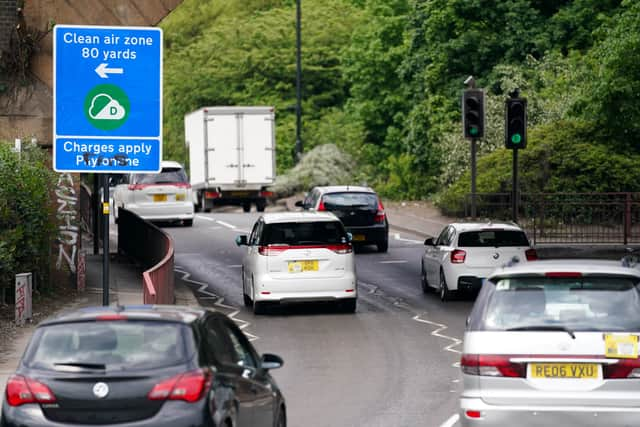

The number of fines and daily charges paid by Birmingham City Council represented around 20 times the number of those paid by any other UK council running a CAZ, Low Emission Zone (LEZ) or Ultra Low Emission Zone (ULEZ) which was able to disclose any similar payments for breaking their own emissions standards.
Government commissioners have been working with Birmingham City Council since it issued a so-called Section 114 notice – often referred to as declaring its own effective bankruptcy – in 2023. In March, its then-Labour leadership hailed its first balanced budget in three years.
The income from CAZ charges and fines goes towards the operating costs of the scheme, some Government charges and any surplus has to be spent on transport or environmental schemes. That money does not go back into the council's general funds so it cannot be reallocated to other projects.
Kings Heath Food Bank's organisers said its own work relied on the good will of volunteers, but some of them could not afford the city's CAZ charges.
They said fewer volunteers to drive donations around the city meant the food bank was helping half the number of people it used to help each week before the CAZ was introduced in 2021.
The food bank's organisers said they had asked the council for an exemption for volunteers but were refused.
Food bank coordinator Sharon Power said: “I certainly could not afford to pay charges to collect money or food for anybody.
“It’s only because we’ve got good people that will go in [to the city] and collect for us that we are able to maintain to support the people.
“The country's in this state: people are having to choose to heat or eat and they're [the council] spending money right, left and centre. It's absolutely appalling."
Under the CAZ scheme, the daily charge for vehicles that do not meet emission standards is £8 for cars, vans and taxis or £50 for HGVs and coaches, unless a valid exemption is in place.
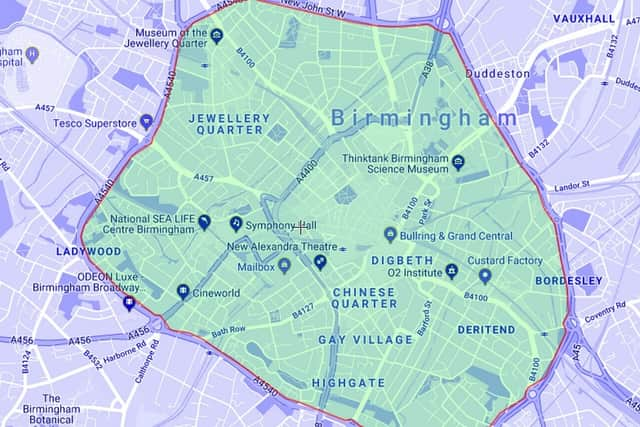
It is enforced using Automatic Number Plate Recognition, which records vehicles travelling within the ring road.
Anyone who fails to pay within six days after entering the zone faces a £120 fine, which is reduced to £60 if paid within 14 days.
Using the Environmental Information Regulations, the BBC was able to secure data about the council's CAZ spending on purchase cards. The data did not make clear if or how often the council paid higher fines for late payment over all of the five years.
The most recent fines in the past financial year covered by council purchase cards were all by "City Operations". There were four £60 payments on 30 March 2026.
Before the CAZ was introduced, the council said air pollution was responsible for shortening the lives of about 900 people per year.
Its aim was to reduce the most harmful air pollutants - nitrogen dioxide and particulate matter.
William Bloss, professor of atmospheric science at the University of Birmingham, helped lead a study on the CAZ's impact.
He said: “We know it’s cleaner within the Clean Air Zone area and by cleaner we mean: made up of more modern vehicles with less of the older, higher-polluting ones and we know from our own measurements here at the university that we saw a step-change in the NO2 levels within the Clean Air Zone when it was introduced.
“We could see a definite change linked to, or attributed to, that policy.”
He said for there to be further health benefits, we would need to see further societal changes such as in how we heat out homes, not just to the vehicles used on the city's roads.
A council spokesperson said it had now established a central Vehicle Management Service "to fast-track transition to a modernised, low emission fleet… driving efficiency, economy, safety and sustainability".
They said only 142 (12%) of the 1,170 council-owned vehicles in its fleet, as of 31 March, remained non-compliant with the CAZ requirements and a "large number of these vehicles were minibuses related to social services and education provision".
The spokesperson added the council was looking to develop "eco driving across the fleet", first by monitoring its vehicles' "throttle usage, speed, mileage and idling aimed at reducing fuel usage and carbon emissions."
The council said it did run some exemption schemes from CAZ charges subject to specific criteria being met, but there were none specifically for council vehicles or those used by its contractors.
Pollution charges first took effect in the UK in London's ULEZ in 2019. Bath became the first city to have a Clean Air Zone outside London in 2021 and six other English cities have since followed, including Birmingham. There are four further LEZs in Scotland.