
'Utterly damaging dispute': Why Birmingham can’t fix its bin strike one year on – it’s about more than rubbish
What’s the view on Birmingham’s bin strike? Dr Steven McCabe looks back on a ‘rubbish’ year
January 6th is celebrated by some Christians in recognition of the three wise men – referred to in the Bible as the ‘Magi’ – who travelled to Bethlehem to pay homage to the baby Jesus.
This day is the conclusion of the Twelve Days of Christmas, which, traditionally, will have involved festivities.
As we all know, this creates a great deal more waste than is the case for the rest of the year in terms of food and, of course, packaging and wrapping paper from the gifts we give and receive as part of Christmas.
However, January 6th marks the first anniversary since the commencement of industrial action by the Birmingham City Council (BCC) workers belonging to Unite who collect refuse in Birmingham.

Initially, Unite’s industrial action consisted of one-day walkouts but, on March 11th, escalated to a full-scale indefinite strike when no refuse would be collected.
The origin for the dispute was the plan by the council to scrap what is known as the Waste Recycling and Collection Officer (WRCO) role, which, significantly, was created, it’s alleged, to solve a previous dispute involving refuse workers when all refuse was left uncollected between June and September 2017.
However, in an effort to rationalise, BCC, following “extensive consultation”, declared it intended to withdraw the WRCO role and some 171 operatives, citing the fact that it is unique to Birmingham and that its existence led to the risk of another equal pay claim, which, as has been widely reported, has proved immensely costly to council finances.
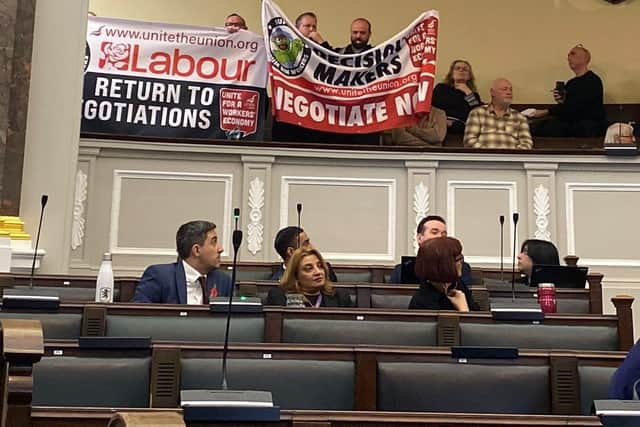
According to BCC, all of the 171 former WRCOs would either be successfully redeployed into other roles or could decide to apply for voluntary redundancy.
However, Unite have argued that workers redeployed from the WRCO role would suffer a drop in their annual pay of £8,000 (almost £670 a month).
The council refute Unite’s claim and, in a factsheet explaining the dispute, state that the number of employees losing money would be 17 and that the maximum amount would be “just over £6,000” and be offered “pay protection for six months in line with council policy”. ”.
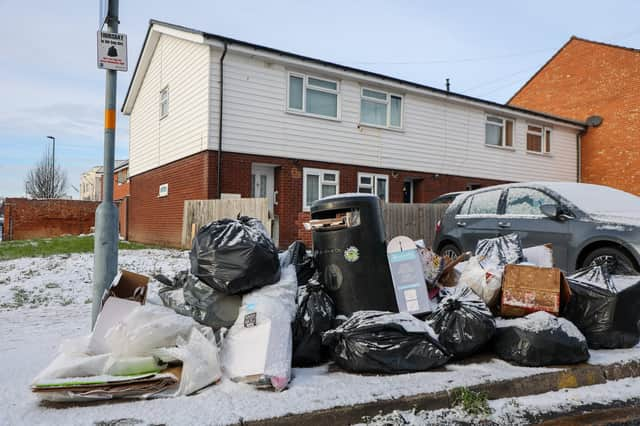
Like the dispute in 2017, refuse started to build up.
For those with access to a vehicle, Birmingham’s citizens could take their waste to a council tip, which partially relieved the situation.
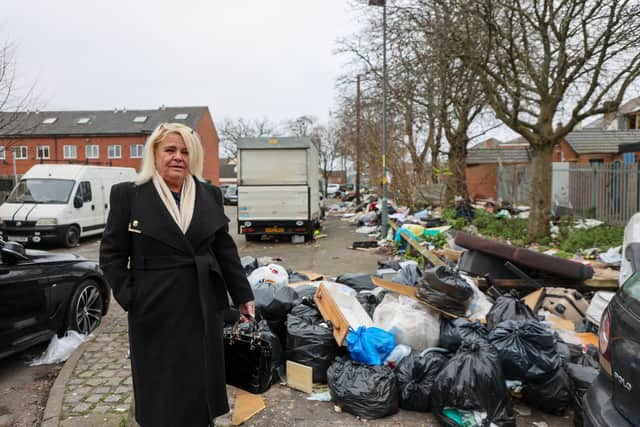
However, in many areas, especially those characterised by endemic poverty and disadvantage, piles of rubbish started to appear which, as well as being unsightly, were regarded as a risk to local citizens’ health.
This situation led to the lurid headlines, including allegations of cats being spotted that were the size of cats, which attracted the attention of national media and media from overseas.
Birmingham, not for the first time, was portrayed as a city unable to deal with the basics of public services.
Residents fearful of suffering the same long period of uncollected rubbish over the summers as in 2017, with the attendant issue of hygiene and smell, were at least thankful that the normal weekly collection of refuse was resumed by, as the council explains:
“The Council have always utilised agency staff to provide contingency cover for leave and sickness and to cover vacancies in Waste. We continue to operate with the same number of agency workers throughout the current industrial dispute.”
Thus, since early summer last year, all households have benefited from being able to see their weekly refuse collected, though, notably, not recycled waste such as glass, paper and plastics unless they are included in ‘normal’ refuse.
Unfortunately, what perhaps commenced as a ‘straightforward’ dispute between an employer and union has become protracted and bitter.
Unite’s approach is undoubtedly one which seeks to defend its members’ position, and its mood for compromise will not have been helped by BCC having carried out what it explains has been a “fair and transparent job evaluation process of the driver/team leader role” which has resulted in an indicative grading of Grade, a downgrading from its current grade of Grade 4.
Unite senses that as Birmingham’s finances become ever more squeezed, it will seek further savings on staff.
BCC is a shadow of the organisation it once was, and council taxpayers may wish to know that the money they pay is being spent wisely and efficiently.

However, I’m certain the vast majority would not wish to see council employees treated unfairly.
Ironically, to read certain elements of the press, you get the impression that local authority workers are overpaid and can retire on what are cynically referred to as ‘gold-plated pensions’.
Stories of senior officers and, more especially, chief executives in any local authority always attract a lot of publicity; particularly so in the case of Birmingham, which some would have you believe is a city in very serious crisis.
A cursory glance indicates that employees in local authorities typically earn, on average, between £28,000 and £38,000 annually.
In the case of refuse workers, there is a tremendous amount of importance and responsibility to what they do.
In my opinion, they deserve every penny of what they earn.
It’s to be noted that The Telegraph , which never misses a chance to have a knock at the public sector, carried a recent report that the seven commissioners appointed to oversee management of BCC after it declared the organisation was experiencing financial problems and couldn’t balance its budget in September 2023 and issued a Section 114 notice, are being paid £1,100 a day.
Apparently, since their appointment in October of 2013, the seven commissioners have collectively received “more than £2.1m in fees and expenses covered by council taxpayers” (it’s to be noted that this figure does not include the last three months of 2025).
It seems that these seven people do not have a solution to the ongoing dispute between BCC and Unite, though they are fully behind the stance of the council leadership, which is that they are no longer prepared to continue to negotiate as there is no more on offer.
Sadly, therefore, Birmingham’s citizens will continue to be unable to enjoy collection of materials capable of being recycled every second week.
The fact that BCC has “a high level of missed collections and one of the lowest recycling rates in the country” and does not “meet the expectations of the people of our city” is not lost on all inhabitants of Birmingham and, of course, those paying council tax, which has increased by over 20% in the last two years as the council seeks to make up the shortfall which caused it to issue a 114 notice.
What people will also note is how stretched services have become, by which employees seek to achieve the same output with shrinking resources and finances.
Intriguingly, as the BCC explicitly states in its factsheet on the ongoing dispute, it fully intends to begin a “new waste service from June 2026” which will include weekly food waste collection and a second recycling bin.
There is also the stated intention to collect normal refuse every other week.
BCC proclaims it must “address years of underperformance and bring pride back to our streets and improve the waste collection service for the benefit of everyone.” ”.
As it contends, its restricting of its waste services, which is the cause of the ongoing dispute with Unite, is seeking to create a “sustainable and consistently reliable” service.
Judging by how the dispute has played out over the last twelve months, it’s hard to see how this admirable vision will be attained.
What is to be hoped is that a sensible and mutually acceptable solution is found soon.
It’s to be sincerely hoped that in its quest for modernity BCC does not seek the sort of ‘nuclear’ solution some right-wing commentators propose, which would involve sacking all of those refuse workers who continue to withdraw their labour and receive £80 per day from Unite to, as the union stresses, prevent its members from being forced back to work due to starvation of them and their families.
Perhaps, here in Birmingham, we must hope that we too experience an epiphany very soon, with or without three wise people, which allows everyone to move on from what is an utterly damaging dispute which continues to undermine the way in which this great city is seen by outsiders, most particularly investors so vital for future jobs and prosperity.
Dr Steve McCabe
Steve is Professor and Pro Vice Chancellor, DoctorateHub.
Previously, having worked for Birmingham City Council, he spent the last 35 years as an academic at Birmingham City University teaching and researching economics, management and business. Additionally, he has written extensively for edited texts examining economics and politics.
He regularly writes and comments regularly in the national and international media on politics and the economy and has published texts on quality management, benchmarking, ‘Brexit’ and its economic and social impact, the green economy and manufacturing, house prices and India’s progress since independence.