
'An underwhelming Budget overall' - West Midlands business leaders react to John Healey's economic plans
Businesses described the Chancellor’s speech as a ‘breathing space Budget’ but said it could have offered more
The Budget offers welcome breathing space for many small firms but fell short on helping more small businesses export - that’s the verdict of the Black Country Chamber of Commerce.
Chancellor John Healey set out the government's tax and spending plans in today’s Autumn Budget – the first of Andy Burnham’s premiership.
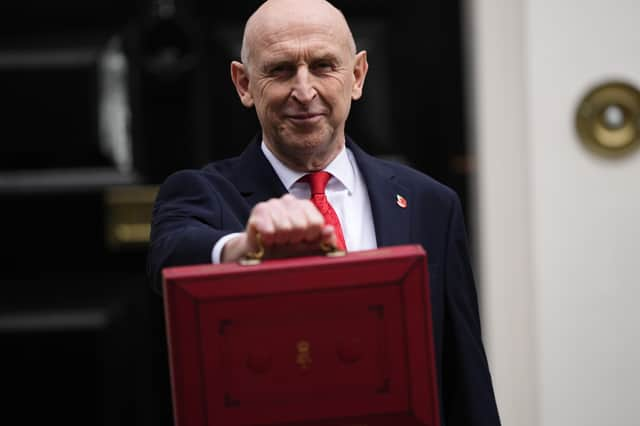

The Chancellor said he was backing high streets with measures that mean all retail, hospitality and leisure properties in England will see business rates either frozen in real terms, reduced, or cut to zero.
Meanwhile, adult games centres and vape shops will not qualify for business rates relief, while taxes on gambling machines will rise for higher risk machine games.
The Chancellor also announced a new Founders Relief to encourage founders to scale their businesses in the UK, plus a tripling of the trading allowance to help people starting a business; the expansion of tax-advantaged employee share schemes to help businesses recruit and retain talent; and reform of the visa system to create a pro-business migration system for highly-skilled workers; as well as making procurement easier for innovative businesses to access.
The Chamber, which had urged the Chancellor to give businesses the confidence to invest, create jobs and grow, welcomed some of the measures announced but said Mr Healey could have done more.
Rachael Wright, the Chamber’s finance director, said: “The Chancellor talked a lot about breathing space today and there are measures here that Black Country firms will feel.

“Raising the small business rate relief threshold will be a real lift for the shops, cafés and pubs that keep high streets in Wolverhampton, Walsall, Dudley and Sandwell alive.
“Taking thousands of firms out of business rates altogether gives them the breathing space to invest and take on staff. But this relief is only for retail, hospitality and leisure. The small manufacturers and workshops at the heart of the Black Country economy still face the same rates bill tomorrow as they did yesterday. We’d like to see the same support reach them.
“A 25 per cent cut to electricity bills for manufacturers is a boost for some of the engineering and metals businesses at the heart of our economy. Bigger tax relief on new equipment gives firms a reason to invest now, rather than wait.”
The Chamber, which represents hundreds of businesses in Wolverhampton, Walsall, Dudley and Sandwell, also welcomed a new £100m local apprenticeship service but added: “
“With the minimum wage going up, employers taking a chance on young people need more support to do it.”
Exports were the Budget’s biggest missed opportunity, according to the Chamber.
“There are firms here with products the world wants to buy and today there was very little to help them get there,” Rachael said.
“Exporting brings new money and new jobs into the region, and we’ll keep pressing the government for practical support for small firms to trade overseas.”
The Chamber welcomed the announcement of a new Good Growth Fund for the mayoral authority devolved region, which saw the Black Country Metro extension name checked in the Budget.
“It’s good to see the Black Country named in the Budget, Rachael said.
“The new good growth funds and the Metro extension show the region is being taken seriously. Better transport links our businesses to their workforce and their customers and decisions about local growth are best made locally. Now we need to see this money quickly.”
Emily Stubbs, head of policy at Greater Birmingham Chambers of Commerce, welcomed the Chancellor’s announcement setting out a roadmap for fiscal devolution.

She said: “The announcement that by 2030 the West Midlands can anticipate full business rates retention, alongside partial income tax retention presents a significant opportunity, provided these new freedoms are used in genuine partnership with business to unlock investment, strengthen infrastructure and tackle the barriers holding back regional growth.
“More immediately, there were also some positive announcements for founders, business leaders and start-ups, particularly those just taking the initial leap to start their entrepreneurial journey, and self-employed parents.
“The extension of business rates reliefs for retail, hospitality and leisure firms will also be welcomed. However, it is incredibly disappointing to see yet another Chancellor swerve the call for meaningful business rates reform and choosing to simply patch over the cracks in a fundamentally flawed system.
“As in previous budgets, increased investment in defence, alongside ambitions to expand the UK’s defence industrial base, may offer new opportunities for local businesses, particularly many manufacturers here in the West Midlands already engaged in automotive supply chains.”
She said businesses had hoped for more action on energy costs and fuel but extra funding for apprenticeship services would be welcomed.
She also described increased funding for business investment through the National Wealth Fund and British Business Bank, investment in sovereign AI, and the new UK Export Finance guarantee as “positive” but added: “Many firms will be disheartened by an underwhelming Budget overall.”
The boss of fast-growing Midlands law firm FBC Manby Bowdler described John Healey’s speech as a “breathing space Budget”
Neil Lloyd, chief executive of FBC Manby Bowdler and Adeptio Law Group, said the Chancellor had his hands largely tied by economic factors.

Neil welcomed the move to raise the business rates threshold from £12,000 to £18,000 which means 75,000 small businesses, shops and hospitality venues will avoid the charge.
“I am very pleased to see the move on business rates which is long overdue and will help many small and mainly retail businesses across our region,” he said.
“This was a speech very much designed to give some breathing space and he announced little which will significantly move the dial for business.
“I’m of course pleased to see further investment in training and skills and the £100m investment for local apprenticeship services to match young people with local firms is welcome.
“The move to protect families from immediate wholesale income-tax when they hand down their businesses to the next generation is also very welcome.”
Neil said moves to help firms with soaring energy costs were welcome but a drop in the ocean compared to the increases businesses had been forced to absorb over the past few years.
“Overall, business energy costs remain some 75 per cent higher than their pre-crisis levels in 2021, so any help in meeting these costs must be welcomed. But today’s measures will not go far in helping UK firms remain competitive on the world stage.
“I would have liked to see stronger, more targeted interventions to support skills development, whether through enhanced training incentives, clearer vocational pathways or more support for regional skills programmes. Without a long‑term plan to grow the UK’s skills base, businesses will continue to face constraints that no single Budget can fix.”
Chris Timmins, managing director of affordable homes builder SH Partnerships, welcomed the extra £1.5b announced for homes plus other pledges but said there was a need for speed to deliver on this.

He said: “The Chancellor’s first Budget has given the affordable housing sector more to work with. An extra £1.5bn for the Social and Affordable Homes Programme takes the total above £40bn.
“Other changes are welcome too. Removing biodiversity net gain requirements for more brownfield sites will cut cost and delay on potential projects.
“VAT-free land for social housing will also support partner schemes and there will be no major changes to building regulations, which will certainly help.
“Skills was my main ask ahead of the Budget, so it’s good to see the Chancellor act on the next generation of construction workers.
“The £100m to expand local apprenticeship services is a positive step too.
“Taken together, these are wins for the sector that theoretically should help speed up delivery of the homes the country needs.
“Now the priority is turning that funding into homes on site as quickly as possible.”
Mark Howell, director of DJH professional services group in Halesowen, gave his views on how the Budget will affect clients - saying: “This Budget spares dividends but not investment income or business exits, and for owner-managed businesses and wealthy families the detail matters more than the headline.
“There is some support for the businesses these owners run. The small business rates relief threshold rises to £18,000, the 5p fuel duty cut is extended to July 2027, and the main rate first-year allowance rises from 40 per cent to 50 per cent, though the 3.9 per cent National Living Wage rise adds to payroll costs.
“The Budget documents and consultations published after the speech will determine the real impact.”
Juliet Halfhead, practice senior partner at Deloitte Midlands, said the Budget underlines the importance of the regions and nations to the UK’s growth agenda and devolution brings an opportunity to turn greater autonomy into tangible economic growth across the UK.
She said: “With more autonomy granted to West Midlands Combined Authority, there is an opportunity to connect people and businesses, allied to further investment in transport, infrastructure and regeneration that supplement the region’s strengths in areas such as advanced manufacturing and technology.”
The Mayor of the West Midlands, Richard Parker, added his support for the Chancellor’s commitment to fiscal devolution - giving mayors greater powers and freedom to shape the region - describing it as “a generational change in who holds the purse strings and who benefits from the wealth our region creates”.

He said: “For too long, decisions about our future here in the West Midlands have been more than a hundred miles away in Westminster. We've had to go cap in hand for the money and permission to deliver things we know our region needs.”
He said as businesses in the West Midlands grow and new jobs are created the region should get a greater share of the success - adding: “More of the money generated here will stay here, so we can reinvest it in our communities.
“With new Good Growth Funds and greater financial freedom, we can get on with delivering our Growth Plan. Building the homes people need, improving transport, bringing life back to our high streets and giving young people the opportunities they deserve. And we can do it without constantly waiting for Whitehall to give us permission.
He said he was pleased to see the Chancellor backing high streets with greater business rates relief for small businesses.
He also welcomed the £100 energy payment for millions of households this winter with action to bring down energy bills and the increase in the minimum wage, as well as the doubling of funding to tackle rough sleeping.
He said: “I'm really ambitious for our region. We have the businesses, the talent and the ideas to lead Britain's next industrial revolution, grow our economy and change lives. What we've needed are the powers and resources to match that ambition.
“We've proven over the last two years what we can achieve in the West Midlands and now it's my job to turn these new powers into even greater results.
“Because ultimately, people won't judge us on how much power we've been given. They'll judge us on what we do with it. And I'm determined that every part of the West Midlands will share in our success.”