

After more than 70 years submerged beneath the waters of the Goodwin Sands in the North Sea, the rare artefact was salvaged and will now be displayed at RAF Cosford Museum.
Nicknamed the ‘Flying Pencil’ due to its slim fuselage, the Do 17 played a pivotal role in the early stages of the Second World War and is best remembered for its involvement in the Battle of Britain.
Of more than 1,500 Do 17 bombers produced, over 400 were deployed by the Luftwaffe - the German air force - during the battle. Today, only one remains complete.
The wing section set to be displayed comes from this sole surviving Do 17, recovered in a landmark operation led by the RAF Museum in 2013.
The Do 17 wing section will be available for public viewing from early 2025. RAF Cosford Museum is based just outside of Wolverhampton on the border with Shropshire. You can also access it via train: Cosford is located on the Birmingham to Shrewsbury line (via Wolverhampton) then ½ mile walk. There is no footpath alongside the road.
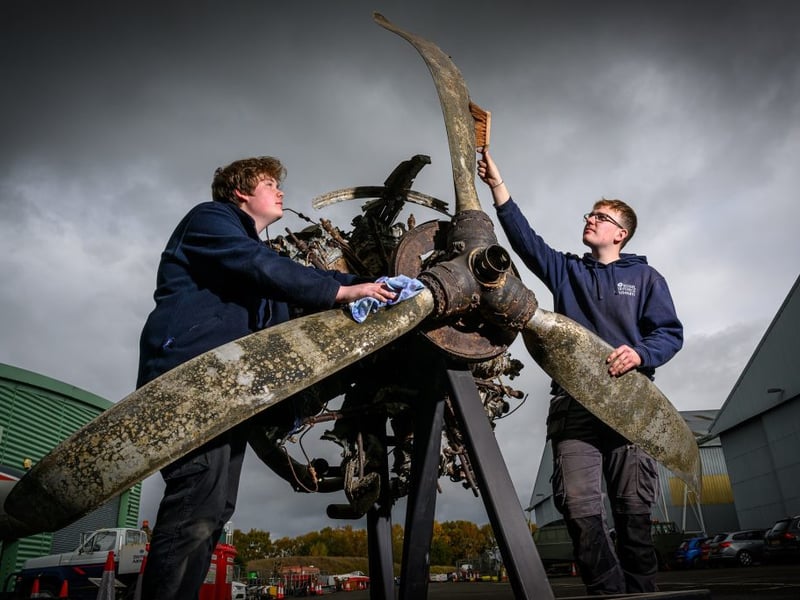
5. It will soon go on display at RAF Cosford in the Midlands
Apprentices inspect the Dornier Do 17 | RAF
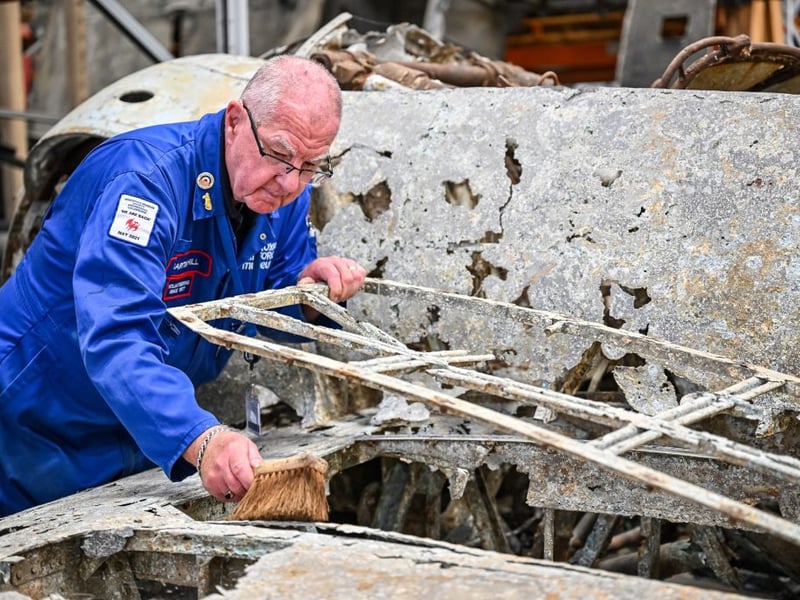
6. The wing section will soon be on display in the Midlands after 70 years in the sea
RAF museum volunteers with the Dornier Do 17 wing section | RAF
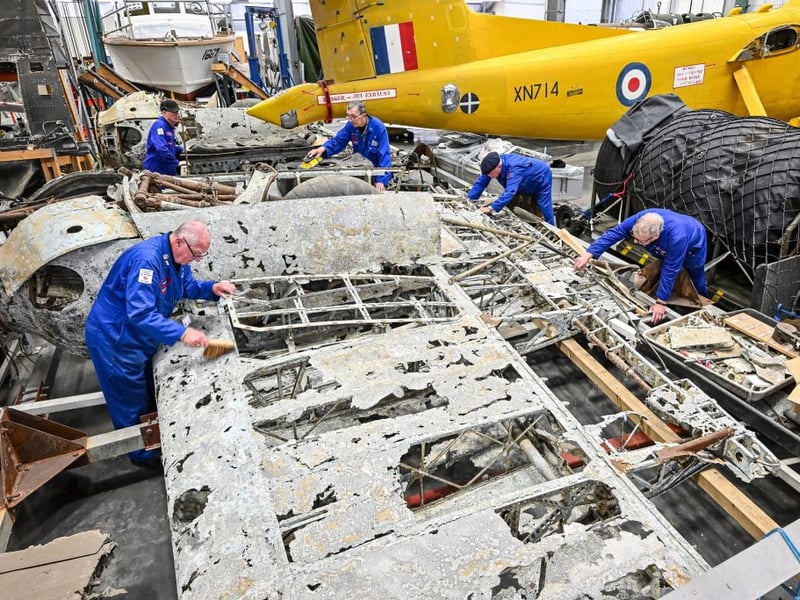
7. The wing section will soon be displayed in the Midlands
This photos shows the scope of the restoration work involved | RAF