
'Majestic' West Midlands woodland with Ice Age roots and links to Anglo-Saxon king

With roots tracing back to the Ice Age and links to an Anglo-Saxon king - this magical place is a must-visit if you live in and around Birmingham.
Tucked between fields of pasture just south of Halesowen, Uffmoor Wood feels like a quiet surprise.
It’s just a 26 minute drive from Birmingham city centre - and makes for the perfect winter outing.

You may hear the steady tap of a woodpecker.
Look up and you might spot a buzzard circling overhead, mewling as it twists and glides on warm air.
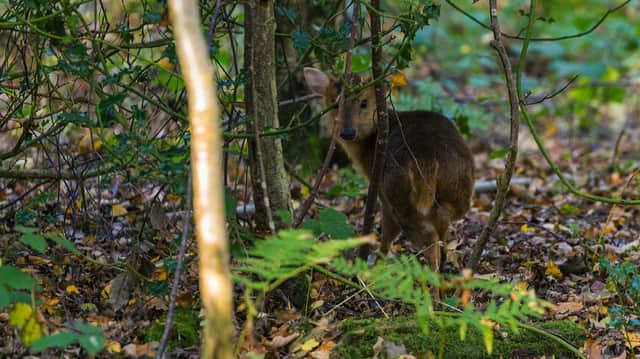
Look ahead, and if you’re lucky, you’ll see movement between the trunks. Deer roam here, and catching a glimpse of one slipping quietly through the undergrowth is one of Uffmoor’s small thrills.
At 85 hectares, Uffmoor Wood is big enough to get lost in your thoughts but friendly enough to explore with confidence.
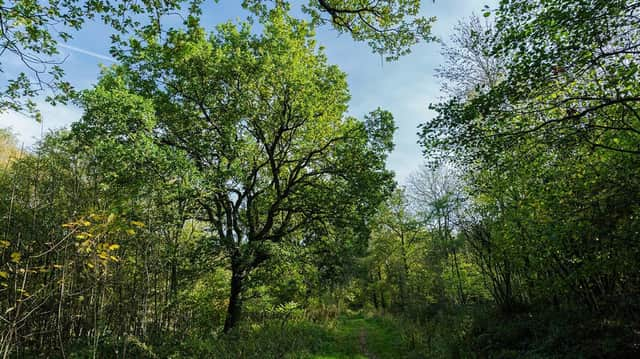
There are more than 8 kilometres of permissive paths, including a waymarked trail and a surfaced circular route that works well for wheelchairs and buggies.
Streams thread their way across the site, so sturdy footwear helps, especially after rain or in winter, when some paths can turn muddy.
What makes Uffmoor special is its mix of life. The woodland is a patchwork of larch, pine, sycamore, ash and poplar, with pockets of mature oak that hint at a much older landscape. In early summer, guelder rose shows off its creamy white flowers. Come autumn, whitebeam berries glow scarlet against the fading green. Keep an eye out too for bay willow, a less common sight in this part of the country.
At ground level, the wood changes with the seasons. Spring brings bluebells and wood anemones, followed by foxgloves, ragged robin and dog rose as summer takes hold. Later in the year, fungi steal the show. Fly agaric pops up like something from a storybook, while petticoat mottlegill and the strange, jelly-like crystal brain add flashes of colour and texture to damp logs and leaf litter.
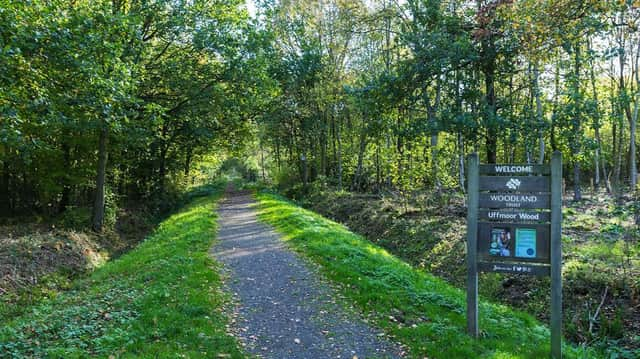
There’s history woven through all of this. The name Uffmoor comes from “Offa’s moor”, a nod to King Offa, who ruled the ancient kingdom of Mercia in the 8th century.
The land itself has likely been wooded since the end of the last ice age, though its appearance has changed many times. In the 1970s, much of the wood was felled and replanted with conifers. Before that, it formed part of the Hagley Hall estate, only leaving its ownership in 1978.
Since taking over the site in 1986, the Woodland Trust has been carefully reshaping the woodland again. Conifers have been thinned, especially around remnants of ancient woodland, giving light and space for native plants to return. It’s a long, patient process, but one that’s paying off in richer habitats and greater diversity.
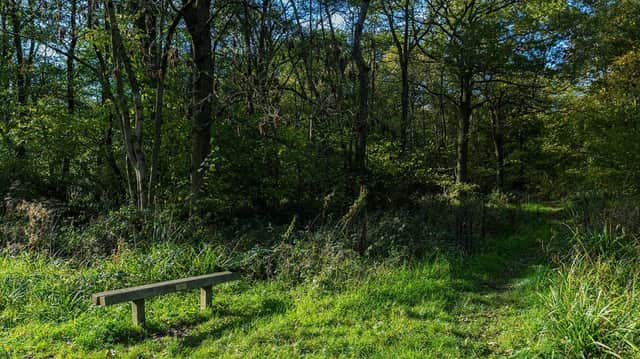
Uffmoor Wood isn’t showy. It doesn’t shout for attention. What it offers instead is a chance to breathe, to notice small things, and to feel connected to both nature and the past. Whether you come for a short stroll, a longer wander, or simply to sit and watch for deer, it’s the kind of place that quietly stays with you.
Go once, and chances are you’ll be back.