
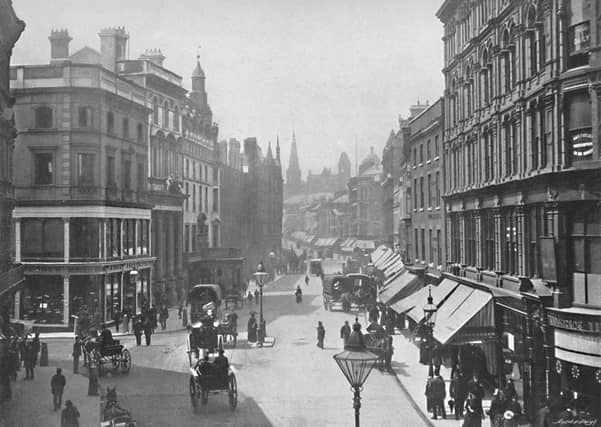


Ever wondered about the origins of street names in Birmingham? Why is “Moor Street” is called that? Or what about the Bullring or New Street.
Often overlooked, these names are historical echoes, marking the presence of notable individuals, locations, and event shifts through the ages. Consider the Bullring: originally “Corn Cheaping,” denoting the area’s corn market.
The term “Bull Ring” emerged from a green space within Corn Cheaping designated for bull-baiting. The ‘ring’ in question was an iron hoop in Corn Cheaping where bulls were tethered for baiting prior to being slaughtered, hence the name “Bull Ring” for Birmingham’s city centre. But what does other street names in the city centre mean?
So many street names in Birmingham city centre gives an insight into Brum's history - and can help us trace its journey from market town to one of the biggest cities in Europe. Here are the fascinating stories behind some of these street names in Birmingham city centre:
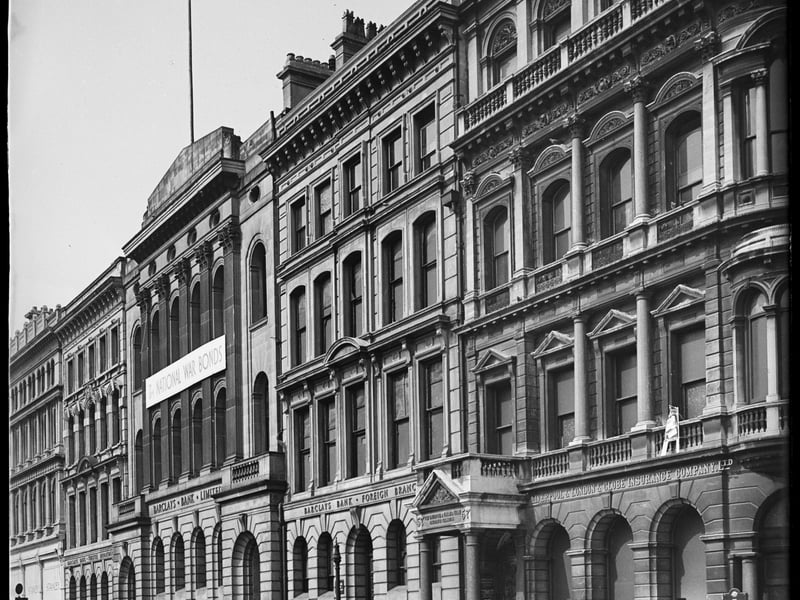
5. Colmore Row, Birmingham, 1941. A view looking north west along Colmore Row from the junction of Church Street showing sandbags built up outside number 55 in the foreground. Artist George Bernard Mason. (Photo by by Historic England/Heritage Images via Getty Images)
Bull Lane was the name once given to that part of the present Colmore Row between Livery Street and Snow Hill, though it has been better known as Monmouth Street. (Image - Colmore Row, Birmingham, 1941 by Heritage Images via Getty Images) | Heritage Images via Getty Images
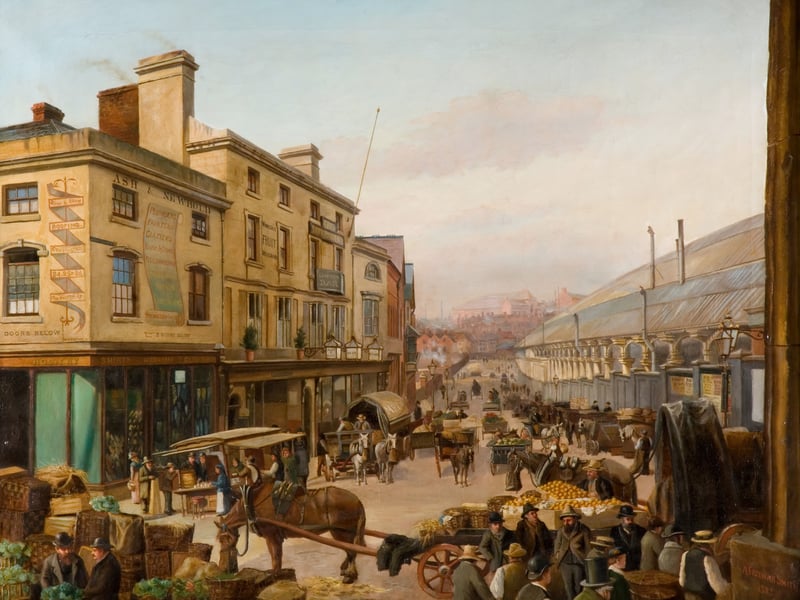
6. Worcester Street, Birmingham, 1883. View of New Street Station with Worcester Street to the left. This is a view of New Street Station in central Birmingham in the 1880s. The long glass roof of the station can be seen on the right hand side. Just visible on the far right is the corner of the old Bull Ring Market Hall. This picture was probably painted a market day as wagons can be seen bringing produce to the markets. New Street Station opened on 1 June 1854. During World War II the station suffered considerable bomb damage. The station was rebuilt in the 1960s, completed in 1967 and since then has been completely redeveloped, officially opening in 2015. Artist A. Freeman Smith. (Photo by Heritage Art/Heritage Images via Getty Images).
A passage leading to the Swan Inn off New Street, was called Swan Alley, a well-trodden path until its integration into Worcester Street around 1820. (Image -Worcester Street, Birmingham, 1883 by Heritage Images via Getty Images) | Heritage Images via Getty Images
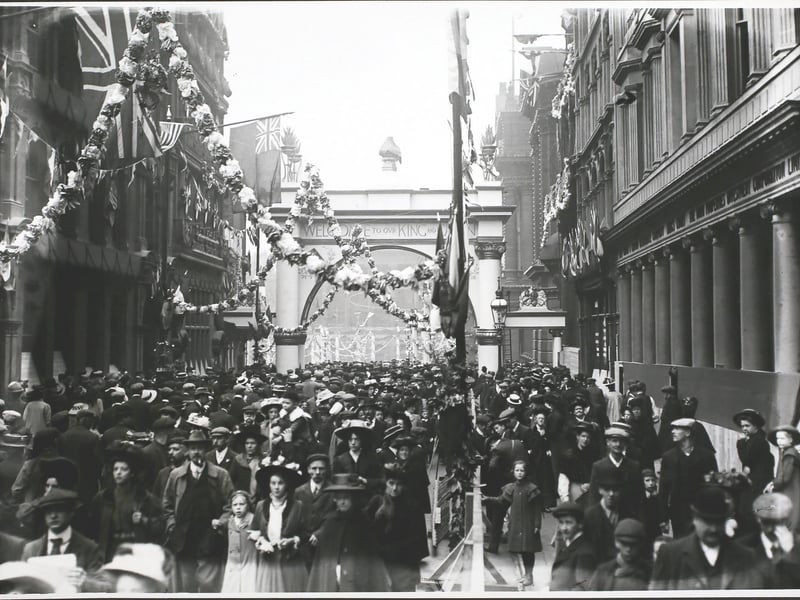
7. Broad Street
Birmingham’s renowned nightlife strip, Broad Street, began as a mere footpath across a field. Its name came from the transformation into the city’s widest street due to the area’s development in the late 18th century. (Image - royal visit to Birmingham, Broad Street, Birmingham by Hulton Archive/Getty Images) | Getty Images
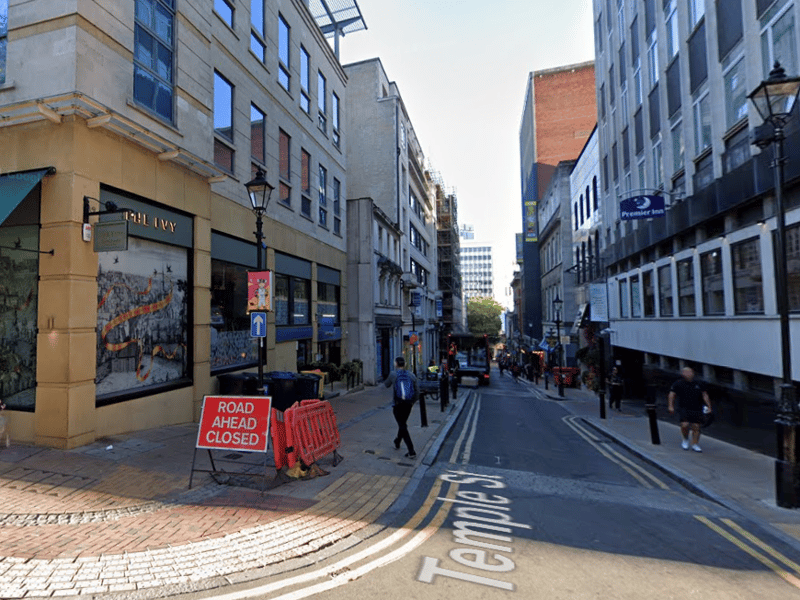
8. Temple Street
Temple Street takes its name from the old summer arbour, called "the Temple," which was once situated in a garden at the junction of what is now Temple Row and the street itself. | Google Maps