
I was one of those who knew of the bodies - the hidden history beneath Birmingham's Brindleyplace
Reflections on Birmingham’s waterside revolution, Dr Steve McCabe.
One of the dubious joys of watching certain repeat television programmes is the chance to see what well-known locations looked like before development and how much they’ve changed.
This is particularly so when you watch episodes of the police drama The Sweeney, which was originally shown in the mid-70s, and Minder, which straddled the 70s and 80s, certainly when Denis Waterman played the lovable hard man to rogue trader Arthur Daley.
What is obvious is that London has dramatically altered as a direct result of the huge investment into property.
Arguably, the most prominent example of change which utterly changed the landscape is what’s now known as Canary Wharf but had previously been called the Isle of Dogs, which in the two series I referred to provides us with tantalising glimpses of how magnificent London’s docks once were (they are heavily featured as a backdrop to the 1980 gangster film The Long Good Friday).
If you want to read a wonderful history of this fascinating peninsula in the Thames, which the Romans converted from marshland into Londinium, its port into Britannia, and which, of course, is the utterly preeminent capital city, read Fiona Rule’s wonderful book, London’s Docklands: A History of the Lost Quarter.
Though Birmingham possesses no river as strategically vital as the Thames, its canal system became utterly critical to ensuring it became a powerhouse of the industrial revolution.
The historical development of canals is a source of immense fascination and one I’ll come back to in a subsequent later article.
Though Birmingham’s canals were not used on screen as extensively as London’s docklands, they do appear and, for the eagle-eyed, provide glimpses of the city before the extensive development of the 1980s onwards.
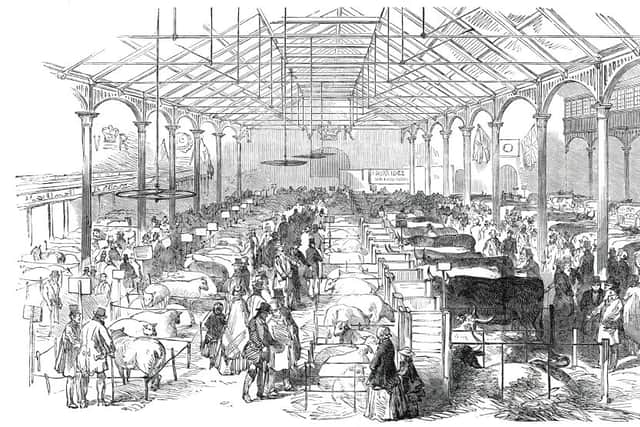

Crossroads, a now widely derided national soap opera which ran from 1964 to 1988 (briefly being revived in 2001 for two years), was set in the fictional village of Kings Oak, filmed in Gas Street Basin, called ‘Heathbury Basin’, and used outside shots of a property that was supposed to be a cottage for the Harvey family and later as Sam ‘Carney’ Carne’s cottage (https://crossroadsmotel.co.uk/fanclub/fact-files/locations/).
Some of you may have visited it as it is now the Canalside pub.
Gas Street in the 1970s was not regarded as one of the most salubrious parts of the city; quite the contrary.
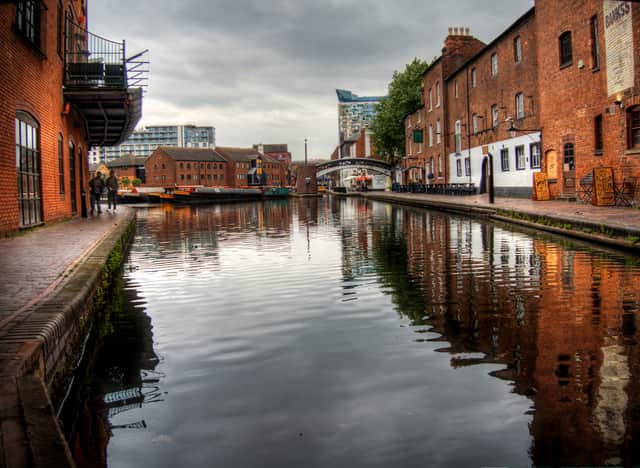
The waterways which had once been the arteries of trade and the city’s reputation as the ‘workshop of the world’ have very much fallen into decline as a consequence of the rise, firstly, of trains and then, more particularly, of the motor vehicle, which could go from door to door.
It’s taken vast reconstruction and half a century to undo the sense of a city in which planners regarded road vehicles as having primacy over pedestrians.
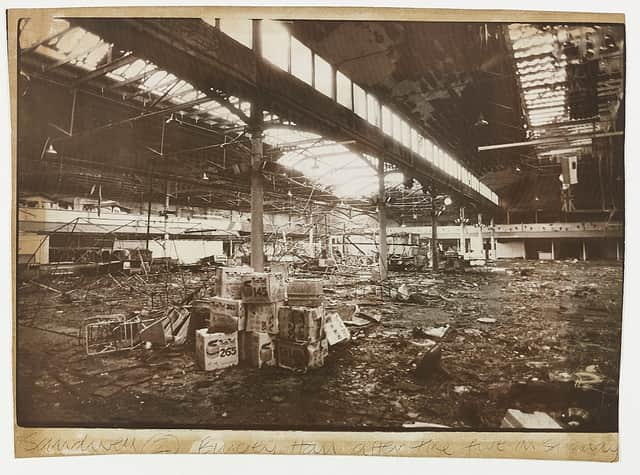
Though such development has undoubtedly transformed the image of Birmingham, I’d argue that what really was a game changer was what happened on or around Broad Street as a consequence of the decision to build the International Convention Centre (ICC) in the mid-80s.
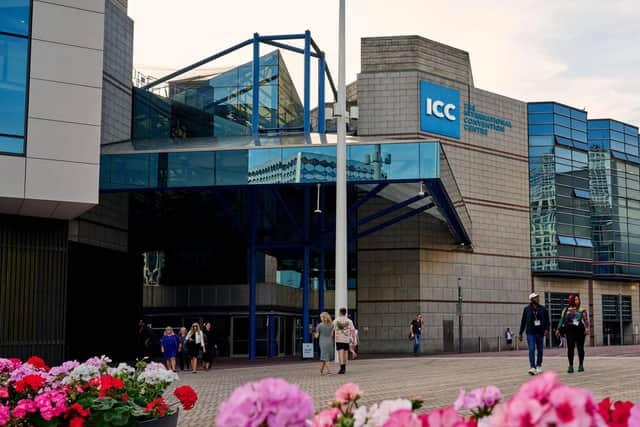
Whilst not on the same scale as London’s Docklands, Birmingham City Council’s foresight in committing to the £200 million to build the ICC, though criticised by some as raiding essential budgets to raise this finance, set off a frenzy of investment.
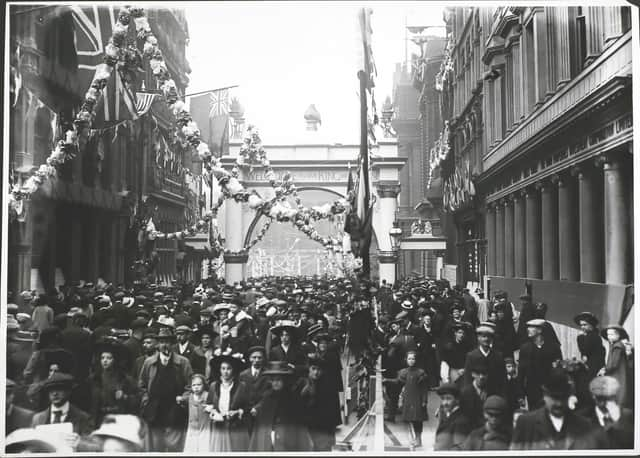
Crucially, the fact that the ICC was located next to the intersection of the canals in Birmingham provided ample opportunity for development of land that’d once been thriving with industry and warehouses, which relied on the canals to transport materials into the city and transit finished goods to customers elsewhere in Britain and the rest of the world.
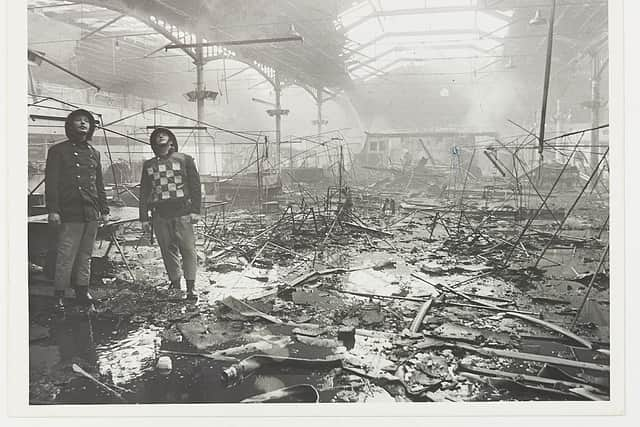
As occurred in London’s docklands, as industry and warehouses either closed down or moved elsewhere, what had been an eclectic mixture of buildings all too frequently built without any interference by planners fell into decline and was demolished.
The land now known as Brindley Place took on a vaguely dystopian feel.
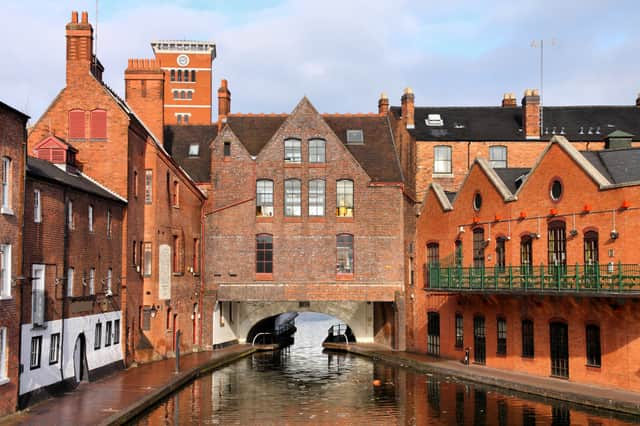
When not being used as a car park, the land served as the set for the 1980s psychodrama Dead Head and was featured in ‘Northwest Passage to Acock's Green’, an episode of the ITV comedy-drama Boon, which was made by Central TV and starred the late Michael Elphick.
What’s as intriguing as its sad, similar to what had been experienced among those who’d been employed in the London docks, the community that had existed around Birmingham’s canals around Broad Street dwindled as families moved out to the suburbs as part of the expansion between the two wars and, understandably, in search of new employment and opportunities for them and their children.
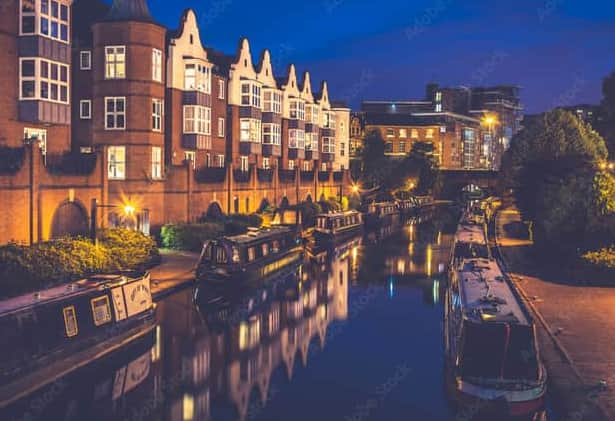
There’d been a local community in the area since the completion of the Birmingham Canal in 1773, when the area was still largely rural and somewhat disconnected from what was then regarded as central Birmingham – Digbeth where the town had originally been located close to the River Rea.
Once operational, the canals generated demand for workers in the allied trades required in the range of workshops, warehouses, factories and wharves which were rapidly developing as part of the Industrial Revolution characteristic of the reign of Queen Victoria (1819-1901).
Housing would have been almost literally thrown up to cope with the demand and conditions would have been cramped and, particularly with the use of shared water and toilets, unsanitary.
Families moving out of the area probably felt relief at leaving such housing.
Photos show that there was such housing existed until the 1960s.
Notably, St Peter’s Catholic Church, built in 1786 and decommissioned by the church then demolished in 1969, is particularly emblematic of the decline of the area.
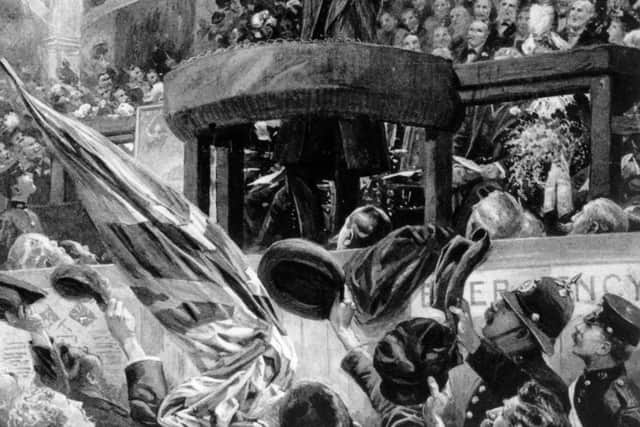
Built to provide a place of worship for Italian workers who were attracted to Birmingham by the requirement for skilled artisans in the nearby Jewellery Quarter, so as to assuage those who remained suspicious of a religion that had been at the heart of the Reformation, the building was made to look like a factory on the outside.
When those attending the church died, they were buried in the adjoining cemetery.
Very sadly, as has since been reported given that many were immigrants whose families had moved on, the cemetery was forgotten and covered over to provide additional playground area for the primary school of the same name.
When work on the Convention Centre commenced, now covering where the church and cemetery once were, bodies of those discovered during excavation were to be respectfully retrieved and reinterred at Oscott Cemetery by a specialist team.
As has since been reported, this process was to be carried out in secret but was an open secret among many in the city, particularly in offices which overlooked the site.
I was one of those who knew of the bodies, as I could see the excavation works from my office in Birmingham City Housing Department’s Bush House, demolished in 1990, where I worked from late 1986 until 1988, when I entered academic life.
However, this process created an issue in the initial stages of construction of the Convention Centre, which now stands on the site of the church. Although official records indicated there were 577 bodies buried, almost double that number were actually discovered.
This increase is widely believed to have been due to the need to bury those who’d died of an infectious disease such as plague or cholera with speed in order to contain the outbreak.
Another church which disappeared slightly later than St Peters in 1978, The Church of the Messiah opened 1st January 1862 is, to my knowledge the only place of worship in Britain which had a working canal beneath it.
Given I went to school on the Hagley Road and would have frequently passed this church, I regret I didn’t pay more attention to it.
The location where the Church of the Messiah once stood is now regarded as another ‘place of worship’ in that it is Black Sabbath Bridge, which was the focus of international attention following the death and funeral of Ozzy Osbourne last July.
I doubt that many of those who regularly visit Brindley Place either to work in the many offices built as part of the regeneration of the area, or to visit the many pubs or clubs as well as to enjoy concerts in the many local venues, including, of course, the magnificent Convention Centre, are aware of the history of the place.
That’s progress I accept.
Indeed, a pub I remember visiting, which, though built on top of the car park which once stood at Five Ways on the left, built in the late 1960s, was called ‘Unspoilt by Progress’.
Ironically, it was demolished in the late 1990s as part of a new development!
The ending of canal trade and demise of small-scale manufacturing provided an abundance of cheap land around which the multitude of new apartments were built to provide accommodation for the latest generation of those seeking new opportunities in England’s second city.
It must be acknowledged that the employment in commerce and other sectors in the offices built in Brindley Place, which has given rise to the impressive increase in hospitality in the local area as well as ensuring Gas Street is vastly more pleasant than I recall in the 1970s, is a really good thing for the city.
However, like London’s Docklands where the indigenous community was displaces by ‘new money’, we should never forget the incredible hard work and dedication of those who made Birmingham the city it is today.
Dr Steve McCabe
Steve is Professor and Pro Vice Chancellor, DoctorateHub.
Previously, having worked for Birmingham City Council, he spent the last 35 years as an academic at Birmingham City University teaching and researching economics, management and business. Additionally, he has written extensively for edited texts examining economics and politics.
He regularly writes and comments regularly in the national and international media on politics and the economy and has published texts on quality management, benchmarking, ‘Brexit’ and its economic and social impact, the green economy and manufacturing, house prices and India’s progress since independence.