
The secret caves beneath the West Midlands: Hidden tunnels carved by hand and shrouded in mystery

Just a 50-minute drive from Birmingham, lies one of Britain’s most mysterious network of underground caves and tunnels.
These hand-carved tunnels and chambers are shrouded in mystery and local legend.
Hidden beneath a quiet patch of woodland near Shifnal, Shropshire, lies one of Britain’s most curious underground sites — the Caynton Caves, also known as the Caynton Hall Grotto.
From above, the entrance looks like nothing more than a rabbit hole, but it leads into a labyrinth of hand-carved tunnels and chambers cut into soft sandstone.
The caves sit just west of Caynton Hall, which was owned in the mid-1800s by the Legge family. It’s widely believed the grotto was carved out around that time, though no one knows exactly why.
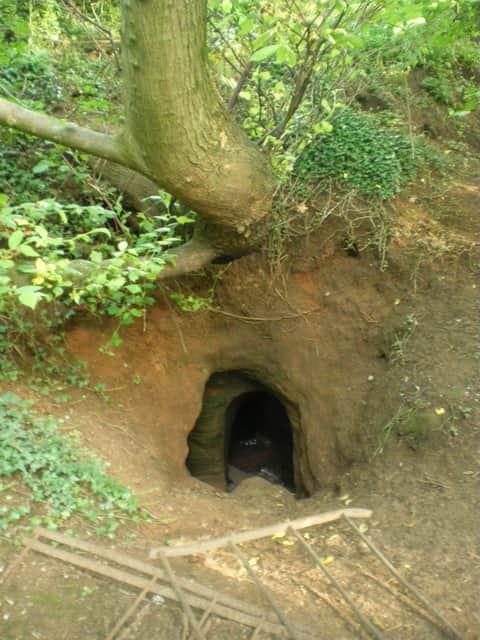

The chambers form an irregular series of passageways and rooms, complete with carved archways, pillars, and niches — likely once used to hold candles or other lighting. The craftsmanship is surprisingly refined, suggesting skilled stonemasons were involved.
Historic England describes the site as a grotto, probably created in the late 18th or early 19th century. Some historians suggest it began as part of a quarry before being converted into a romantic underground folly by the Legge family.
Others, however, prefer a more mysterious origin story. Local legend claims the caves were once used by followers of the Knights Templar in the 17th century, though experts - including historian Dan Jones - agree there’s no real evidence to support that.
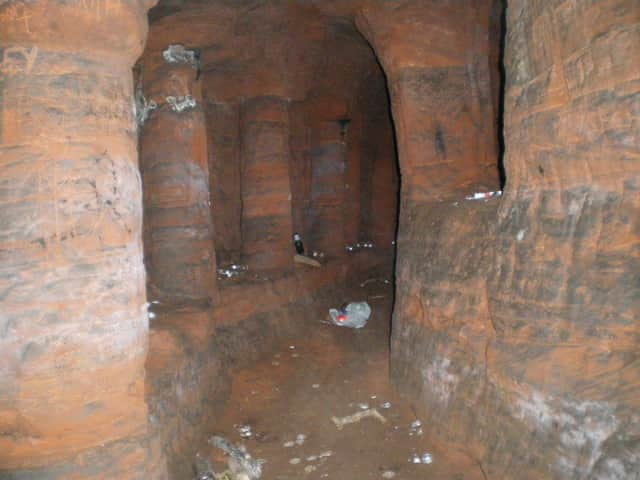
In the late 20th century, the caves gained a darker reputation. By the 1980s, they were rumoured to have been used for “black magic” rituals — though likely more the stuff of local myth than serious occult activity.
Repeated vandalism forced the site to be closed off in 2012.
But the Caynton Caves returned to the spotlight in 2017, when a photographer’s images of the underground passages went viral. The photos, taken by Richard Law and shared under a Creative Commons licence, revealed an atmospheric, almost sacred space — eerie, intricate, and untouched by time.
Whether a 19th-century folly, an old quarry, or something far older, the Caynton Caves remain one of the West Midlands’ most enigmatic landmarks — a professional work of craftsmanship wrapped in mystery, half history and half legend.