
Tesco extends national Fruit & Veg for Schools programme across Birmingham, with more than 500 schools across the UK set to receive free fruit & veg
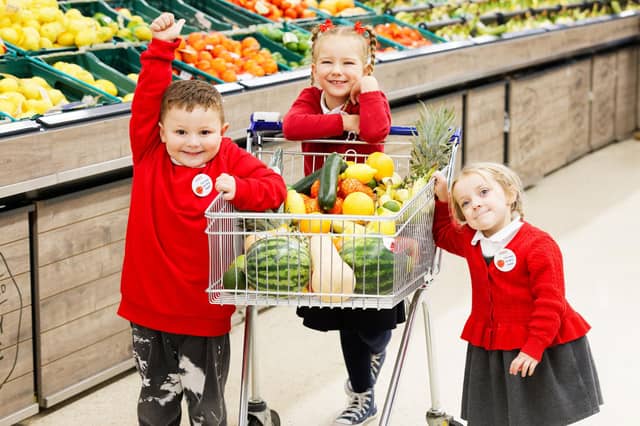

Scheme will give thousands of young people fruit and vegetables every day at school Last academic year (24/25), around 140,000 children were supported with over 10 million portions of fruit & veg
Tesco has announced that its Fruit & Veg for Schools programme, developed in partnership with the British Nutrition Foundation, is to be expanded for another year to reach even more schools across the UK.
For the whole of the next academic year (2025/2026), free fruit and veg from local Tesco stores will give children in more than 500 schools a nutritious boost that they might not ordinarily get.
The Tesco Fruit & Veg for Schools programme launched in September 2024 as part of the supermarket’s Stronger Starts funding and community support for children. In Birmingham, 37 schools took part.
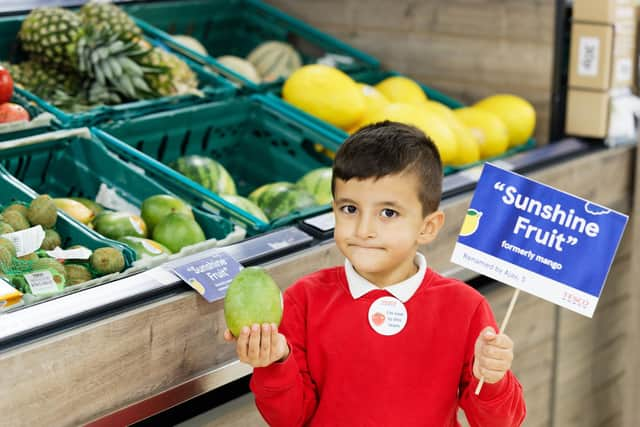
The second year of funding will continue to be specifically targeted in areas where the proportion of pupils receiving free school meals is above 50%. The focus on areas with higher free school meal participation is particularly important because data shows that families on lower incomes struggle to afford a healthy diet.
Only 12% of children aged between 11 and 18 are meeting the five-a-day recommendation [1] and for children taking part in the scheme, Tesco expects to see their overall fruit and veg intake increase by 23%, based on the average five-a-day intakes in school-aged children.
The schools taking part in the scheme will be able to shop for the fruit and veg the school needs in stores local to their school.
Most popular fruits in year one, were:
1. Apples (225,585kg)
2. Bananas (108,602kg)
3. Oranges (92,597kg)
4. Grapes (39,771kg)
5. Strawberries (37,735kg)
Ashwin Prasad, Tesco UK CEO, commented:“Schools have told us what a positive impact the Tesco Fruit & Veg for Schools programme has made on their children, so we are delighted we are able to support even more schools in year two.
“The first year of our programme has been a huge success and by expanding it we can ensure that even more young people in some of the most challenged communities in the UK get access to more fruit and veg.”
Zahreen Asghar, Pastoral Manager from Adderley Primary School, who took part in the first year of the programme added: “The funding we received from Tesco has already made a meaningful difference to our school community. We are now able to provide fresh fruit daily to all our pupils, promoting healthier eating habits and encouraging children to make nutritious choices throughout the day. We have even seen improvements in both attendance and concentration amongst the children, which is fantastic to see.”
Astral Blanchard, Head Teacher at Twerton Infant School in Bath, said: “The Tesco Fruit & Veg for Schools programme has given our children the opportunity to try so many new fruit and vegetables, while also helping us build healthy eating into a valuable part of our daily routine. Snack time is now a calm and enjoyable moment where we read stories, talk about flavours and explore new tastes together in ways we hadn’t before. Children are helping to prepare the fruit, trying things they’ve never eaten, and even asking for fruit and vegetables at home. It has been a joy to see their curiosity grow and their enthusiasm for healthy eating thrive.”
Elaine Hindal, Chief Executive of the British Nutrition Foundation, said: “Tesco’s Fruit & Veg for Schools programme has helped to improve the diets of our young people by helping them get more of their five a day, try new varieties and develop healthy habits that we hope will stay with them through life. We’re delighted to see the programme expanded to provide daily fruit and vegetables to even more children who might not normally be able to access them.”
Ends
Notes to editors:
Fruit and vegetables provide key nutrients for children’s health, including vitamins A and C, folate and fibre.
Portions based on an average adult portion of 80g for fruit and veg.
According to the British Nutrition Foundation:
• On average, 11% of 4-10 year olds and 18% of 11-18 year olds have low intakes of vitamin A, which is important for the immune system, vision, and healthy skin
• Only 14% of 4-10 year olds and 4% of 11-18 year olds are meeting recommended fibre intakes . Fibre is important for keeping the gut healthy and for reducing the risk of disease in later life.
• Vitamin C helps to protect cells from damage and helps form collagen, which is important for healthy bones, gums, teeth, and skin. It also supports the immune and nervous systems.
• To measure the impact of the scheme, Tesco and the British Nutrition Foundation have developed a series of metrics that will be reviewed at the end of the school year in 2025.
Find out more about the British Nutrition Foundation at: https://www.nutrition.org.uk