
ROS1DERS UK takes rare lung cancer fight to Parliament
A newly launched UK charity for patients with a rare and aggressive form of lung cancer has met with MPs at the Houses of Parliament to expose critical gaps in diagnosis, treatment, and national awareness.
ROS1+ lung cancer disproportionately affects young, non-smoking women and is often diagnosed at Stage 4, when treatment options are limited and survival odds are poor.
In the UK, there are currently no NICE(National Institute for Health and Care Excellence)-approved second-line treatments, and no standard biomarker testing on the NHS to detect this mutation early.
“We’re watching people die in months,” said Catherine Paul Biswas, who founded the ROS1DERS UK charity after being diagnosed with Stage 4 ROS1+ lung cancer.
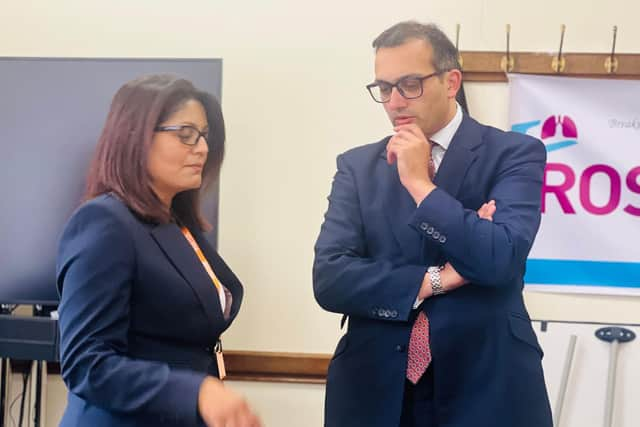

“They’re young mums and dads, teachers, professionals — and no one’s looking for this cancer because no one’s even heard of it.”
Unlike more common types of lung cancer, ROS1+ does not respond well to chemotherapy or immunotherapy.
However, it can respond dramatically to targeted therapies called TKIs (tyrosine kinase inhibitors).
Yet, UK patients face severe access barriers to these life-prolonging treatments.
“Radiation can help a little, but TKIs are the only real lifeline — and we have no NICE-approved backup options when resistance inevitably builds,” said Catherine.
“We don’t have the luxury of time. This cancer moves fast. So must we.”
Catherine had private insurance and says that’s why she’s alive but most patients don’t — and they’re dying before anyone even tests for ROS1.
“I can never be called cured, but I’m living a nearly normal life with cancer,” she said.
“Most people aren’t that lucky. By the time they’re diagnosed, it’s already too late.”
The charity warns that ROS1+ patients are dying every fortnight due to lack of options and visibility.
While other lung cancer mutations have multiple TKI lines and research momentum, ROS1+ has been largely neglected.
Pharmaceutical companies and NICE have not prioritised this small but vulnerable group, partly because most do not survive long enough to advocate for themselves.
“We brought our stories to Parliament not just to be heard — but to beg for action. It’s not just rare. It’s neglected,” said Catherine.