
'My stepson’s skin cancer saved my life'
A skin cancer survivor says she owes her life to her stepson who insisted she get a mole checked out when he discovered his own melanoma was incurable.
Janet Wood from Sutton Coldfield had no intention of visiting the GP with the mole on her back because she says it looked nothing like the one her stepson Lea had to have removed.
But thanks to Lea’s insistence, Janet’s skin cancer was diagnosed early enough for effective treatment.
Now Janet has teamed up with Cancer Research UK to help save lives by launching a sun safety campaign.
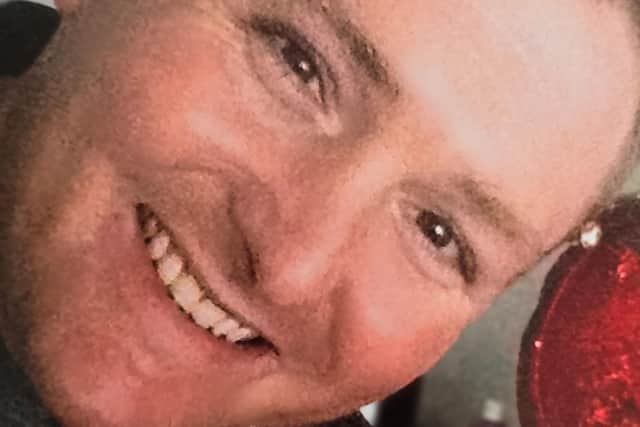

Janet, a former West Midlands Police detention officer, was 70 when her husband Steve first suggested she got a mole on her back checked by the GP in 2018. At the time, Steve’s son Lea Wood was being treated for stage four melanoma, aged just 34.
“It looked like a red blister but it was hard, said Janet from Four Oaks. “Lea noticed it and told his dad, but I told him that my mole looked nothing like his, so I wasn’t going to bother getting it checked. Then Lea told me that’s how his skin cancer had started.
“If it wasn’t for Lea I would never have thought it was anything to worry about. I believe he saved my life.”
Lea, a father from Sutton Coldfield who worked as a telephone engineer,was diagnosed with skin cancer in July 2018. After visiting A&E with a weeping mole on his chest, he was treated with immunotherapy but the cancer, which had grown to a tennis ball sized lump, spread to his brain. He died in January 2019, just two days before Janet’s surgery.
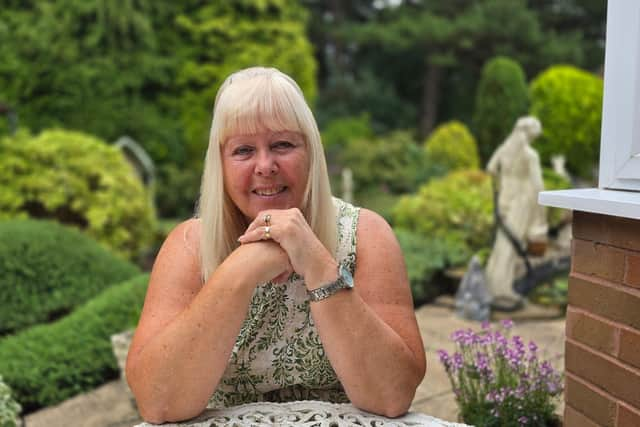
Determined to try and make a difference in Lea’s memory, Janet has teamed up with Cancer Research UK to encourage people to follow three simple steps this summer: seek shade, cover up and apply sunscreen regularly and generously.
Her call comes as latest analysis from Cancer Research UK reveals the majority of UK melanoma skin cancer cases are preventable, with almost 9 in 10 (87%) caused by overexposure to ultraviolet (UV) radiation from the sun and sunbeds.
With around 1,400 people diagnosed with the disease every year in the West Midlands region, Janet wants to do all she can to help raise vital awareness.
After her emotional skin cancer journey, Janet always takes precautions and says protecting your skin really is as “easy as 1,2,3.”
“I’ll never forget what Lea said to me after I was diagnosed,” said Janet. “He said, ‘don’t worry, they will have caught yours in time’. That’s why I’m sharing my story to help spare others from what my family had to go through.
“Awareness of the risks was low when I was young, so I did sit in the sun, and I did get sunburnt. I also used sunbeds as well from time to time, but I want to tell people, it’s just not worth it. It doesn’t matter how old you are, it’s just too dangerous.
“Now, I make sure I’m covered up and take some time out of the sun in the middle of the day, as well as always being prepared with hat, sunglasses and sunscreen. It’s natural to want to make the most of warmer days, but sun safety doesn’t mean missing out, just being careful whether you’re at home or abroad.”
Skin cancer is more common in people over the age of 50, but it can affect anyone of any age.
Nearly 100 years ago, Cancer Research UK helped prove that UV radiation can cause skin cancer and since then has learnt more about how skin cancer starts and spreads, pioneering new ways to prevent, detect and treat the disease.
NIVEA Sun has raised over £8 million to support this life-saving research over the last 12 years and works in partnership with the charity to stop the disease before it even starts. When the sun is strong, they recommend people:
- Spend time in the shade, especially between 11am and 3pm in the UK.
- Cover up with clothes, a wide-brimmed hat and UV-protection sunglasses.
- Apply sunscreen with at least SPF 30 and 4 or 5 stars generously and regularly.
Cancer Research UK Health Information Manager, Beth Vincent, said: “Today, more than 9 in 10 people diagnosed in the West Midlands will survive their melanoma for five years or more.
“From harnessing the power of the immune system to seek and destroy the disease, to developing a skin patch that could detect cancer earlier and creating targeted drugs - we’re powering progress for more people like Janet. But we want to beat skin cancer for everyone so, with rates at a record high, we’re grateful she’s lending her voice to our campaign with NIVEA Sun.
“Getting sunburnt just once every two years can triple the risk of developing skin cancer, compared to never being burnt. Even on a cloudy day, the sun can be strong enough in the UK - to burn between mid-March and mid-October. So, it’s important people remember to use a combination of shade, clothing and sunscreen, with at least SPF 30 and 4 or 5 stars, to help protect their skin.”
For more advice or to donate to skin cancer research visit cruk.org/sunsafety
FACTFILE: MELANOMA SKIN CANCER
Damage to our skin from the sun is the number one cause of melanoma. It’s the UK’s fifth most common cancer and in the West Midlands, around 210 people die of the disease every year.
Who can get skin cancer?
Anyone can develop skin cancer. That’s why, according to Cancer Research UK and NIVEA Sun, everyone should take care to enjoy the sun safely. But those at higher risk of the disease, include people with lighter skin tones and naturally light-coloured hair or eyes, as well as people with lots of moles and freckles, or a family history of skin cancer.
What are the signs and symptoms?
A new mole, or changes to the size, shape or colour of a mole or freckle could be a sign of skin cancer, but that’s not all. It could be a sore that doesn’t heal, a lump, an ulcer, or a patch of skin that looks out of the ordinary.
What should people do if they spot any changes to their skin?
Don’t ignore it. Any unusual changes to an area of people’s skin should be seen by a doctor. They will want to hear from you; spotting cancer early saves lives.
Visit cruk.org/sunsafety to find out more.