
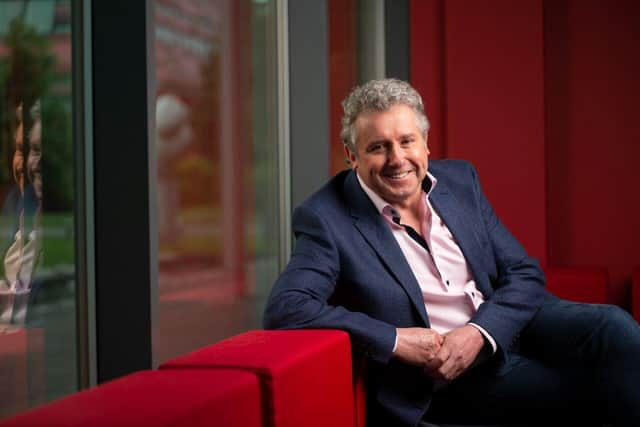
Can books save lives? Professor Paul Crawford’s early life in Birmingham nearly destroyed him but also gave him new powers of survival, inspiring his latest novel, The Wonders of Doctor Bent
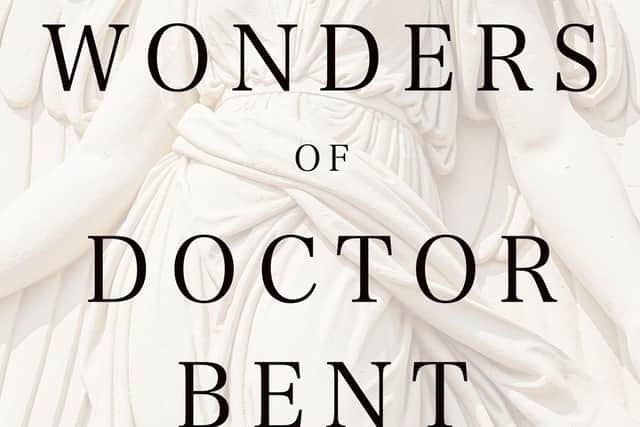
The Wonders of Doctor Bent, reflects the ying and yang of my life in Birmingham. First, the horror of sexual abuse. Second, the route to recovery through writing that came with the gift of books on my first day of school at St Philip’s Grammar School on the Hagley Road, Edgbaston.
The reader will understand that I need to cloak the details of the devastation that occurred in my childhood in Erdington (Ardinweald, in the novel, draws from origins of that suburb) and made a wound that can never heal. Instead, I will talk about the aftermath of a profound loss of trust, and how writing became the greatest salve and comfort.

What were the two new books that the teachers placed on our desks that first day at St Philip’s School back in 1974? The Hobbit and The Bible.
I read both books and relished the fact that J. R. R. Tolkien had attended the school for a time. Later, I learned that much of his writing reflected real Birmingham locations. This is something that features in my own fiction, not least The Wonders of Doctor Bent.
After St Philip’s, my reading of The Bible led to me to train for religious ministry at St. Mary’s College Oscott, Sutton Coldfield, before some of the contradictions I found in that life took me away to the ‘church of the street’. Yet studying this book as an imaginative work provoked a profound interest in stories and language and their role in who we are and what we do to one another. This is something that was key to my recovery and building a career after the early trauma.
Following short periods in London and Bristol, I returned to Birmingham, a wounded healer, working to support people’s mental health at All Saints Hospital, Winson Green. Whilst there, I completed a part-time Honours degree in English Literature and Language at the University of Central England (formerly Birmingham Polytechnic)—the same course comedian Frank Skinner joined a decade earlier! Winning a British Academy Award, I went on to complete a PhD on William Golding (Lord of the Flies etc.) at The University of Birmingham. Some recollections from that time feature in campus episodes in the new novel (most likely influences by fellow Birmingham novelist and critic, David Lodge). After graduating, I moved on to research mental health in Stafford before joining the University of Nottingham and becoming the world’s first Professor of Health Humanities, spearheading the application of the arts to promote healthy bodies and minds through my work at the Institute of Mental Health.
Looking back, my writing life has grown out of complex, intergenerational trauma, not least through adverse experiences in childhood. Such experiences bring loss of trust so profound, so immense, that it has been a battle to edge around the hole in my soul that it left. Books and writing have been my self-prescribed medication.
Merriam-Webster defines trust as “assured reliance on the character, ability, strength, or truth of someone or something”, from Old Norse traust (trust) akin to Old English trēowe (faithful). Clearly, abusive events in childhood obliterate this “assured reliance” and, as many commentators note, building trust again can be a slow, titrated process.
However, perhaps more note-worthy than the devastation of trust that occurred in my childhood and sent sharp-edged ripples into my future, is the marvel of recovery. How individuals recover from catastrophes in foundational relationships within their families should perhaps be our focus. In this sense survival is most impressive when it is least expected. We need to learn how individuals, for example, abused in their families, recover. What did they do to survive? What did others do to help them recover their identities?
In my novel, The Wonders of Doctor Bent, I portray the devastating impact of different kinds of loss of trust but also the potential routes to recovery. The fiction delves into criminal accountability, mental health and the power of the arts to save individuals from mental decline. It asks, when everything is falling apart, whom do you trust?
The worlds of Jason Hemp, an English lecturer, and Dr Bent, the unlikely Medical Director of high-security psychiatric hospital Foston Hall, come together in this dark tale of murder, revenge and abandonment. Attempting to track down his twin brother’s killer, Jason finds his life unravelling in unexpected and frightening ways, whilst visionary Dr Bent attempts to reform Foston Hall into a place of comfort, all while facing his own mental health challenges. It asks, when everything is falling apart, who do you trust?
As Gene Beresin MD, MA, Professor of Psychiatry, Harvard Medical School writes of the novel:
In The Wonders of Doctor Bent, Paul Crawford brilliantly draws us in to the suffering of his characters – their battles with the impact of adverse childhood experiences and trauma on loss, grief and depression. It makes a compelling case for all of us to seek recovery, as health professionals and lay individuals alike.
From one Brummie to all those who have suffered mentally from trauma in their lives, I wish you the comfort of books. Books really can save lives. They saved mine.
The Wonders of Doctor Bent is out 25th February 2025 and is available at Amazon, WHSmith, Waterstones, and all major retailers.